Poetry Turn: Indian Poetic Expressions That Speak Louder Than Words
When we talk about a poetry turn, a sudden shift in tone, meaning, or emotion within a poem that changes how the whole piece lands. Also known as the volta, it’s not just a literary device—it’s a cultural rhythm in India, where a single line can flip pain into pride, silence into shout, or love into legacy. You’ve felt it: that moment in a ghazal when the last couplet hits like a door closing behind you. Or when a WhatsApp status, written like a half-sung verse, makes your chest tighten without you knowing why. This isn’t just poetry. It’s the quiet rebellion of people who don’t say much but say everything when they do.
In India, poetry doesn’t live in books alone. It lives in birthday wishes sung over dholak beats, in friendship quotes passed between college roommates, in the way a mother whispers a line from Ghalib while tucking you in. A ghazal, a form of lyrical poetry rooted in Urdu and Persian traditions, built on rhyming couplets and a recurring refrain. Also known as the emotional echo, it’s the backbone of how many Indians process love, loss, and longing. You won’t find it in textbooks often, but you’ll find it in the way someone texts you after a fight: "Tere bina jeena, kya hai?" That’s a poetry turn. And it’s not rare—it’s routine.
Then there’s the poetic friendship quote, a short, emotionally charged line that captures the depth of a bond without needing a long story. Also known as the silent promise, it’s what gets shared on birthdays, after arguments, or when someone just needs to feel seen. Think of the quote from Tagore that someone scribbled on a notebook: "Don’t walk behind me; I may not lead. Don’t walk in front of me; I may not follow. Just walk beside me and be my friend." That’s not poetry for the sake of beauty. It’s poetry as survival. As belonging. As the only language left when words fail.
What makes Indian poetry turn so powerful isn’t the meter or the rhyme—it’s the weight behind it. A line from a 12th-century Sufi poet still gets copied into college exam answer sheets. A line from a Bollywood song still gets sent as a breakup status. Because in India, poetry isn’t decoration. It’s the tool we use to say what we can’t say out loud. It’s how we turn loneliness into legacy, anger into art, and silence into strength.
Below, you’ll find real examples—not just quotes, but moments frozen in words. The kind that made someone pause mid-scroll. The kind that got saved, shared, and whispered. The kind that didn’t need a big audience to matter. These are the poetry turns that changed how people felt. Not because they were perfect. But because they were true.
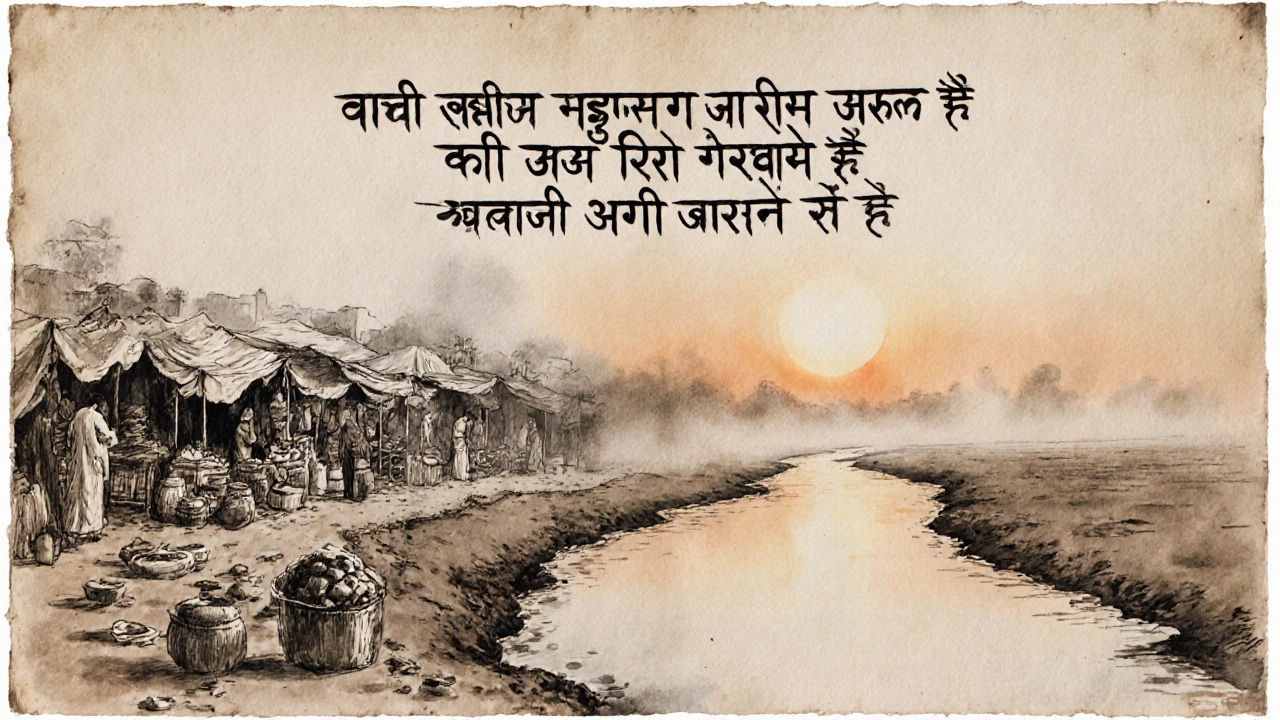
A Volta poem isn't just about structure-it's about the sudden turn that gives Indian short poetry its power. From Kabir's dohas to modern Hindi verses, the volta transforms simple lines into lasting truths.
More