What Is a Volta Poem? Understanding the Turn in Indian Short Poetry
 Nov, 28 2025
Volta Identification Tool
Find the Volta in Indian Poetry
Enter a short Indian poem (2-8 lines) and our tool will identify where the volta occurs and explain why it's significant.
Volta Identified
Why This is a Volta
Examples from the Article
When you read a short poem in India-maybe a two-line couplet in Urdu, a four-line stanza in Bengali, or a crisp Hindi verse-it often hits you with a sudden shift. One moment you’re thinking about love, the next you’re staring at loss. That twist? That’s the volta. It’s not just a fancy Italian word. It’s the heartbeat of many Indian short poems you’ve read without even knowing its name.
Where the Volta Comes From
The word volta means "turn" in Italian. It started in European sonnets, where poets like Petrarch and Shakespeare used it to flip the mood, question the idea, or reveal a hidden truth around line nine. But in India, the volta didn’t need to wait for 14 lines. It arrived early-in the ghazal’s second line, in the doha’s second couplet, in the haiku-inspired verses written by modern poets in Pune or Patna.
Take this simple doha by Kabir:
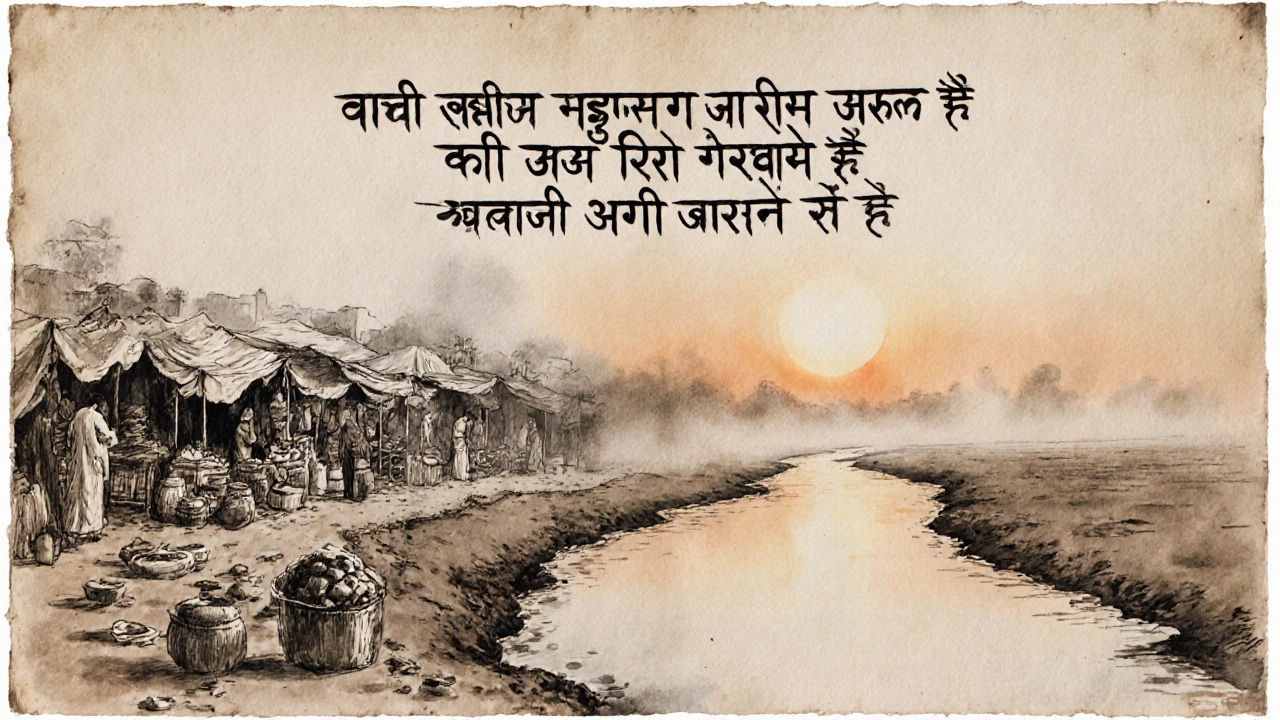
बाज़र में बाज़ार है, बाज़ार में बाज़ार है।
जो देखे वही बेचे, जो बेचे वही देखे।
At first, it sounds like a repetitive loop about market life. But then-the volta. The second line flips it. It’s not just about trading goods. It’s about how we mistake the world for reality. The poet turns from observation to insight. That’s the volta. No need for 14 lines. Just two.
How the Volta Works in Indian Short Poetry
Indian short poetry thrives on compression. A single line can hold a lifetime. The volta is the spark that makes it burn. It doesn’t always come at the end. Sometimes it’s in the middle. Sometimes it’s hidden in a single word.
In Urdu ghazals, the maqta-the final couplet-often contains the volta. The poet slips in their name or a personal plea, and suddenly the whole poem changes from romantic longing to spiritual surrender. Ghalib’s lines often do this. One moment he’s talking about a lover’s absence; the next, he’s asking God why the universe is so cruel.
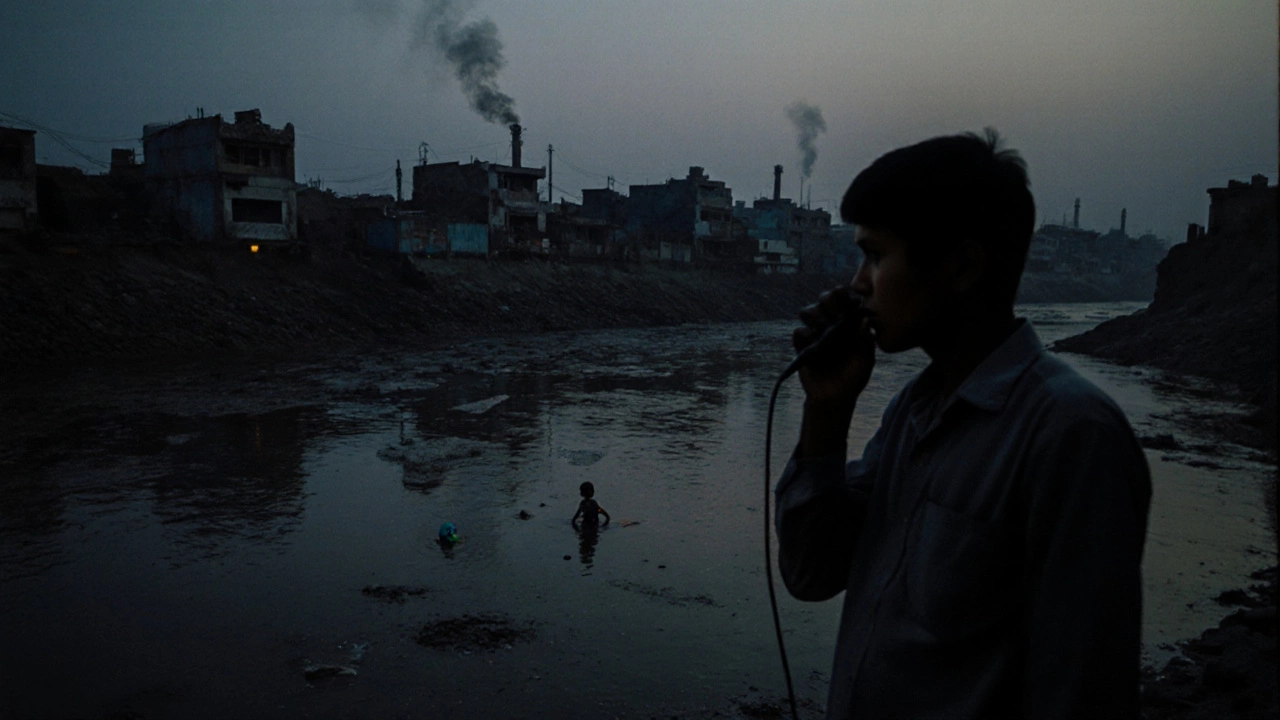
Modern Hindi poets like Agyeya and Nirala used the volta to break tradition. Agyeya’s poem "Nadiya Ke Dwar" starts with a child playing by a river. The volta comes in the third line: "वह नदी आज बहती नहीं, बस याद है"-"That river doesn’t flow anymore, it’s just a memory."
That’s not just sadness. It’s a political statement. The river is gone because of dams, pollution, neglect. The volta turns a personal memory into a cultural loss.
Why the Volta Matters More in India
In cultures where oral poetry is alive, every word counts. A poem isn’t just read-it’s recited, remembered, passed down. If it doesn’t turn, it doesn’t stick.
Think of the chhand in Punjabi folk songs. The first line sets the scene: a farmer walking home at dusk. The second line hits: "पर आज उसका खेत बेच दिया गया"-"But today, his field was sold."
That’s the volta. No explanation. No buildup. Just the truth, dropped like a stone in water. The listener feels it before they understand it.
This is why Indian short poetry doesn’t need long forms. The volta does the work of paragraphs. It’s why a two-line poem can feel heavier than a novel.
Volta vs. Other Poetic Turns
Not every twist is a volta. Some poems use surprise, irony, or rhyme for effect-but those aren’t the same.
A surprise ends with a punchline. A volta changes how you see everything before it.
Here’s a fake example:
She smiled when I asked her out.
Turns out, she was my boss.
That’s a surprise. It’s funny. But it doesn’t transform your understanding of the first line. You still just think: "Oh, awkward!"
Now this:
She smiled when I asked her out.
That smile was the last thing she ever gave me.
Now the smile changes meaning. It’s not just polite-it’s final. The volta turns affection into grief. That’s the difference.
How to Spot a Volta in Indian Poetry
You don’t need to know Sanskrit or Urdu to find it. Just ask yourself:
- Where does the tone shift?
- What word or line makes you pause?
- Does the second half reframe the first?
Look for:
- Sudden silence after a loud line
- A question that wasn’t asked before
- A shift from "I" to "we"
- A natural image turned spiritual
- A simple observation that becomes a warning
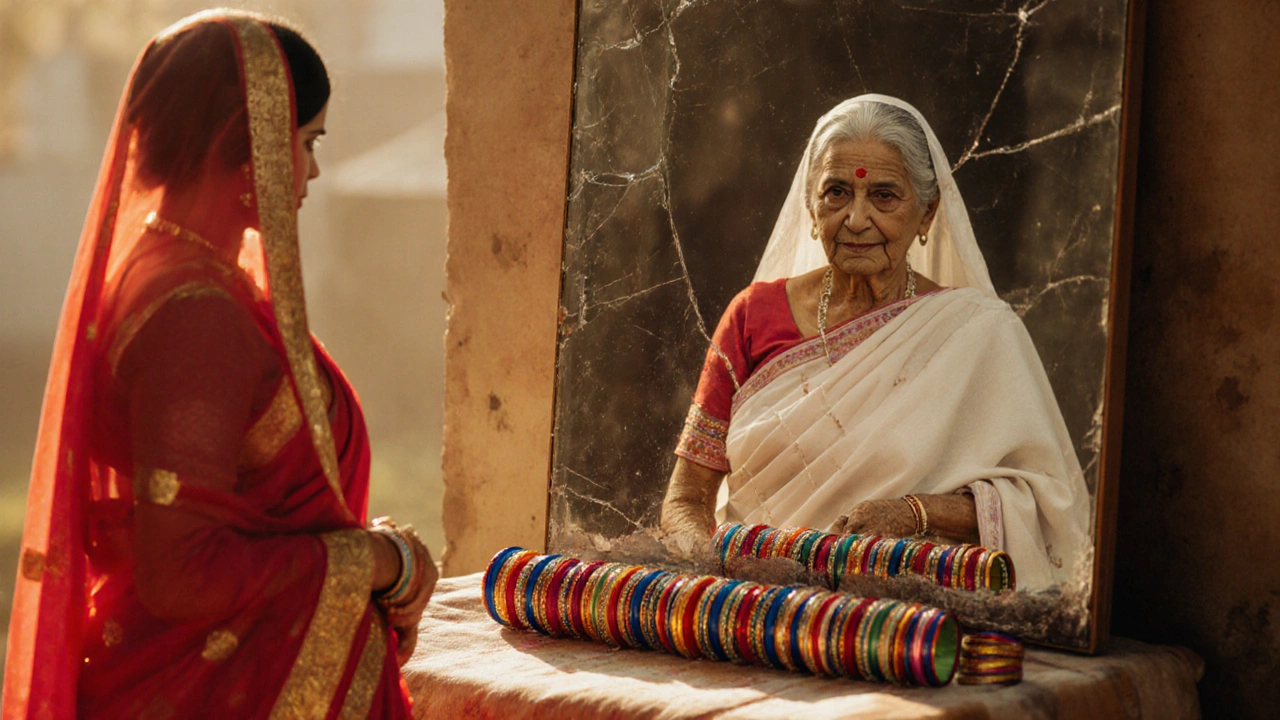
Try reading a poem by Sarojini Naidu: "The Bangle Sellers". The first lines paint colors-silver, blue, red. Then comes the volta: "Daughters and wives of men". Suddenly, the bangles aren’t just jewelry. They’re symbols of a woman’s life. That’s the volta.
Why You Should Care About the Volta
If you write poetry in India-whether in English, Hindi, Tamil, or Punjabi-you’re already using the volta. You just didn’t know its name.
Knowing it helps you sharpen your work. Instead of relying on rhyme or clichés, you can build meaning through structure. You can make a four-line poem that stays with someone for years.
And if you read poetry? The volta turns you from a passive listener into an active participant. You’re not just hearing words-you’re watching a mind change direction.
In a country where poetry lives in rickshaw songs, temple chants, and WhatsApp forwards, the volta is the quiet revolution. It doesn’t shout. It turns. And when it does, everything changes.