Hindi Poetry Structure: Patterns, Forms, and How They Work
When you read a line of Hindi poetry structure, the rhythmic and rhyming framework that shapes traditional Indian verse. Also known as Hindi poetic form, it’s not just about pretty words—it’s about rules that make emotions land harder. Unlike free verse in English, Hindi poetry lives by patterns: meter, rhyme, repetition, and pauses called caesura. These aren’t optional decorations. They’re the bones of the poem. Without them, a shayari loses its pulse. A ghazal loses its soul. And a doha loses its power to stick in your head.
The most common shapes you’ll find are the ghazal, a pair-based form with repeating end rhymes and a signature closing line, the doha, a two-line couplet with strict syllable balance, often used in spiritual or wise sayings, and shayari, a broader term for emotionally charged, rhyming verse, usually in couplets. Each one has its own heartbeat. A ghazal builds like a slow burn—each couplet stands alone but echoes the last. A doha is a punch: two lines, 13-16 syllables, and a truth that hits like a door closing. Shayari? That’s the wild card. It can be romantic, angry, spiritual, or sarcastic—but it always follows rhythm like a rule you can’t break.
These forms didn’t come from books. They came from street corners, wedding halls, and chai stalls. People didn’t write them to be studied—they wrote them to be remembered. To be whispered. To be shouted. The Hindi poetry structure works because it’s designed for the ear, not just the eye. The rhyme doesn’t just sound nice—it makes the line stick. The pause doesn’t just look right—it gives the feeling room to breathe. And the repetition? That’s not lazy. It’s a drumbeat. It’s the sound of a heart beating the same rhythm over and over, trying to say something too big for one line.
What you’ll find below isn’t just a list of poems. It’s a collection of how these structures are used today—by people who still know that a well-placed rhyme can say more than a paragraph. You’ll see how modern WhatsApp statuses borrow from the doha. How love messages copy the ghazal’s layered pain. How one-line quotes steal the shayari’s punch. This isn’t about history. It’s about why these forms still live—in your texts, your captions, your silent thoughts. You don’t need to memorize syllable counts to feel them. But knowing how they’re built? That’s what turns a good line into a lasting one.
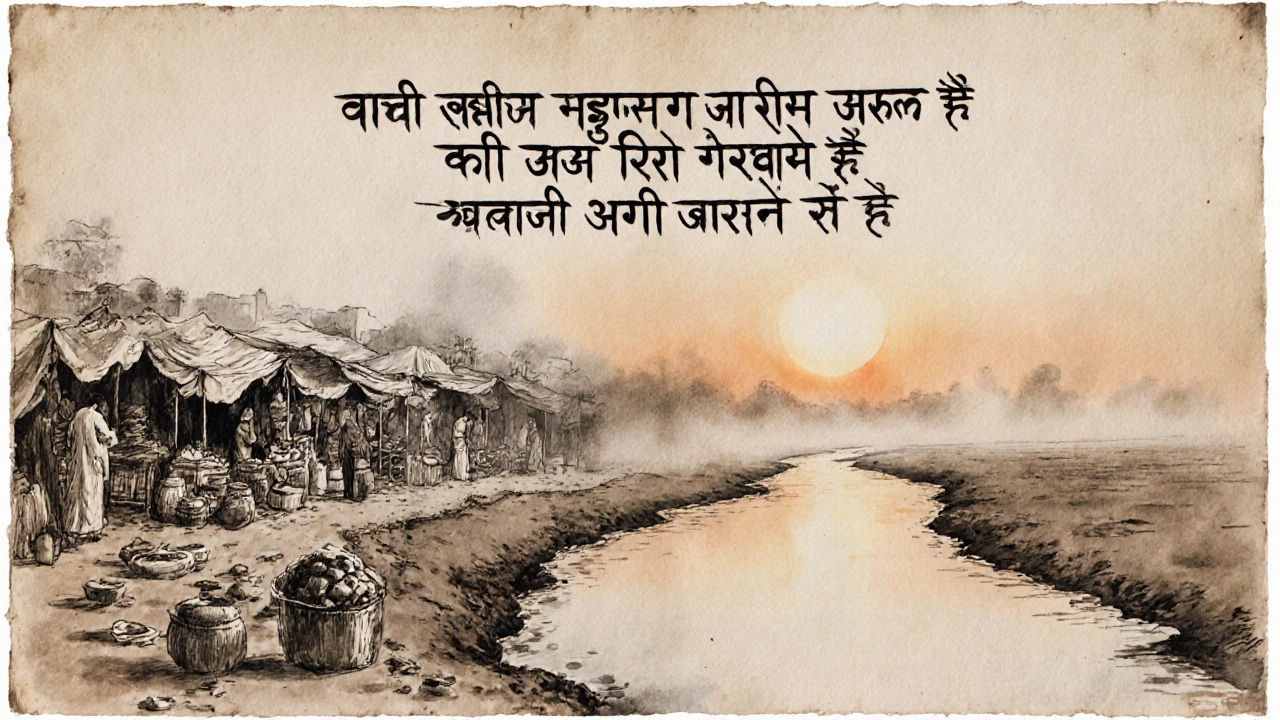
A Volta poem isn't just about structure-it's about the sudden turn that gives Indian short poetry its power. From Kabir's dohas to modern Hindi verses, the volta transforms simple lines into lasting truths.
More