Who Was a Famously Bad Poet? Exploring Infamous Verses & Literary Fails
 Mar, 31 2026
Have you ever heard a poem so clunky it made you cringe? Sometimes the loudest voices in history produce the weakest rhymes. We tend to protect the reputations of great artists, but history holds space for those who tried and stumbled spectacularly. There is something oddly captivating about watching powerful figures struggle with iambic pentameter or fail to find the right metaphor.
When we talk about famous bad poets, historical or public figures whose literary attempts are widely criticized. we aren't just looking at amateurs. We are digging through the archives of presidents, queens, and intellectuals who left behind verses that time has marked with a grade of 'D' or lower. It forces us to ask: what actually makes poetry good, and why does failure hurt more when the author is powerful?
The President Who Wrote Blank Verse
You cannot discuss this topic without mentioning George W. Bush, The 43rd President of the United States known for publishing poetry collections. He served two terms leading a superpower, yet his legacy includes two books of poetry published after his presidency. Critics didn't hold back. His collection, Promises Kept, contains lines that read more like greeting card filler than serious literature.
Consider the rhythm issues. Good poetry relies on a specific cadence, often called Rhyme Scheme, A pattern of rhymes at the ends of lines. Bush frequently struggled with this. He would force a rhyme where the meaning suffered. For instance, he wrote about love and war in ways that felt disjointed to professional reviewers. The New York Times Review once noted that his metaphors fell flat, lacking the depth expected from someone occupying the Oval Office. It created a strange dissonance between his real-world power and his creative vulnerability.
This raises a question about accessibility. If the former leader of the free world can write poetry that feels unpolished, what does that mean for the rest of us? It democratizes the failure. You realize that technical skill in art isn't inherited with office or status. It requires study, patience, and an ear for sound that money cannot buy.
Royal Rhymes That Missed the Mark
Across the ocean, the Victorian era produced its own share of unintentional comedy. Queen Victoria, Monarch of the United Kingdom who wrote personal verses. The Empress of India wrote hundreds of pages of private verse. Some were heartfelt tributes to her husband, Prince Albert. Others, however, were steeped in sentimentality that modern readers find difficult to stomach.
We have to understand the context. She wrote during the height of the British Empire. Her poetry was often didactic-meant to teach morals rather than stir emotions. When she penned lines about death and loss, the language was overly ornate. She relied heavily on Imagery, Descriptive language intended to appeal to the senses. but the images were outdated even in her time. A critic might say she confused complexity with depth. Just because you use big words doesn't mean the poem lands.
It also highlights how class influenced reception. Because she was the Queen, people initially praised her work. Once the monarchy stepped down from absolute reverence, the critique sharpened. Now, historians view her work as an interesting artifact of her mind, not necessarily masterpieces of the written word.
The Indian Context: Politics and Poetry
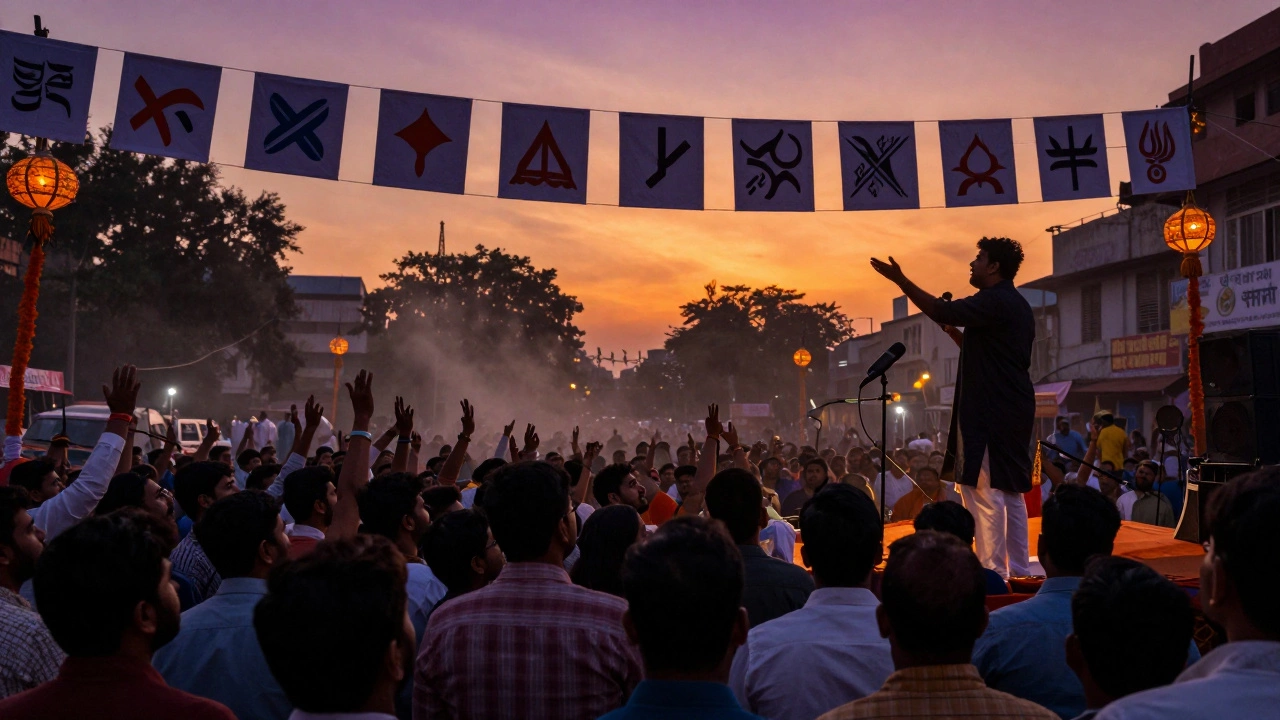
In my neighborhood here in Delhi, we have our own version of this phenomenon. Political rallies are not complete without the recitation of verses. Leaders here often claim to be scholars of Hindi Shayari, A popular form of Urdu/Hindi poetry recited at social events. While traditional poets like Ghalib remain untouchable gods of the genre, modern politicians attempt to craft their own couplets during speeches.
Often, these attempts fall into the trap of propaganda disguised as art. They lack the necessary pain or joy found in authentic Urdu Poetry, A sophisticated literary tradition emphasizing emotion and philosophy. Purists in the Delhi ghazal circles shake their heads. The meter (wazan) is off. The riyaz (rhyme) is forced. Yet, the crowd cheers. Why? Because they hear the politician, not the poet.
This distinction matters. When we discuss badly written poetry in India, we must separate genuine artistic failure from calculated performance. Sometimes a bad poem serves a political purpose better than a good one because it is simple enough for a mass audience to memorize. Does this disqualify it from being art? Absolutely. But it succeeds in communication. This is a crucial difference in how we judge quality versus utility.
| Poet | Primary Criticism | Historical Status |
|---|---|---|
| George W. Bush | Lack of metrical structure | Famous Leader |
| Queen Victoria | Overly sentimental | Monarch |
| Political Figures | Propaganda over substance | Public Officials |
| Robert Southey | Middlebrow quality | Poet Laureate |
Is "Bad" Poetry Subjective?
Here is the uncomfortable truth: labeling poetry as bad is often a matter of taste. Literary Criticism, The systematic study and evaluation of literature. However, there are technical standards. A poem needs coherence. It needs to respect its own internal logic. When you read a collection from a figure like Robert Southey, Poet Laureate whose work Samuel Johnson and others critiqued, you see a decline in reputation over centuries. What once seemed brilliant now looks tedious.
Time acts as a filter. If a poem survives decades, it usually proves its worth. If it gets forgotten or mocked, it joins the list of Literary Canon, The body of works considered important and authoritative. But remember, the canon changes. Walt Whitman wasn't always revered. Virginia Woolf was once ignored.
So, when we mock the bad poets today, are we doing them a disservice? Maybe. Or maybe we are learning what to avoid in our own writing. Every bad line teaches you about the fragility of meaning. If you strip away the prestige of the author, you are left with raw language. And raw language, without care, fails to move us.
Lessons from the Mistakes
As someone who spends time reading around the cafes in Khan Market, I see young writers trying to find their voice. They often look up to masters. But studying failures is equally vital. Avoid the temptation of forcing a rhyme scheme. Let the rhythm breathe naturally.
Do not write for the sake of filling a page. Write because the silence is too loud. Even famous leaders got it wrong because they treated poetry as a hobby or a flex rather than a discipline. Respect the craft. If you don't have the technical skill, acknowledge it.
Key Takeaways
- Famous bad poets often hold positions of power unrelated to artistic talent.
- Technical flaws like broken meter reveal why certain verses fail.
- Subjectivity plays a huge role in how we judge historical verses.
- Local political rhetoric often masquerades as high-quality Urdu or Hindi poetry.
Who is considered the worst poet in history?
There is no single official "worst" poet, as taste varies. However, figures like George W. Bush and Robert Southey are frequently cited due to technical weaknesses in meter and style recognized by major critics.
Did Queen Victoria write good poetry?
Her work is generally viewed as sentimental and amateurish by modern standards. While historically significant for insight into her personal life, it lacks the technical mastery of professional Victorian poets like Tennyson.
Why do people publish bad poetry?
Motivations vary from personal catharsis to political branding. Many famous figures write to express grief or maintain public image, regardless of the artistic quality of the output.
Can a poet be famous for writing bad verses?
Yes, fame can lead to publication. If an individual has a massive platform, their work gets noticed simply because of their identity, not necessarily the merit of the writing itself.
How do you identify bad poetry?
Look for forced rhymes, inconsistent rhythm, clichés, and lack of genuine emotional resonance. If the poem tells you how to feel instead of making you feel it, it is often structurally weak.
Final Thoughts on Artistic Failure
We should stop treating these mistakes as scandals. They are just part of the vast landscape of human expression. Seeing a titan stumble gives us permission to try ourselves. So, pick up a pen. Even if your first draft resembles a political slogan, keep going. The only way to stop being a bad poet is to keep writing until you aren't.