What is the Self in Indian Thought? A Guide to Atman and Brahman
 Sep, 22 2026
The Self Explorer: Atman & Brahman Interactive Guide
Advaita Vedanta
"Tat Tvam Asi" (That Thou Art)
View on Self
The Self (Atman) is identical to Brahman (Universal Reality). Individuality is an illusion (Maya) caused by ignorance.
Goal of Life
Moksha: Liberation through knowledge (Jnana). Realizing you were never separate from the source.
The Hierarchy of Experience
In most schools, suffering arises when the Witness identifies with the Ego or Body instead of the Atman/Brahman.
Practical Application: Detached Observation
Indian thought insists on direct experience. Try this exercise to shift from "I am angry" to "Anger is arising."
Before
After
You wake up every morning, look in the mirror, and see a face. You have a name, a job, a history, and a body that aches when it rains. Most of us assume this collection of memories and flesh is "you." But if you scratch beneath the surface of Indian thought, you’ll find a radical claim: that what you think of as "you" is mostly an illusion.
This isn’t just abstract poetry for monks sitting in caves. It’s a practical framework that has shaped how billions of people understand their existence for thousands of years. The question "Who am I?" isn’t treated here as a philosophical riddle to be solved in a university lecture hall. It’s treated as the primary problem of human suffering. If you get this wrong, you suffer. If you get it right, you’re free. Let’s unpack what the self actually is in the eyes of India’s great thinkers, without the confusing jargon.
The Core Conflict: Body vs. Witness
To understand the Indian view of the self, you first have to accept a distinction that Western psychology often blurs. In many modern contexts, we equate our thoughts and feelings with our identity. If I feel angry, I say, "I am angry." In classical Advaita Vedanta and Yoga traditions, this is considered a fundamental error.
Think of it like watching a movie. You see the hero fall in love, lose a battle, or die. Your heart races. You cry. But are you the hero? No. You are the person sitting in the dark theater, watching the screen. In Indian metaphysics, your body, your mind, and your ego are the movie. The real "You" is the Witness Consciousness (often called the Sakshi) that observes the drama but remains untouched by it.
This shift changes everything. If you identify with the movie, you are subject to its plot twists-aging, sickness, loss. If you identify with the witness, those things happen to the character, not to you. This is the starting point of almost all Indian spiritual inquiry.
Atman: The Innermost Core
If the body and mind aren't the self, what is left? The answer most schools of Indian philosophy offer is Atman. Often translated loosely as "soul," this translation misses the mark. In Western theology, the soul is often seen as a personal entity created by God, distinct from others. Atman is different. It is described as pure consciousness, unchanging, eternal, and infinite.
The Upanishads, the ancient texts that form the foundation of Hindu philosophy, use the phrase Tat Tvam Asi (That Thou Art) to describe the nature of Atman. It suggests that the core of your being is identical to the ultimate reality of the universe. This isn't about becoming powerful; it's about recognizing that you were never separate from the source in the first place.
| School of Thought | View on Self (Atman) | Goal of Life | Key Metaphor |
|---|---|---|---|
| Advaita Vedanta | The Self is identical to Brahman (Universal Reality). Individuality is illusion (Maya). | Moksha (Liberation through knowledge) | A drop of water realizing it is the ocean. |
| Dvaita Vedanta | The Self is distinct from God but eternally dependent on Him. | Bhakti (Devotion and service to God) | A servant lovingly serving the King. |
| Buddhism | Anatta (No-Self). There is no permanent, unchanging essence. | Nirvana (Cessation of craving/suffering) | A flame passing from one candle to another. |
| Jainism | The Self (Jiva) is individual but can become infinite (Siddha) by shedding karma. | Kevala Jnana (Omniscience/Liberation) | A diamond covered in mud, cleaned to shine. |
Brahman: The Universal Background
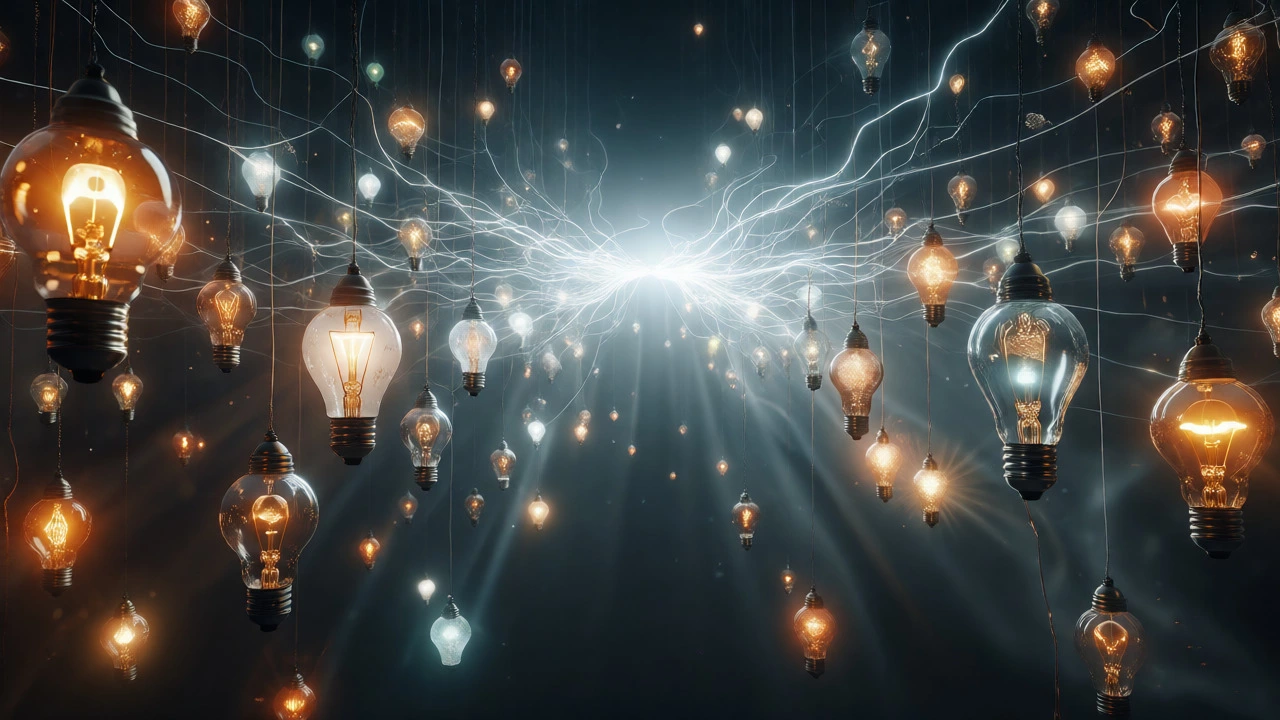
You can’t talk about the individual self in Indian thought without talking about Brahman. While Atman is the subjective experience of consciousness, Brahman is the objective ground of all existence. Imagine electricity. Every lightbulb in your house looks different-one is a chandelier, one is a desk lamp, one is a streetlight. They have different shapes, locations, and purposes. But they are all powered by the same invisible current.
In this analogy, the bulbs are individual selves (Atmans), and the electricity is Brahman. When you turn off the switch, the bulb doesn't cease to exist, but the specific function of "lighting this room" ends. Similarly, when the body dies, the individual personality dissolves, but the underlying consciousness returns to the universal source. For non-dualists, there was never really a separation to begin with. The wave thinks it is separate from the ocean, but it is always just water.
The Illusion of Ego (Ahamkara)
If the true self is infinite and peaceful, why do we feel so limited, anxious, and small? Indian psychology points to Ahamkara, or the ego-maker. This is the mental faculty that claims ownership over experiences. It says, "This is my body," "This is my opinion," "This is my life story."
The ego acts like a filter. It takes the raw data of experience and colors it with preference and aversion. You don't just see a snake; you see a threat. You don't just hear music; you hear something beautiful. This filtering creates a sense of duality: me versus the world. Indian thought argues that this dualistic perception is the root of fear. As long as you believe you are a separate fragment fighting against a hostile universe, you will be anxious. Realizing the self means seeing through the ego's tricks, not destroying them, but understanding their mechanical nature.
Practical Application: How to Experience This
Reading about these concepts is fine, but Indian traditions insist on direct experience. You can't know the taste of sugar by reading a chemistry textbook; you have to eat it. So, how do you apply this view of the self in daily life?
- Practice Detached Observation: Next time you feel anger rising, pause. Instead of saying "I am angry," try thinking, "Anger is arising in the mind." Notice how this slight linguistic shift creates distance between you and the emotion.
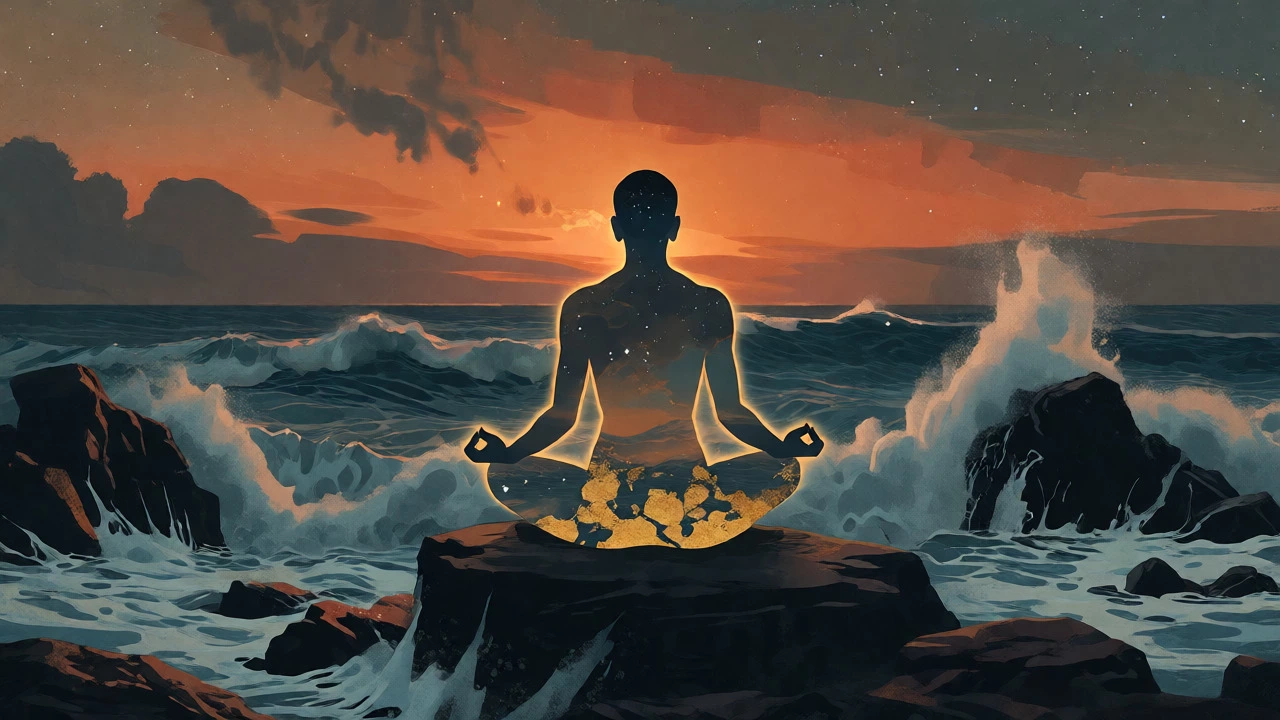
- Meditation on the Witness: Sit quietly for ten minutes. Watch your thoughts pass like clouds. Don't engage with them. Just watch. Who is watching? That awareness is closer to your true self than any thought you had during the session.
- Self-Inquiry (Atma Vichara): Ask yourself, "Who is experiencing this pain?" Trace the feeling back to its source. Keep asking until you hit a wall where words fail. That silence is the pointer toward the self.
It’s not about escaping reality. It’s about engaging with it more clearly. When you stop defending a fragile ego, you actually become more resilient. You can handle criticism better because you know it hits the mask, not the face.
Why This Matters Today
We live in an era of identity crisis. Social media encourages us to curate a persona, constantly worrying about how we are perceived. We define ourselves by our jobs, our political affiliations, or our consumer choices. When those change-or when we lose them-we feel like we are losing ourselves.
Indian thought offers a stable anchor. If your identity is rooted in conscious awareness rather than external achievements, you remain steady regardless of external chaos. This isn't passive resignation. On the contrary, many great activists and leaders in India, from Mahatma Gandhi to contemporary thinkers, drew strength from this concept. They acted fiercely in the world while remaining internally detached from the outcome. They served humanity because they saw the divine self in everyone else.
Understanding the self in Indian thought isn't about adopting a new religion. It's about updating your operating system. It challenges you to look past the avatar and find the user. It asks you to consider that the peace you are searching for outside might be the very thing doing the searching.
Is the concept of Atman the same as the soul in Christianity?
Not exactly. While both refer to an immaterial aspect of a person, the Christian soul is typically viewed as a unique creation of God, retaining individual identity forever. Atman, particularly in Advaita Vedanta, is seen as identical to the universal consciousness (Brahman). Individuality is considered a temporary illusion caused by ignorance, whereas the soul's individuality is often preserved in Christian eschatology.
Do all Indian philosophies agree that the self exists?
No. Buddhism, which originated in India, famously teaches the doctrine of Anatta (No-Self). Buddhists argue that what we call the "self" is just a bundle of changing physical and mental processes (skandhas) with no permanent core. This contrasts sharply with Hindu schools like Vedanta, which affirm the existence of an eternal Atman.
How does Karma relate to the self?
Karma is the law of cause and effect that binds the individual self to the cycle of rebirth. Actions performed with the ego (the sense of "I am doing this") generate karmic residues. These residues shape future experiences. Liberation involves acting without attachment to results, thereby stopping the accumulation of new karma and eventually burning off old karma.
Can science prove the existence of Atman?
Science currently studies the brain and observable phenomena. Atman is defined as the observer itself, not an object to be observed. Therefore, standard scientific instruments cannot measure it directly. However, neuroscience explores the "hard problem of consciousness," which parallels the inquiry into the nature of the self. Some researchers suggest that consciousness may be fundamental to the universe, echoing ideas found in Indian monism.
What is Maya in relation to the self?
Maya is often translated as "illusion," but it more accurately means "creative power" or "appearance." It is the force that makes the one, formless Brahman appear as the many, diverse forms of the world. For the individual self, Maya creates the illusion of separateness and material reality. Seeing through Maya means recognizing the unity behind diversity.