What Is the Indian Way of Life? A Real Look at Daily Rhythms, Values, and Traditions
 Dec, 4 2025
Indian Cultural Values Quiz
Test your understanding of key cultural elements from the article about the Indian way of life.
Quiz Results
Score: 0/5The Indian way of life isn’t something you find in a book or a travel brochure. It’s in the smell of turmeric and cumin rising from a kitchen at 6 a.m., in the way a grandmother folds a prayer cloth before sunrise, in the quiet pause before a meal when everyone says a silent thanks. It’s not about grand rituals alone-it’s the small, repeated acts that stitch together a way of being that’s lived, not just talked about.
Family Comes First-No Exceptions
In India, family isn’t just a group of people you share blood with. It’s your safety net, your identity, and your responsibility. Multi-generational homes aren’t rare-they’re the norm. Grandparents raise grandchildren. Siblings support each other’s education. Adult children often live with parents even after marriage, not out of lack of independence, but because care is seen as a duty, not a burden.
When someone gets sick, the whole family drops everything. When a cousin gets engaged, the whole neighborhood shows up. There’s no such thing as "that’s not my problem." If you’re family, you’re in. This isn’t about control-it’s about belonging. Studies show that over 80% of Indians live in households with three or more generations under one roof. That kind of closeness shapes how people think, act, and heal.
Respect Isn’t Politeness-It’s a System
Respect in India isn’t just saying "please" and "thank you." It’s touching an elder’s feet to ask for blessings. It’s removing shoes before entering a home or temple. It’s using "aap" instead of "tum" when speaking to someone older or unfamiliar. These aren’t customs you follow because you were told to-they’re habits you absorb from childhood.
Even in cities like Mumbai or Bangalore, you’ll see young professionals bowing slightly to their office cleaner or driver before asking for help. It’s not performative. It’s ingrained. This system of respect isn’t about hierarchy-it’s about recognizing that everyone carries their own weight in the world. A teacher, a street vendor, a priest-they all hold space in the social fabric. Disrespect isn’t rude; it’s destabilizing.
Food Is More Than Fuel
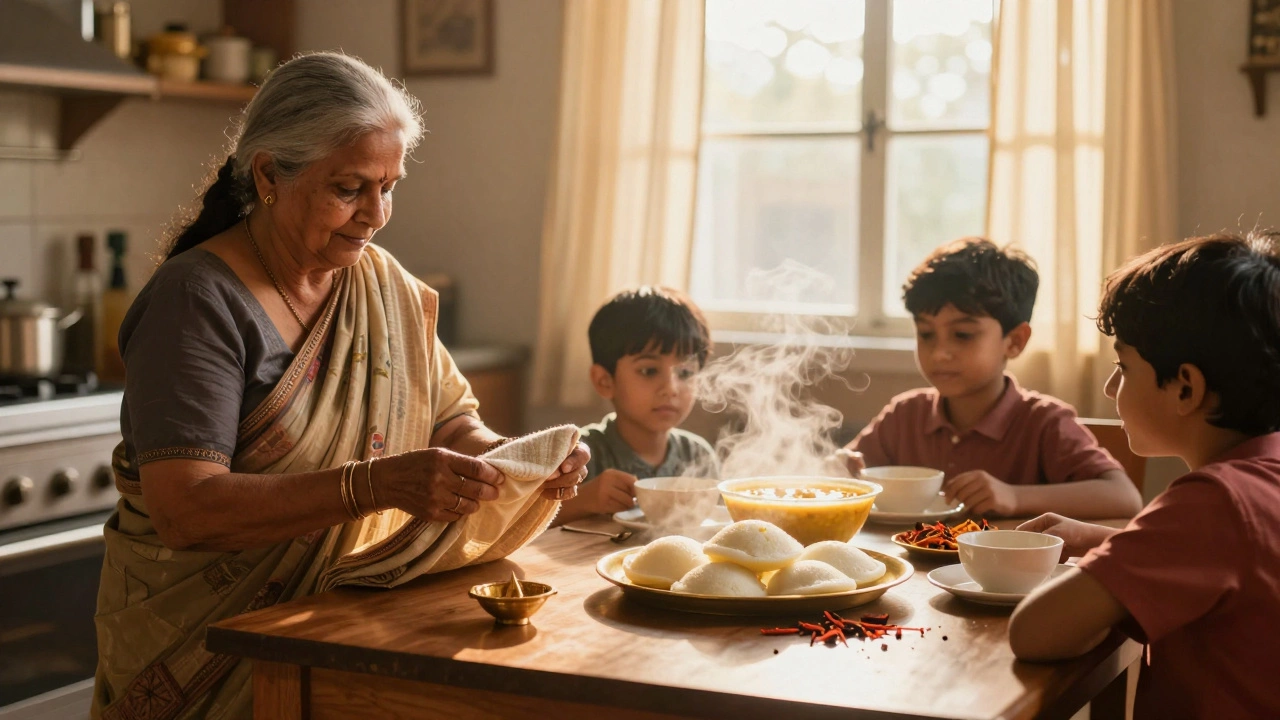
Every meal in India is a ritual. Breakfast isn’t just coffee and toast. It’s idli with coconut chutney, or paratha with butter and pickle. Lunch isn’t a sandwich-it’s rice, dal, vegetables, yogurt, and a spoonful of pickle, eaten with your hands. Dinner isn’t rushed. It’s shared. And no one eats alone.
Food is tied to seasons, festivals, and even moods. During monsoon, you eat warm, spicy khichdi to fight the chill. During Diwali, you make sweets to give away. When someone is grieving, you bring them plain rice and yogurt-not because it’s fancy, but because it’s gentle on the soul.
Vegetarianism isn’t a trend here-it’s a choice shaped by religion, environment, and tradition. Over 38% of Indians are vegetarian, the highest percentage in the world. But even meat-eaters follow rules: no beef, no pork in many homes, and meals often begin with a prayer. Food isn’t just eaten-it’s honored.
Spirituality Isn’t Separate From Life
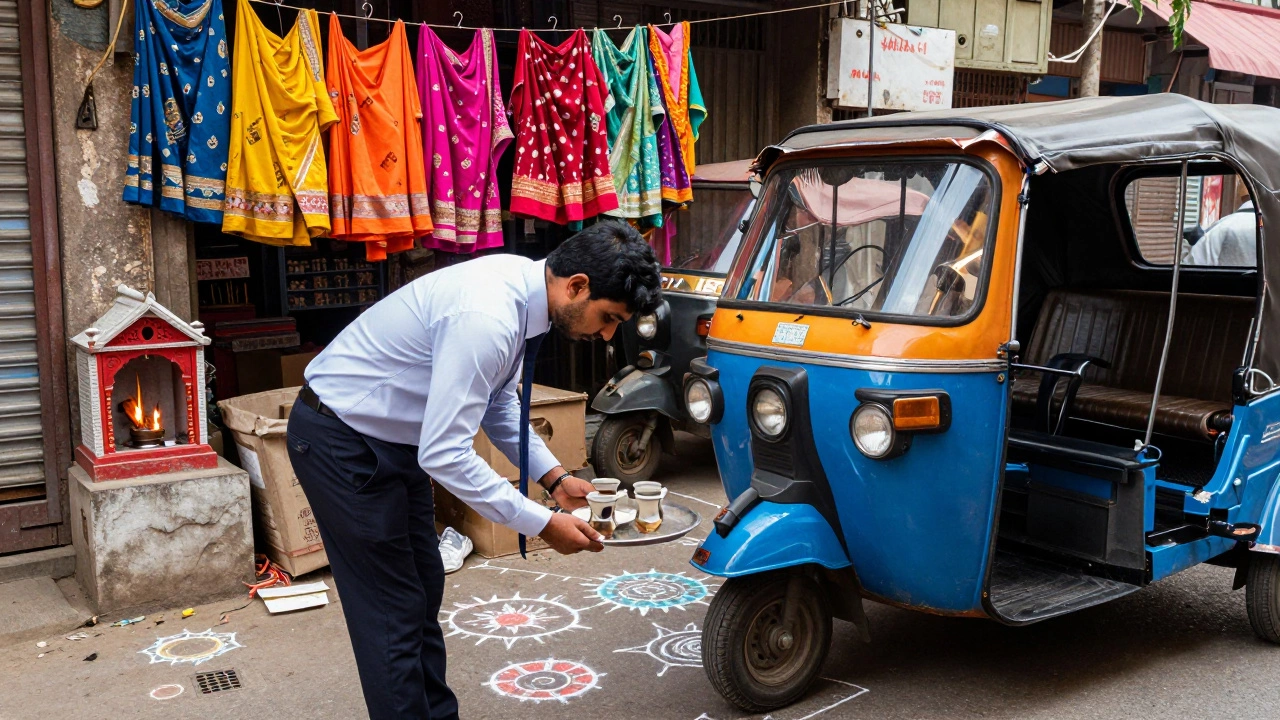
You won’t find a clear line between "religious" and "everyday" in India. Prayer isn’t confined to temples. It’s in the morning chant before brushing teeth. It’s the small shrine in the corner of the living room. It’s the woman who lights a diya before leaving for work, just to ask for a safe day.
People don’t wait for Sunday to connect with something bigger. They do it daily. A student prays before an exam. A driver recites a mantra before hitting the road. A mother whispers a verse to her child before sleep. Spirituality here isn’t about dogma-it’s about grounding. It’s the quiet voice that says, "This too shall pass," when things get hard.
Yoga and meditation aren’t trendy fitness routines. They’re survival tools. In a country where stress is high and resources are tight, these practices help people stay calm, focused, and present. You don’t need a studio or a mat. You just need a quiet corner and five minutes.
Community Over Individualism
India doesn’t celebrate the lone hero. It celebrates the person who lifts others. Success isn’t measured by how much you have, but by how many you help. A man who builds a well in his village is remembered longer than a man who buys a luxury car.
Neighborhoods function like extended families. If your fridge runs out of milk, your neighbor gives you some. If your child needs a tutor, someone in the building volunteers. If you lose your job, people don’t ask for proof-they just start sending job leads.
This isn’t charity. It’s reciprocity. You help now, so you’ll be helped later. It’s a system that works because everyone is in it together. In rural India, this is called "sabka saath, sabka vikas"-together with all, growth for all. Even in cities, you see it in the way people share umbrellas in the rain or split a single auto-rickshaw fare with a stranger.
Patience Isn’t Passive-It’s Strategic
If you’ve ever waited in line at a government office in India, you know patience isn’t a virtue here-it’s a necessity. Bureaucracy moves slowly. Power cuts happen. Trains are late. But people don’t scream. They wait. And they keep smiling.
This patience isn’t weakness. It’s wisdom. In a place where so much is out of your control, anger doesn’t fix anything. What works is staying calm, adapting, and finding another way. A mother waits three hours for her child’s medicine. A shopkeeper waits for the electricity to come back before closing. A student waits months for exam results. They don’t give up. They wait-and keep going.
This mindset shapes how Indians approach big goals. Success isn’t rushed. It’s built slowly, like a temple. One brick at a time. One day at a time.
The Beauty in Imperfection
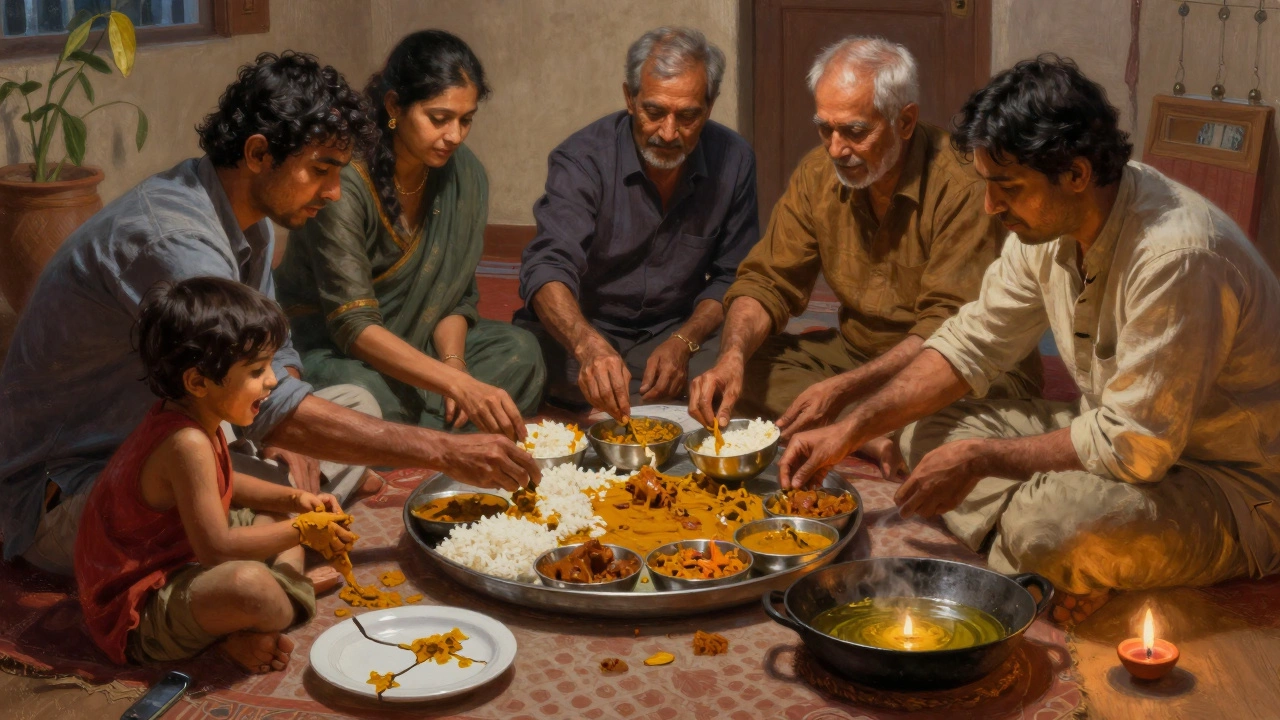
Indian life doesn’t try to be perfect. It tries to be real. Homes are cluttered. Clothes are mismatched. Meals are uneven. But they’re full of love. You won’t find Instagram-perfect kitchens here-you’ll find kitchens where five people cook together, flour flies everywhere, and laughter drowns out the sizzle of oil.
There’s no pressure to look a certain way. No obsession with "clean" or "minimalist." There’s color, noise, chaos-and deep meaning. A torn sari is mended. A broken plate is glued back. A child’s drawing is pinned to the wall. Imperfection isn’t something to hide. It’s proof that you’re alive, trying, and still here.
What the World Gets Wrong
People outside India often see the country as either "spiritual" or "poor." But that’s not the full picture. The Indian way of life isn’t about poverty or enlightenment. It’s about balance. It’s about finding joy in small things, strength in community, and peace in routine.
It’s not about rejecting modernity. It’s about choosing what fits. A young woman in Delhi might wear a saree to work and then hop on a scooter to meet friends. A farmer in Punjab uses a smartphone to check crop prices and still prays to the earth before planting.
The Indian way of life doesn’t ask you to choose between tradition and progress. It asks you to carry both.
Living It, Not Just Talking About It
If you want to understand the Indian way of life, don’t read about it. Live it for a week. Wake up early. Eat with your hands. Sit quietly before you speak. Help someone without being asked. Wait without complaining. Say "thank you" to the person who cleans your floor.
It’s not about adopting rituals. It’s about adopting a rhythm. A rhythm that says: you are part of something bigger. Your actions matter. Your presence is enough. And even in chaos, there is harmony-if you know where to look.