What is the Indian Philosophy of Dreams? Understanding Svapna and Maya
 Oct, 2 2026
The Four States of Consciousness Explorer
Click on each state of consciousness below to explore its characteristics, source of experience, and philosophical status according to ancient Indian thought.
Waking State (Jagrat)
Empirically RealSource of Experience
External World via Senses
Philosophical Description
This is your waking state. Your eyes are open, your senses are engaged with the external world, and you feel like a separate individual interacting with objects. You see a tree, you touch water, you hear traffic. It feels solid. It feels undeniable.
Reflection Question
If the dream world feels real while you are in it, what does that suggest about the nature of reality in the waking state?
You wake up. The nightmare about falling is gone. You check your phone. It’s real. But what if I told you that according to ancient Indian thinkers, the "real" world you’re looking at right now has the same ontological status as that dream? That sounds crazy, doesn’t it? Yet, this isn’t just a poetic metaphor. It’s the core of one of the most sophisticated philosophical systems in human history.
If you’ve ever wondered why Indian philosophy of dreams treats sleeping and waking states with such suspicious similarity, you’re asking the right question. This isn’t about Freud or Jung decoding symbols. It’s about understanding the nature of reality itself. Let’s break down how sages from thousands of years ago mapped out consciousness long before modern neuroscience picked up its microscopes.
The Four States of Consciousness
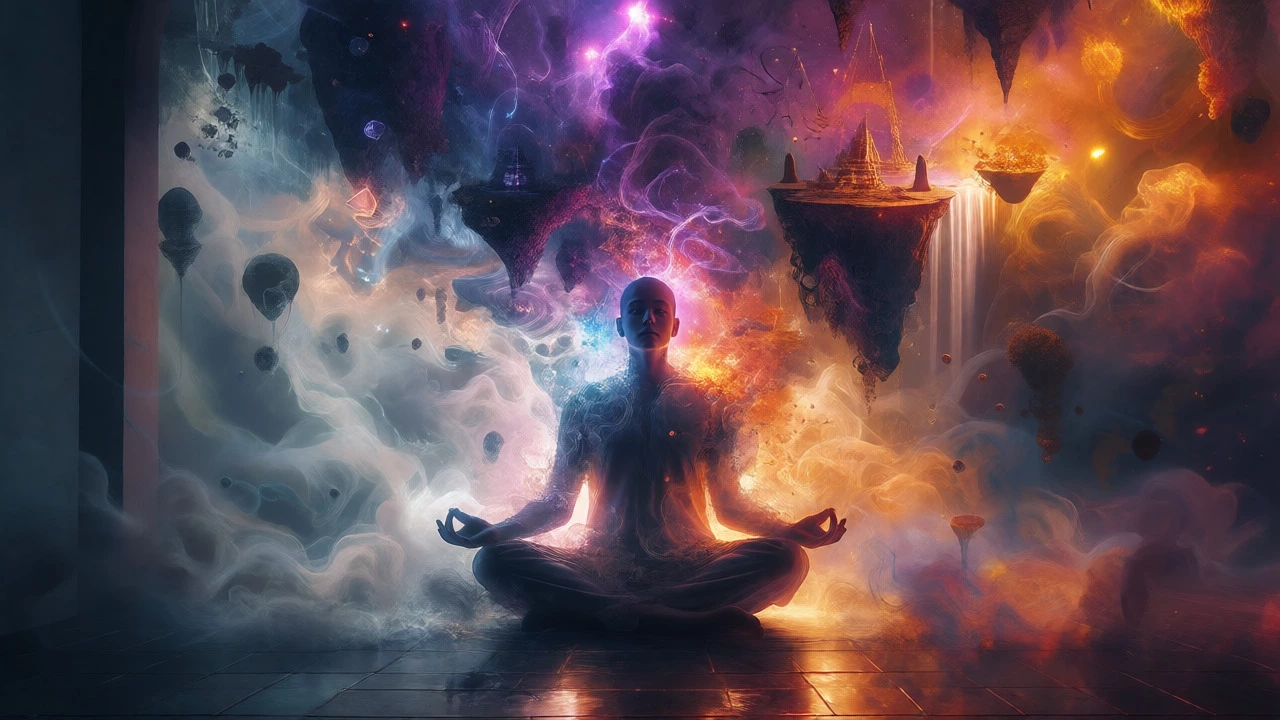
Western psychology often draws a hard line between being awake and being asleep. Indian philosophy, specifically within the tradition of Advaita Vedanta and the Upanishads, sees consciousness as a continuum with four distinct levels. Think of it like a spectrum of light, not a switch that flips on and off.
The first state is Jagrat. This is your waking state. Your eyes are open, your senses are engaged with the external world, and you feel like a separate individual interacting with objects. You see a tree, you touch water, you hear traffic. It feels solid. It feels undeniable.
The second state is Svapna. This is the dream state. Here’s where things get interesting. In Svapna, your physical senses shut down. You aren’t seeing the tree with your physical eyes. You aren’t touching the water with your physical skin. And yet, you experience fear, joy, hunger, and pain. Where does this experience come from? The mind creates the entire scenario. The subject (you) and the object (the dream world) are both made of the same stuff: mental impressions.
| State | Sanskrit Name | Source of Experience | Reality Status |
|---|---|---|---|
| Waking | Jagrat | External World via Senses | Empirically Real (Vyavaharika) |
| Dreaming | Svapna | Mind via Impressions | Subjectively Real (Pratibhasika) |
| Deep Sleep | Sushupti | No Object / Pure Potential | Absence of Duality |
| Turiya | Turiya | Consciousness Itself | Absolute Reality (Paramarthika) |
The third state is Sushupti, or deep sleep. No dreams here. No thoughts. No "I" feeling. Just blankness. When you wake up from this, you say, "I slept well." How do you know? Because the awareness that was present during the blankness remembers the absence of content. This proves that awareness exists even when there is no object to perceive.
And then there’s the fourth: Turiya. Literally meaning "the fourth," this is the background screen upon which the other three movies play. It’s pure consciousness, unchanging and witness-like. You don’t "do" Turiya; you are Turiya.
Why Waking Life is Also a Dream
Here is the controversial bit. If the dream world is created by the mind and feels real while you are in it, why is the waking world any different? According to the sage Gaudapada in the Mandukya Karika, the only difference is duration and consensus. The dream ends when you wake up. The waking world ends when you die-or so we think. But until then, both are experiences generated within consciousness.
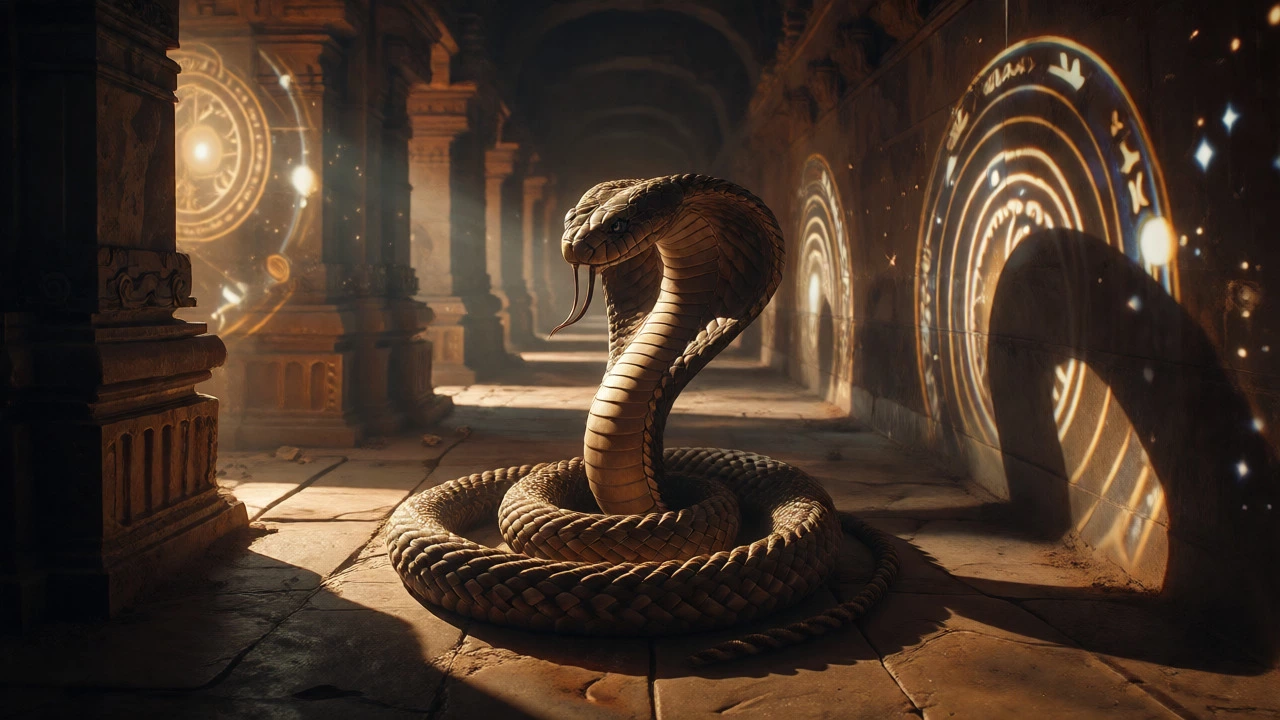
This leads us to the concept of Maya is the cosmic illusion or creative power that makes the non-dual Brahman appear as the diverse universe. Maya isn’t saying the world doesn’t exist. It’s saying the world isn’t what it appears to be. It’s a projection. Just as a rope looks like a snake in dim light, the universe looks like separate, independent objects because of our ignorance (Avidya). Once the light of knowledge shines, you see the rope. The snake never existed independently; it was always just rope.
So, when an Indian philosopher asks, "Is this real?", they aren’t asking if you can kick a stone. They are asking: Is this permanent? Is this independent of my consciousness? If the answer is no, it’s part of the dream.
Yogic Nidra: Lucidity Before Enlightenment
You might have heard of lucid dreaming-knowing you’re dreaming while inside the dream. In Tibetan Buddhism and certain schools of Yoga, this practice is called Milam or Yoga Nidra. It’s not just for fun. It’s training.
Think about it. If you can realize the dream is a dream while you are dreaming, you weaken the grip of illusion. You stop reacting to the monster with terror because you know it’s made of your own mind. Apply this logic to waking life. If you can see the stress of a deadline, the anger at a rude driver, or the desire for a new car as "dream-stuff," you gain freedom. You become the player, not the puppet.
Swami Vivekananda, a key figure in introducing these ideas to the West, often used the analogy of the actor. An actor plays a villain, gets hated by the audience, but knows he is not the villain. He goes home and hugs his family. Similarly, the soul (Atman) plays the role of the ego in the drama of life. The suffering is real to the character, but not to the actor.
Scientific Parallels: What Neuroscience Says
It’s fascinating to see how modern science echoes these ancient insights. Neuroscientists confirm that during REM sleep, the visual cortex lights up just as it does when you look at a physical object. To your brain, a dreamed tiger is neurologically similar to a real tiger. The amygdala (fear center) activates. Your heart races. You sweat.
Furthermore, studies on "reality testing" show that our brains construct reality rather than passively receiving it. We don’t see the world as it is; we see it as we are. This aligns perfectly with the Vedantic idea that the world is a projection of the observer’s mind (Manas). The boundary between internal imagination and external perception is blurrier than we admit.
Even quantum physics throws a curveball. The observer effect suggests that particles behave differently when measured. While physicists debate the interpretation, philosophers smile. For centuries, Indian thought has argued that consciousness is primary, and matter is secondary. The dream isn’t happening in the brain; the brain is happening in the dream of consciousness.
Practical Takeaways for Daily Life
So, what do you do with this? Do you stop working? Stop loving? Not necessarily. The goal isn’t nihilism. It’s liberation (Moksha). Here is how you apply the philosophy of dreams without checking out of life:
- Practice Detachment: When something bad happens, remind yourself, "This is part of the dream." It reduces the emotional spike. You still act, but you aren’t crushed by the outcome.
- Question Assumptions: Are you angry because of the event, or because of your story about the event? The story is the dream. Change the story, change the experience.
- Observe the Transition: Notice the moment you fall asleep. Try to maintain awareness as the body shuts down. This trains you to recognize the nature of consciousness.
- Enjoy the Play: If life is a dream, make it a beautiful one. Kindness, creativity, and love are the best ways to curate your dream.
Remember, calling life a dream doesn’t mean it’s fake. It means it’s malleable. You have more agency than you think. The script isn’t written in stone; it’s written in mist.
Frequently Asked Questions
Does Indian philosophy believe dreams predict the future?
Not primarily. While some folk traditions look for omens, classical Indian philosophy (like Vedanta) views dreams mostly as reflections of past impressions (samskaras) and current mental states. They are seen as less real than waking life, serving as tools for self-inquiry rather than prophecy.
What is the difference between Maya and Illusion?
Maya is often translated as illusion, but it’s more accurate to call it "creative magic" or "appearance." Unlike a hallucination that doesn’t exist at all, Maya has empirical reality. A mirage can quench no thirst, but it guides the traveler. Similarly, the world of Maya functions consistently, but it lacks ultimate, independent existence.
Can I control my dreams according to this philosophy?
Yes, through practices like Yoga Nidra or Lucid Dreaming techniques found in Tibetan Buddhism (which shares roots with Indian Yogic traditions). By becoming aware of the dream state, you learn that the experiencer and the experienced are one, leading to greater control over both dream and waking reactions.
Is the waking world considered unreal?
No, it is considered "relatively real" (Vyavaharika Satya). It follows consistent laws of cause and effect. However, it is not "absolutely real" (Paramarthika Satya) because it changes, decays, and depends on consciousness to be perceived. Only Brahman (pure consciousness) is absolutely real.
How does this view help with anxiety?
By recognizing that stressful situations are transient projections of the mind, you detach from their emotional weight. You realize that the "you" who is anxious is also part of the dream. Witnessing the anxiety rather than being it brings immediate relief and perspective.