What Is the Deepest Form of Sadness? Exploring Grief, Longing, and Despair in Indian Poetry
 Jun, 20 2026
Deep Sadness Explorer
Select the scenario that best describes your current feeling or a recent experience to explore its roots in Indian philosophy.
Choose a scenario to discover the ancient concept behind your emotion.
Have you ever felt a heaviness in your chest that words couldn't quite capture? It’s not just being upset about a bad day. It’s a silence so loud it drowns out everything else. When we ask, what is the deepest form of sadness?, we aren’t looking for a dictionary definition. We are looking for that specific, hollow ache that stays with us long after the tears have dried. In the rich tapestry of Indian culture and poetry, this depth isn't just an emotion; it's a landscape we all navigate.
Sadness has layers. There is the sharp sting of anger, the dull throb of disappointment, and then there is the abyss. This article explores those bottomless depths through the lens of Indian poetic tradition, psychological understanding, and personal experience. We will look at why some sorrows feel heavier than others and how expressing them can be the first step toward healing.
The Anatomy of Deep Sorrow
To understand the deepest sadness, we first need to distinguish it from everyday unhappiness. Everyday sadness is usually reactive. You lose your keys, you miss a bus, or someone says something unkind. It passes. But deep sorrow-often called grief, despair, or existential angst-is structural. It changes how you see the world.
In psychology, this is sometimes referred to as "complicated grief" or "persistent depressive disorder." However, poets don't use clinical terms. They describe the sensation. Think of it like the difference between a scratch on your arm and a broken bone. The scratch hurts, but you forget it quickly. The broken bone requires rest, care, and time to mend. Deep sadness fractures your sense of normalcy.
- Surface Sadness: Temporary, situational, often relieved by distraction.
- Deep Sadness: Persistent, identity-altering, resistant to quick fixes.
- Existential Dread: A fear of meaninglessness or the void.
When you are in the deep end, comfort doesn't always help. Telling someone to "cheer up" feels like insulting their reality. The deepest sadness isolates you because it feels unique to your soul. Yet, paradoxically, it is the most universal human experience.
Viraha: The Pain of Separation
If you explore Indian classical poetry, one concept stands out above all others when discussing profound sadness: Viraha. Viraha is the intense longing and anguish caused by separation from a loved one or the divine.. Unlike Western concepts of grief which often focus on death, Viraha focuses on absence. It is the pain of presence without proximity.
Consider the Bhakti movement poets like Mirabai or Kabir. Their verses are filled with a desperate yearning for union with God. This isn't just religious devotion; it's raw emotional vulnerability. The lover is separated from the beloved, and that gap creates a vacuum that sucks in all other emotions. Joy feels distant. Food tastes bland. The world loses its color.
This type of sadness is deep because it is active. It’s not passive suffering; it’s an active reaching out into empty space. Every heartbeat reminds you of who or what is missing. In modern terms, this mirrors the pain of losing a partner, a parent, or even a version of yourself that no longer exists. The object of love is gone, but the capacity to love remains, turning inward and causing pain.
Kaala: The Cruelty of Time
Another pillar of deep sadness in Indian thought is the relentless march of time, or Kaala. Poets like Kalidasa and later Tagore wrote extensively about how time erodes everything we hold dear. The deepest sadness here is the realization of impermanence.
We build homes, raise children, and create careers, believing they will last. Then, time comes along and takes them away. This isn't just about aging; it's about the inevitability of loss. The sadness lies in the powerlessness. You cannot stop the sun from setting. You cannot stop a river from flowing to the sea. This acceptance brings a heavy, quiet despair.
Think about standing in front of an old family home that is now abandoned. The memories are still there, vivid and bright, but the physical structure is crumbling. That dissonance between memory and reality is a potent source of deep sorrow. It teaches us that holding on too tightly causes more pain than letting go, yet letting go feels like betrayal.
Dukkha: The Buddhist Perspective
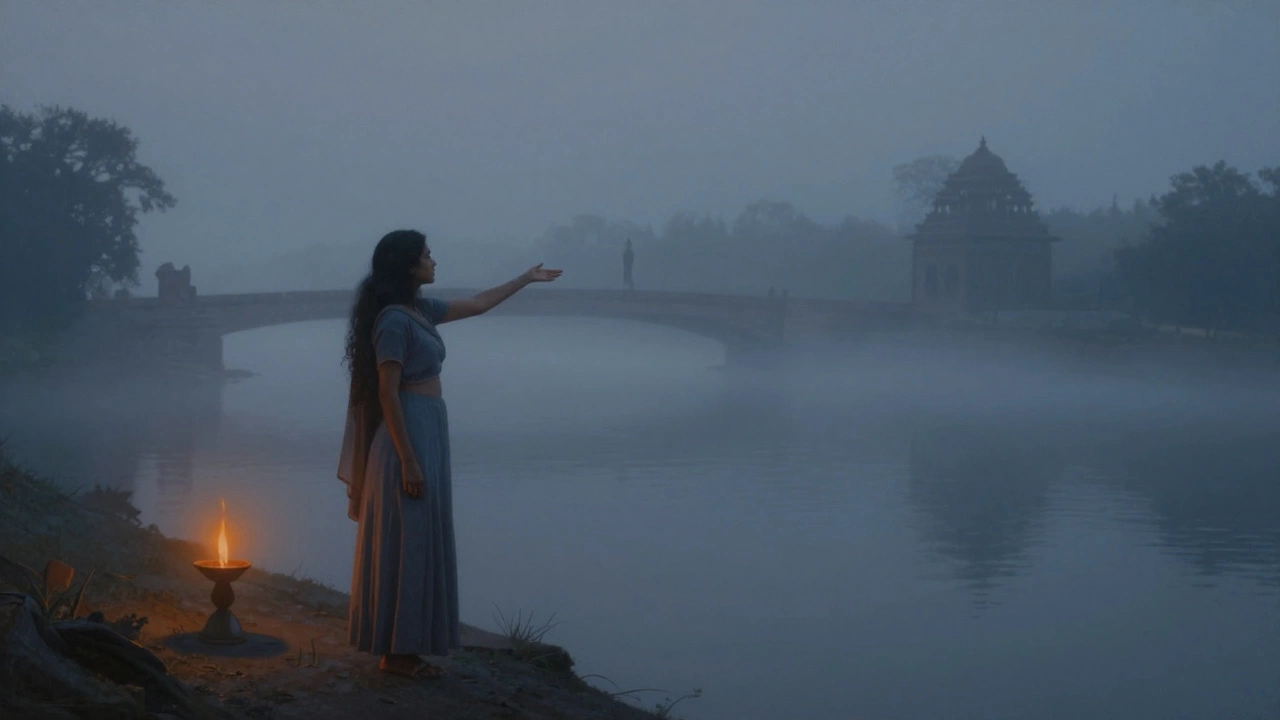
To truly grasp the deepest form of sadness, we must look beyond romance and time to the core of existence itself. Buddhism, which originated in the Indian subcontinent, introduces the concept of Dukkha. Dukkha is often translated as suffering, unsatisfactoriness, or stress, representing the inherent inability of conditioned phenomena to provide lasting satisfaction..
Dukkha suggests that sadness isn't an accident; it's built into the fabric of life. Why? Because we crave permanence in a temporary world. We want happiness to stay forever. When it doesn't, we suffer. The deepest sadness, therefore, is the realization that nothing satisfies us completely for long.
This might sound bleak, but it’s actually liberating. If you understand that dissatisfaction is natural, you stop blaming yourself for feeling sad. You stop trying to force joy where it doesn't belong. Instead, you learn to sit with the discomfort. Many people today feel a vague, chronic emptiness despite having successful lives. This is Dukkha in action. It’s the background hum of anxiety that says, "Is this all there is?"
| Type | Source | Emotional Quality | Example in Poetry |
|---|---|---|---|
| Viraha | Separation/Absence | Longing, Yearning, Hunger | Mirabai’s songs for Krishna |
| Kaala | Time/Impermanence | Nostalgia, Powerlessness | Rabindranath Tagore’s reflections on youth |
| Dukkha | Existential Condition | Emptiness, Unsatisfaction | Buddhist parables on desire |
| Aparadha | Guilt/Regret | Shame, Self-Loathing | Goethe’s Faust (universal theme) |
The Silence of Unspoken Pain
In many Indian households, especially older generations, emotions were not discussed openly. Men were expected to be stoic; women were expected to endure silently. This cultural suppression creates a unique layer of deep sadness: the sadness of being unheard.
When you carry pain alone, it grows. It festers. The deepest sadness often isn't the event itself, but the isolation surrounding it. You look around at a crowded room, smiling and laughing, but inside you are screaming. No one hears you. No one sees you. This invisibility is crushing.
Modern mental health awareness is changing this. We are learning to say, "I am not okay." But for many, the habit of silence runs deep. Recognizing this pattern is crucial. If you feel lonely even when surrounded by people, it might not be social loneliness. It might be emotional isolation. Breaking that silence is the hardest but most necessary step.
How Poetry Heals the Wound
So, why do we read sad poetry? Why do we listen to melancholic songs? It seems counterintuitive. If you’re already sad, shouldn’t you seek joy? Actually, no. Psychology tells us that catharsis-the release of pent-up emotions-is essential for healing.
When you read a poem that perfectly describes your pain, you feel seen. You realize you are not broken; you are human. The poet acts as a witness to your suffering. In Indian traditions, reciting poetry was never just entertainment. It was a spiritual practice. By giving shape to formless pain, we gain control over it.
Try this next time you feel overwhelmed:
- Identify the specific emotion. Is it anger? Grief? Fear?
- Find a poem or song that matches that tone. Don’t force happy media.
- Read it aloud. Let the rhythm match your breathing.
- Write down one sentence about what you feel. Just one.
Finding Light in the Darkness
Does the deepest sadness ever go away? Not entirely. And that’s okay. Healing isn't about erasing the past. It’s about integrating it. The scars remain, but they stop hurting. They become part of your story, adding depth and empathy to your character.
The goal isn't to be happy all the time. The goal is resilience. It’s knowing that you can survive the storm. As the ancient sage Valmiki wrote in the Ramayana, even the gods experience sorrow. It is part of the cosmic dance. By accepting sadness as a visitor rather than a permanent resident, we reclaim our peace.
If you are struggling right now, please remember that your feelings are valid. You don't need to justify your pain. Reach out to a friend, a therapist, or simply write it down. You are not alone in this darkness. Millions have walked this path before you, and millions will follow. Your voice matters. Your pain matters. And eventually, the light will return, brighter than before.
What is the difference between sadness and depression?
Sadness is a temporary emotional response to a specific event, like a breakup or failure. Depression is a clinical condition characterized by persistent low mood, loss of interest in activities, and physical symptoms like fatigue or sleep changes, lasting for weeks or months. While sadness passes, depression often requires professional support.
Why does reading sad poetry make me feel better?
Reading sad poetry provides validation and catharsis. It helps you articulate feelings that are hard to express, reducing the sense of isolation. Knowing that others have experienced similar pain and found beauty in it can be deeply comforting and healing.
What is Viraha in Indian philosophy?
Viraha refers to the intense longing and pain of separation from a loved one or the divine. It is a central theme in Bhakti poetry, describing the soul's yearning for reunion with God or a beloved person. It is considered a powerful spiritual catalyst.
Can sadness be productive?
Yes. Sadness can lead to introspection, creativity, and deeper empathy. It forces us to slow down and reflect on what truly matters. Many great works of art, literature, and music were born from periods of deep sorrow.
How do I cope with the deepest form of sadness?
Coping involves acknowledging the pain without judgment, seeking support from trusted friends or professionals, engaging in expressive activities like writing or art, and practicing self-compassion. Remember that healing is non-linear and takes time.