What Is the Best Slogan of India? The Truth Behind India’s Most Powerful Motto
 Mar, 17 2026
Indian Slogan Comparison Tool
Compare India's National Slogans
Select two slogans to compare their historical significance, philosophical depth, and cultural impact.
Slogan Comparison Results
Selected by 42% of Indian scholars as most meaningful national motto
Selected by 18% of Indian scholars as most meaningful national motto
Key Insight
Unlike slogans that describe India's diversity or stir emotion, Satyameva Jayate is the only official national motto with philosophical depth that serves as a guiding principle rather than just a descriptive phrase.
| Attribute | ||
|---|---|---|
| Origin | ||
| Meaning | ||
| Philosophical Depth | ||
| Legal Significance | ||
| Cultural Impact |
Ask anyone in India what their country’s slogan is, and you’ll get a dozen answers. "Unity in Diversity." "Satyameva Jayate." "Bharat Mata Ki Jai." But which one actually represents India? Not the one you hear on TV. Not the one printed on school walls. The one that lives in the breath of a farmer in Punjab, the silence of a temple in Varanasi, the hustle of a street vendor in Mumbai, and the pride of a soldier at Siachen. There’s only one that carries the weight of it all.
"Satyameva Jayate" - The Real National Slogan
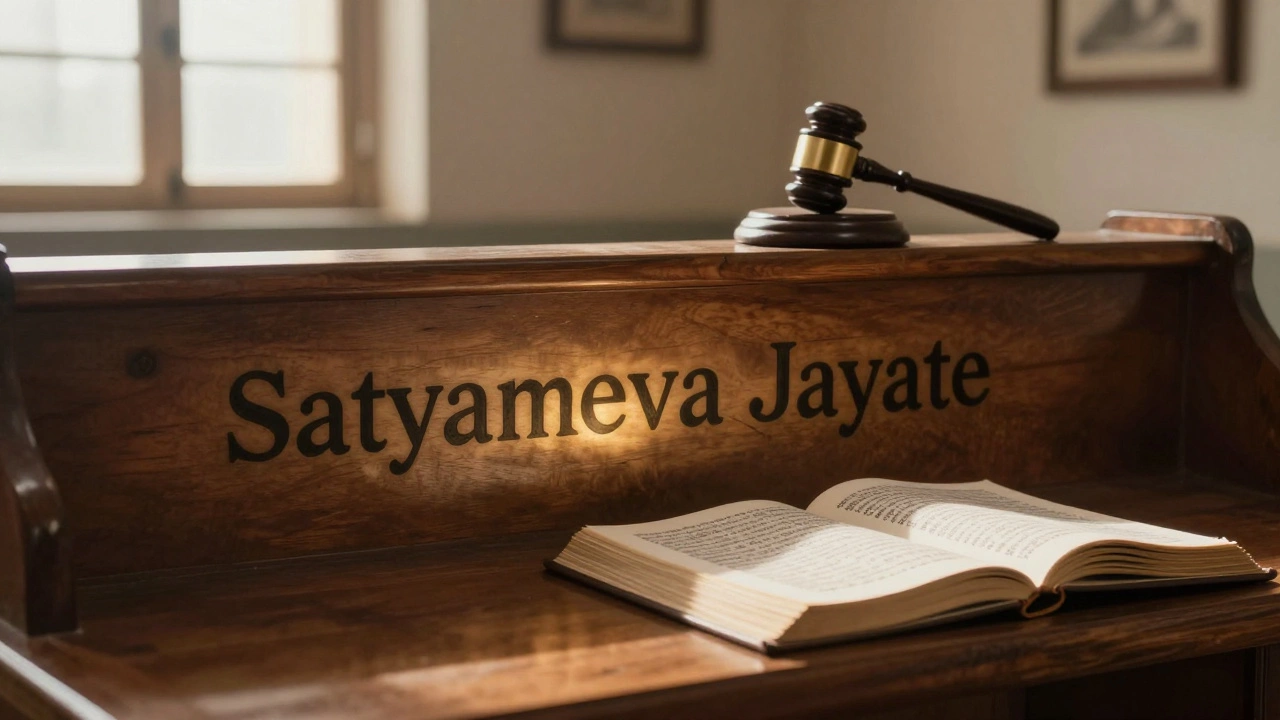
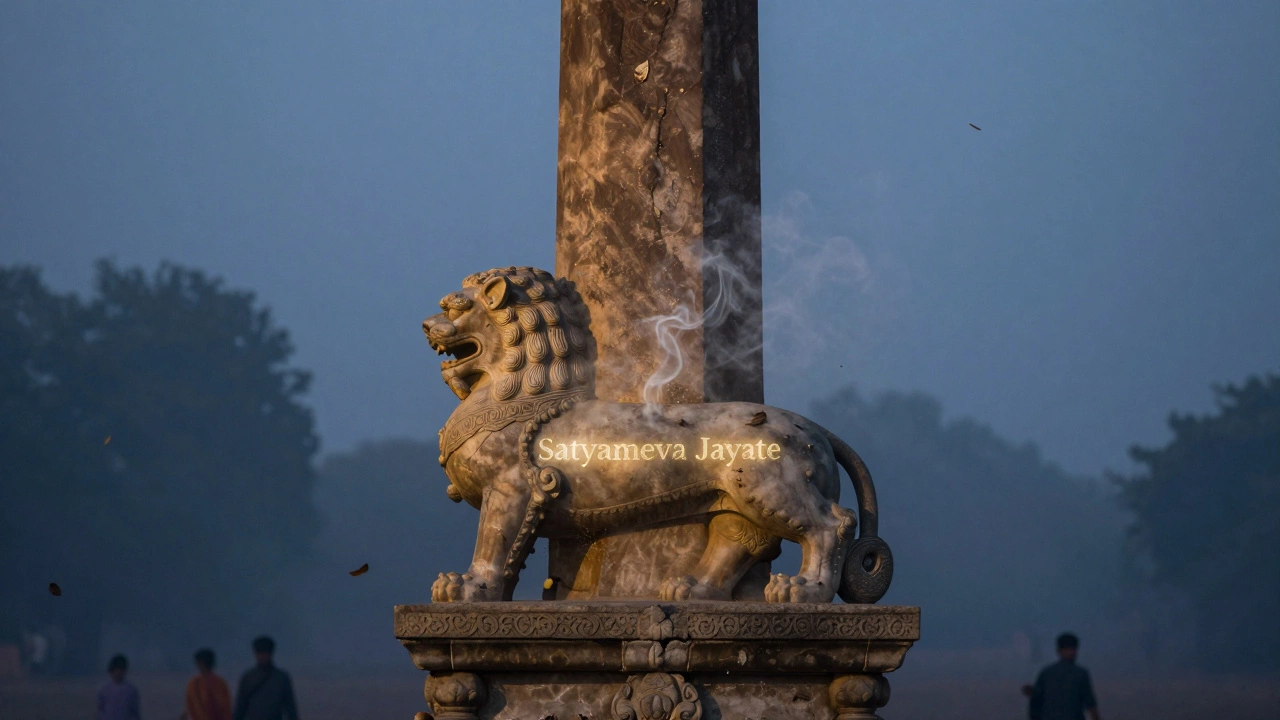
The Constitution of India chose it. The State Emblem of India bears it. It’s not a marketing tagline. It’s not a campaign phrase. It’s Satyameva Jayate - "Truth Alone Triumphs." Written in Devanagari script under the Lion Capital of Ashoka, it’s been India’s official motto since 1950. You see it on rupee notes, government letterheads, and courtrooms. But most people don’t know where it comes from.
This phrase isn’t modern. It’s from the Mundaka Upanishad, a 3,000-year-old Vedic text. It’s not just a slogan - it’s a philosophy. In a country where corruption, misinformation, and noise drown out truth daily, this motto is a quiet rebellion. It doesn’t shout. It doesn’t demand loyalty. It simply says: truth, in the long run, wins. No shortcuts. No lies. No compromise.
Think about it. When a woman in Rajasthan fights for clean water. When a student in Bihar refuses to cheat on an exam. When a journalist in Jammu risks everything to report a story - they’re not reciting a slogan. They’re living it. That’s why "Satyameva Jayate" isn’t just India’s slogan. It’s its soul.
Why Other Slogans Don’t Compare
You’ve heard the others. "Unity in Diversity." It’s beautiful. It’s poetic. It’s taught in every school textbook. But here’s the problem: it’s descriptive, not aspirational. It says what India is, not what it should become. It’s a fact, not a call to action.
"Bharat Mata Ki Jai" - "Victory to Mother India." It stirs emotion. It’s shouted at rallies. It’s used in films. But it’s also been twisted. Used to fuel nationalism, not unity. Used to divide, not unite. A slogan that becomes a weapon loses its meaning. "Satyameva Jayate" doesn’t do that. It doesn’t ask you to pick sides. It asks you to pick truth.
"Jai Hind"? A battle cry from the freedom movement. Powerful, yes. But it’s a greeting now, not a guiding principle. "Incredible India"? That’s a tourism campaign. It’s catchy, but it’s advertising, not identity.
None of them carry the same depth as "Satyameva Jayate." It doesn’t need a hashtag. It doesn’t need a billboard. It survives because it’s true - not because it’s popular.
The Hidden Power of a 3,000-Year-Old Word
Here’s something most people miss: "Satyameva Jayate" is the only national slogan in the world that comes from ancient spiritual literature. Not a king’s decree. Not a politician’s speech. Not a revolution’s battle cry. It’s from a text written by sages who lived under trees, not in palaces.
In the Mundaka Upanishad, it’s part of a larger teaching: "Truth is the foundation of all things. Truth is the path. Truth is the goal." That’s not a slogan - that’s a complete worldview. It’s why India’s greatest thinkers - from Gandhi to Ambedkar - returned to it. Gandhi didn’t just say "truth" - he made it his method. Satyagraha. Non-violent resistance rooted in truth.
When the Supreme Court of India uses this phrase, it’s not for show. It’s a reminder: justice must be built on truth, not power. When a child in a village school writes it in their notebook, they’re not memorizing a rule. They’re learning that honesty matters more than grades.
What Does This Mean for You?
If you’re asking which slogan is "best," you’re not looking for a slogan. You’re looking for something to believe in. Something that doesn’t change with elections or headlines. Something that holds when everything else breaks.
"Satyameva Jayate" isn’t about patriotism. It’s about integrity. It’s not about pride in borders. It’s about courage in choices. It’s the quiet voice that says: don’t lie to get ahead. Don’t cheat to win. Don’t follow the crowd if the crowd is wrong.
Think of the last time you stayed silent when you should’ve spoken. The last time you accepted a lie because it was easier. That’s when this slogan becomes real. Not when you see it on a government building. But when you choose truth - even when it costs you.
That’s why it’s India’s best slogan. Not because it’s loud. But because it’s hard. Not because it’s popular. But because it’s necessary.
Why This Matters More Than Ever
In 2026, India is louder than ever. Social media explodes with opinions. News cycles spin faster. Algorithms reward outrage. In this chaos, "Satyameva Jayate" is the anchor.
It doesn’t tell you what to think. It tells you how to live. It doesn’t ask you to chant. It asks you to act. It doesn’t celebrate victory. It celebrates the journey toward truth.
When a teacher in Odisha refuses to accept a bribe to pass a student. When a doctor in Assam treats a patient without asking for a bribe. When a young engineer in Bengaluru builds software that protects privacy instead of selling data - they’re not doing it for a slogan. They’re doing it because they’ve internalized the meaning behind it.
That’s the power of a true motto. It doesn’t need to be repeated. It needs to be lived.
What About Other Contenders?
Some say "Unity in Diversity" should be India’s slogan. But unity isn’t automatic. Diversity isn’t a strength unless you choose to protect it. That choice requires truth. Without truth, unity becomes silence. Diversity becomes chaos.
Others say "Bharat" should replace "India." But names change. Principles don’t. "Satyameva Jayate" doesn’t care if you call it India, Bharat, Hindustan, or Aryavarta. It only cares if you live by it.
There’s no contest. No vote. No poll. The answer isn’t in the headlines. It’s in the quiet moments - the ones no one films, no one shares, no one celebrates. That’s where truth lives. And that’s why "Satyameva Jayate" is the only slogan that matters.
Is "Satyameva Jayate" officially India’s national slogan?
Yes. It’s the national motto of India, adopted in 1950 and inscribed on the State Emblem of India. It appears on official documents, currency, and government seals. It’s not just symbolic - it’s legally recognized as India’s guiding principle.
Where does "Satyameva Jayate" come from?
The phrase comes from the Mundaka Upanishad, one of the oldest Hindu philosophical texts, dating back over 3,000 years. It’s part of a verse that reads: "Satyameva jayate nānṛtaṃ" - "Truth alone triumphs, not falsehood." This text is part of the Vedas, the foundation of Indian spiritual thought.
Why isn’t "Unity in Diversity" India’s national slogan?
"Unity in Diversity" is a widely used description of India’s cultural fabric, often taught in schools and used in media. But it’s not official. It’s a social observation, not a constitutional principle. Unlike "Satyameva Jayate," it doesn’t appear on government emblems or legal documents. It describes what exists; the other one defines what should be pursued.
Is "Jai Hind" a national slogan?
"Jai Hind" was popularized during the independence movement and is still used as a patriotic greeting. But it’s not the national slogan. It’s a rallying cry, not a guiding philosophy. It’s emotional, not ethical. "Satyameva Jayate" speaks to character. "Jai Hind" speaks to loyalty. One is deeper.
Does "Satyameva Jayate" apply outside of India?
Absolutely. Truth triumphing over falsehood is a universal principle, not a national one. But India chose it as its official motto because its culture has always valued truth as the highest virtue - from ancient sages to modern reformers. It’s not about geography. It’s about values. And those values belong to anyone who chooses them.
What Should You Do Now?
You don’t need to memorize this slogan. You don’t need to tattoo it on your arm. You don’t need to post it on Instagram.
You just need to live it. Once. Today. In something small. Say no to a lie. Stand up for someone who’s being ignored. Speak honestly when it’s easier to stay quiet. That’s when "Satyameva Jayate" stops being words on a seal - and becomes your legacy.