What Is India Nicknamed As? The Real Meanings Behind India's Famous Titles
 Feb, 10 2026
When you hear someone call India the Land of Diversity, they’re not just being poetic. They’re naming a truth written into every street, every language, every festival, and every mountain range across the country. But that’s just one of many nicknames India carries - each with its own history, emotion, and meaning. Why does a nation of 1.4 billion people have so many names? Because no single word can hold the weight of its soul.
India: The Land of Diversity
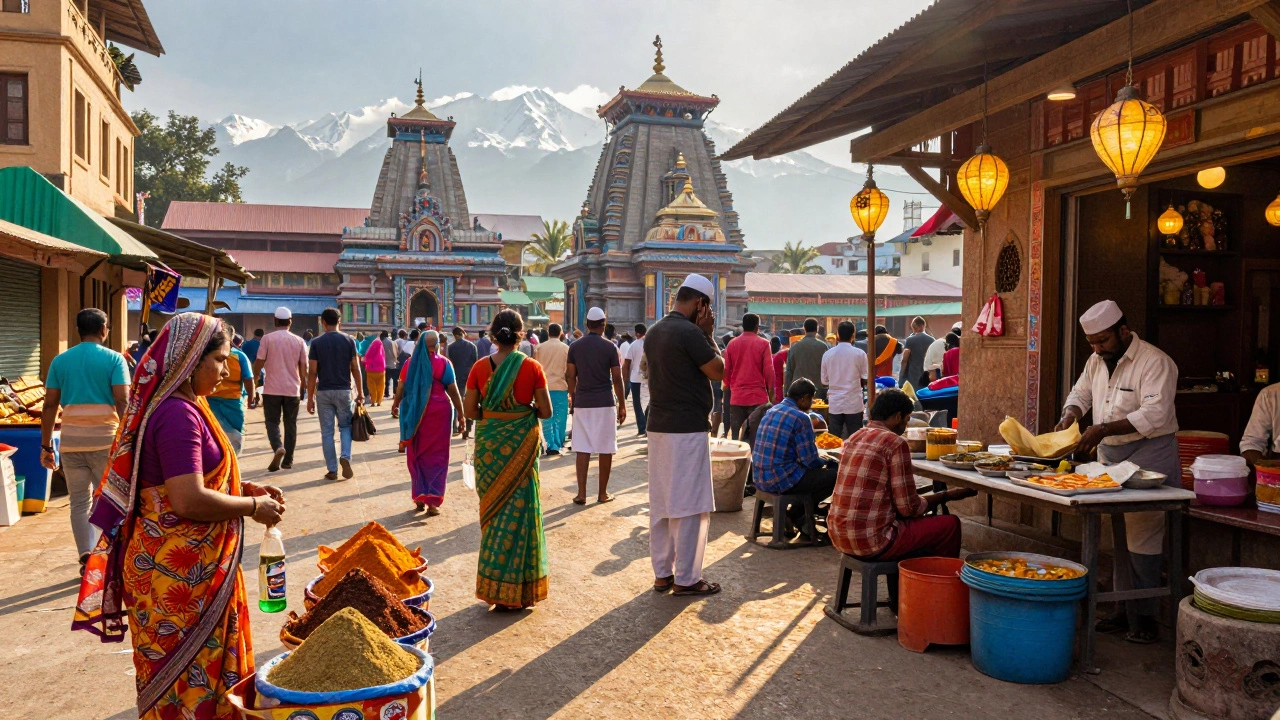
More than any other label, this one sticks because it’s impossible to argue with. In one state, you’ll find snow-capped Himalayan villages where people speak languages older than English. A few hundred kilometers south, you’ll walk through bustling markets in Tamil Nadu where street vendors sell spicy dosas to the rhythm of Carnatic music. In the north, you’ll see Muslims praying beside Hindu temples, while in the northeast, tribal communities celebrate harvests with dances unchanged for centuries. India’s diversity isn’t just in its people - it’s in its food, clothing, climate, religion, and even how time is measured. There are 22 officially recognized languages and over 19,500 dialects. You can eat biryani in Hyderabad, idli in Chennai, momos in Sikkim, and fish curry in Goa - all on the same day. No other country on Earth holds this kind of cultural mosaic within one border.
Bharat: The Ancient Name That Still Lives
If you ask an Indian elder what their country is called, they’ll often say Bharat - not India. That’s because Bharat isn’t just an alternative name; it’s the original one. It comes from the legendary King Bharata, mentioned in the ancient epic Mahabharata, who is said to have ruled the land that became the Indian subcontinent. The name appears in Sanskrit texts over 2,000 years old. Even today, the Indian constitution lists the country as “Bharat, India.” In official government documents, speeches by ministers, and school textbooks, Bharat is used with pride. It’s not a poetic nickname - it’s a living identity. For millions, saying “Bharat” is a way to reconnect with a history that predates colonial rule.
The Golden Bird: A Poetic Legacy
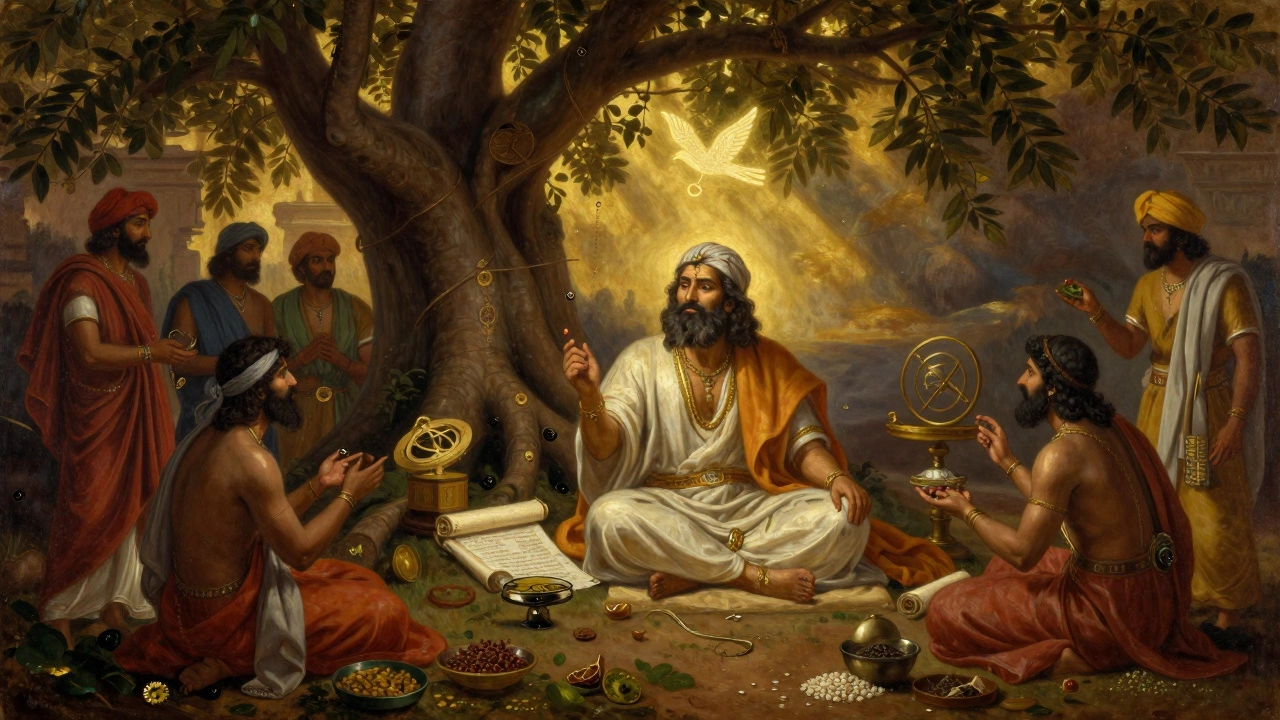
Long before modern maps, ancient travelers from Greece, Persia, and China called India the Golden Bird. Why? Because for over 2,000 years, this land was the richest in the world. Traders came from Rome to buy Indian spices - pepper, cardamom, turmeric - that were worth more than gold. Indian textiles, especially fine cotton and silk, were so prized that Roman senators wore them as status symbols. The Gupta Empire (320-550 CE) was a golden age of math, medicine, and art. Indian mathematicians invented zero. Ayurveda, one of the world’s oldest healing systems, was developed here. The wealth wasn’t just in gold coins - it was in knowledge, creativity, and innovation. The nickname faded with colonial exploitation, but it still echoes in poetry, songs, and school lessons.
Spiritual Hub: Where the World Comes to Seek
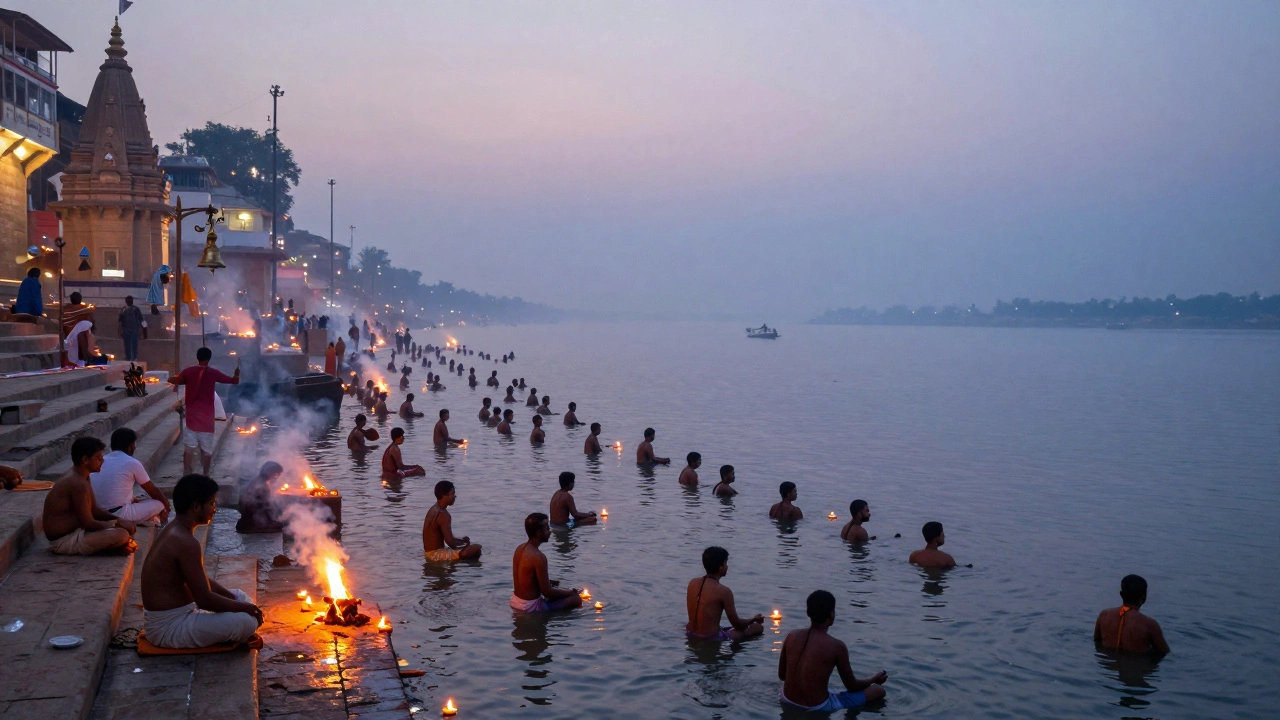
Walk into Varanasi at sunrise, and you’ll see hundreds of people bathing in the Ganges, chanting prayers as the sun rises over the ghats. In Rishikesh, yogis meditate on riverbanks. In Tamil Nadu, temple bells ring every hour. India is home to the birthplaces of Hinduism, Buddhism, Jainism, and Sikhism. More than 80% of the world’s Hindus live here. The country holds over 33 million gods - not as myth, but as living presence in daily life. Pilgrims from Nepal, Bhutan, Thailand, and even the U.S. come to Rameswaram, Amarnath, or the Kumbh Mela - the largest human gathering on Earth, where over 100 million people bathe in one river during one month. This isn’t tourism. It’s a magnetic pull. India doesn’t just have spirituality - it breathes it.
Subcontinent: The Geography That Defines It
While not a nickname, the Indian Subcontinent is the geographic truth behind many of its other names. India sits on its own tectonic plate, separate from the rest of Asia. The Himalayas to the north aren’t just mountains - they’re a natural wall that shaped its culture, climate, and isolation. The Arabian Sea, Bay of Bengal, and Indian Ocean turned it into a trading crossroads. This physical separation allowed unique languages, crops, and traditions to evolve without being swallowed by larger empires. Even today, the subcontinent includes Nepal, Bhutan, Sri Lanka, Bangladesh, and the Maldives - all deeply connected to India’s history, food, and religion. Calling it a subcontinent isn’t just geography - it’s a recognition of its self-contained world.
Why Do Nicknames Matter?
These names aren’t just labels. They’re mirrors. When someone calls India the Land of Diversity, they’re acknowledging its chaos and beauty. When they say Bharat, they’re honoring its ancient roots. The Golden Bird reminds us of what was lost - and what can be regained. Spiritual Hub points to the quiet strength of a people who’ve survived invasions, famines, and colonial rule without losing their inner compass. These nicknames aren’t fancy phrases. They’re emotional shorthand for what India means to those who live here - and to the world that has long looked to it.
What’s Missing? The Unspoken Names
There are other names you might hear - like the Land of Festivals (over 1,000 major ones each year) or the Cradle of Civilization (home to the Indus Valley cities 5,000 years ago). But none stick like the big four: Bharat, Land of Diversity, Golden Bird, Spiritual Hub. They endure because they’re not just facts - they’re feelings. You don’t need to visit to feel them. Just listen to a raga at dusk, taste a street-side chaat, or watch a temple procession in the rain. India doesn’t need a single nickname. It wears them all - like a crown made of many colors.
Is Bharat the official name of India?
Yes. The Constitution of India states in Article 1: "India, that is Bharat, shall be a Union of States." Both names are legally equal. Government documents, official speeches, and even currency notes use both "India" and "Bharat." The choice often depends on context - "India" is more common internationally, while "Bharat" is preferred in formal, cultural, or regional settings.
Why is India called the Golden Bird?
Ancient traders from Rome, Greece, and China called India the "Golden Bird" because it was the richest land on Earth for over 2,000 years. Indian spices, cotton textiles, pearls, and gemstones were exported globally and valued more than gold. The Gupta Empire (320-550 CE) was a golden age of science, art, and philosophy - with Indian mathematicians inventing zero and developing early forms of surgery. The nickname reflects a time when India led the world in wealth and knowledge.
Is India really the most diverse country in the world?
Yes - by almost every measure. India has 22 official languages, over 19,500 dialects, and more than 700 tribes. It’s home to six major religions - Hinduism, Islam, Christianity, Sikhism, Buddhism, and Jainism - with countless sub-traditions. From the desert of Rajasthan to the rainforests of Kerala, from the frozen Himalayas to the tropical islands of the Andamans, the climate, food, dress, music, and festivals change dramatically every few hundred kilometers. No other country combines this level of linguistic, religious, and geographic variety within one national boundary.
Do Indians use "Bharat" more than "India" today?
It depends on context. In everyday conversation, most Indians say "India." But in formal speeches, political debates, school textbooks, and cultural events, "Bharat" is widely used - especially by those emphasizing heritage and identity. In 2023, the government officially began using "Bharat" in international forums alongside "India." The shift reflects a growing pride in pre-colonial history, not a rejection of the name "India."
Why is India called a spiritual hub?
India is the birthplace of four major world religions: Hinduism, Buddhism, Jainism, and Sikhism. It holds the most sacred sites for these faiths - Varanasi, Bodh Gaya, Haridwar, and the Golden Temple. Over 80% of the world’s Hindus live here. Millions of pilgrims from around the globe visit annually, especially for the Kumbh Mela, which draws over 100 million people. Yoga, meditation, and Ayurveda - now global practices - originated here. For many, India isn’t just a country - it’s the heart of spiritual tradition.
What’s Next?
If you’ve ever wondered why India feels so different from other countries, it’s because it’s not just one place - it’s many. To understand its nicknames is to begin understanding its soul. Start by listening: to a temple bell, a street vendor’s call, a grandmother singing an old lullaby. Those sounds hold more truth than any map ever could.