What Is Considered Disrespectful in India? Cultural Boundaries in Love and Relationships
 Mar, 13 2026
When you’re in love in India, it’s not just about two people. It’s about families, traditions, and unspoken rules that have been passed down for generations. What feels natural to one person might be seen as deeply disrespectful to another-especially when it comes to how love is expressed. You don’t need to be a foreigner to get this wrong. Even young Indians, raised in cities and fluent in global trends, often stumble into cultural landmines without realizing it.
Public Displays of Affection Are Still a Line Many Won’t Cross
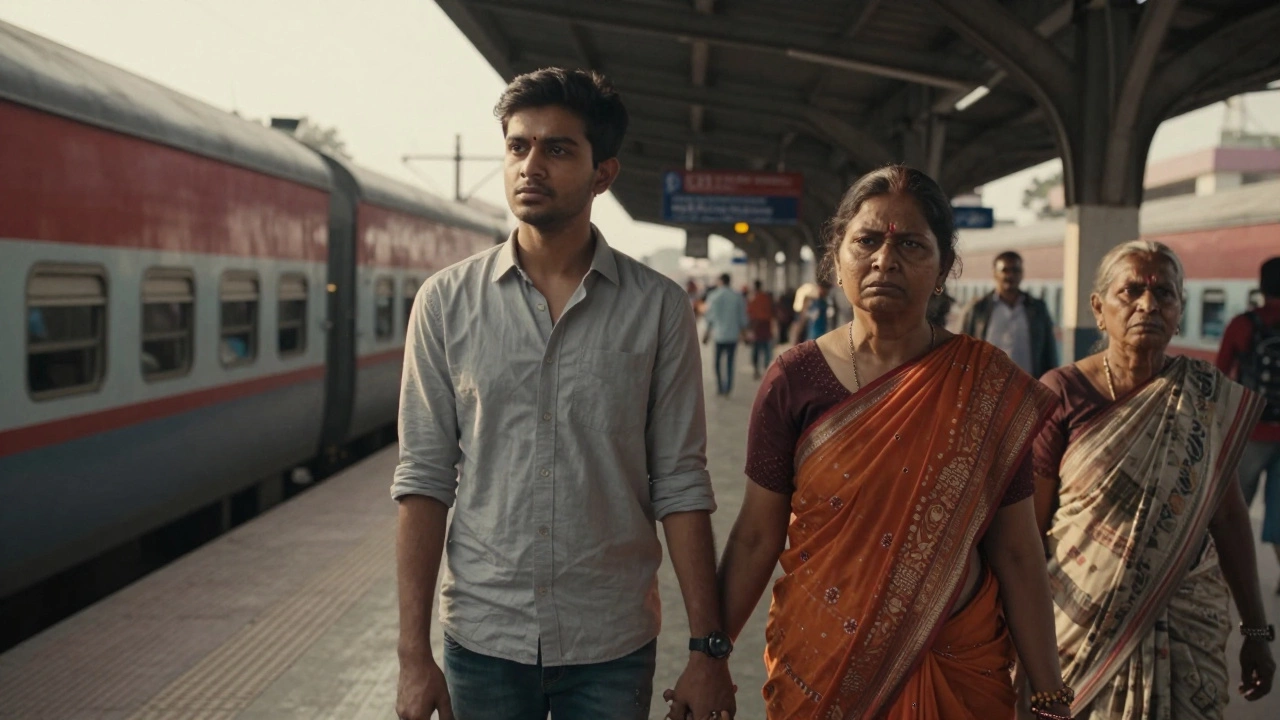
Hold hands? In most parts of India, that’s fine. Kiss on the cheek? Maybe, if you’re in a metro city and no one’s watching. But kiss on the lips in public? That’s where things get uncomfortable. Not because people are prudish-they’re not-but because it’s seen as violating the dignity of the space. A park bench, a train platform, a temple courtyard: these aren’t private zones. They’re shared spaces, and public intimacy there is viewed as selfish, not romantic.
Think about it: in rural Uttar Pradesh, a couple holding hands might get stares. In Delhi, it’s normal. But if you’re hugging tightly in front of a temple in Varanasi? You’ll get whispers, side-eyes, and sometimes even a warning from a temple volunteer. This isn’t about religion-it’s about context. India doesn’t have one rule for love. It has hundreds, shaped by region, class, and generation.
Dating Before Marriage? It’s Not the Problem-How You Do It Is
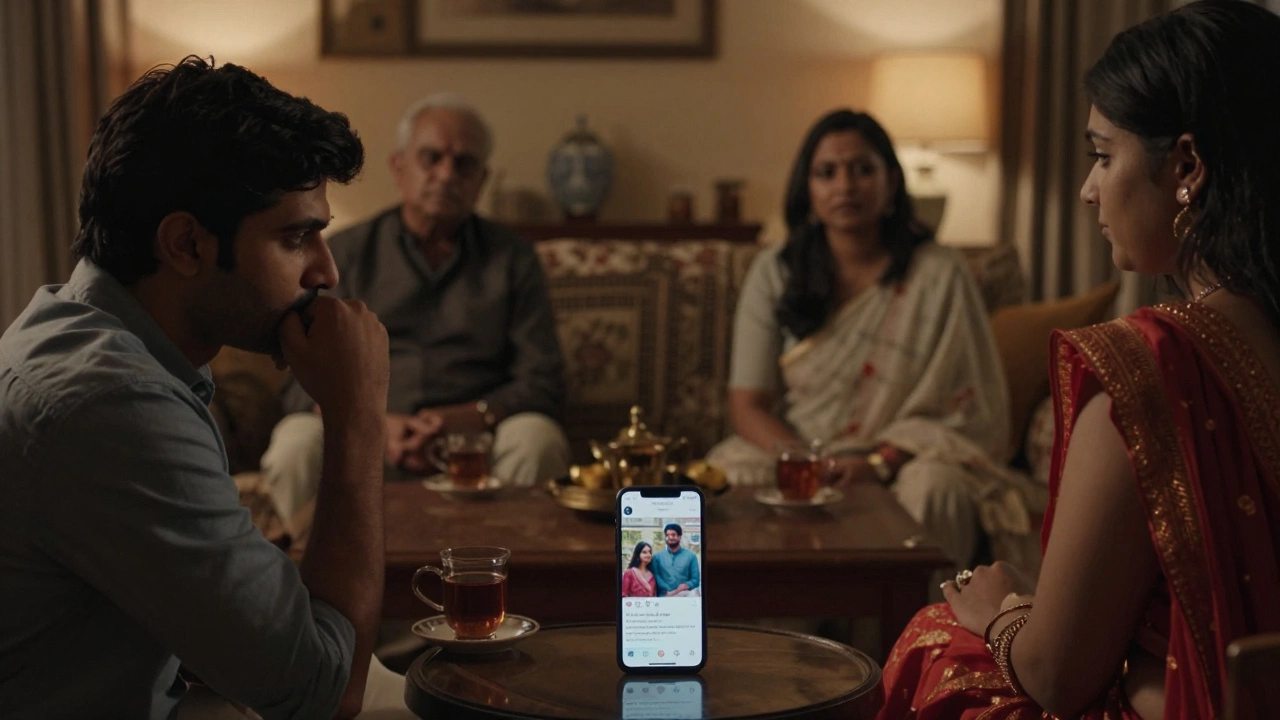
Young Indians date. A lot. In fact, surveys show over 60% of urban millennials have been in relationships before 25. But here’s the catch: the way you talk about it matters. If you post your girlfriend’s photo on Instagram with a romantic caption, and your family hasn’t met her? That’s disrespectful. Not because dating is wrong, but because it bypasses the social contract. In India, relationships aren’t just personal-they’re relational. They involve families, even if quietly.
Imagine this: you’ve been dating for a year. You’ve never introduced your partner to your parents. You’ve never asked for their blessing. You just assume it’s your business. That’s where the disrespect kicks in. It’s not about control. It’s about respect. In Indian culture, parents aren’t just caregivers-they’re guardians of family honor. Ignoring them, even with good intentions, feels like erasing their role.
Calling Your Partner ‘Baby’ or ‘Love’ in Front of Elders
Some couples use pet names. Sweet. Cute. Global. But say ‘baby’ in front of your grandmother or your uncle’s wife? It’s not just awkward-it’s jarring. The language of intimacy in India is quiet. A glance. A hand on the shoulder. A shared cup of tea. Loud affection, especially with Western terms, feels like performance. It’s not the affection that’s the issue. It’s the tone. It’s the context.
One woman I know from Jaipur stopped using ‘honey’ with her husband after her mother-in-law asked, ‘Why are you talking like a foreign movie? Are you ashamed of our language?’ It wasn’t about the word. It was about the implied rejection of home.
Ignoring Family Traditions During Relationships
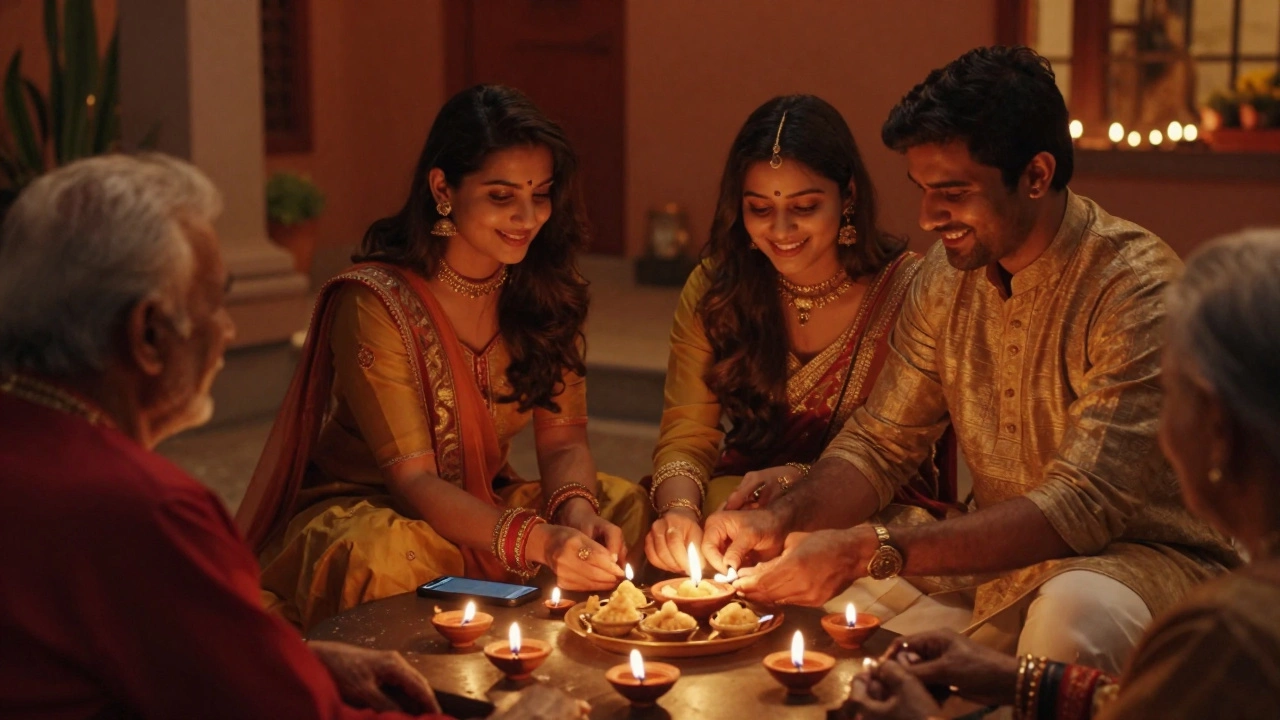
Let’s say you’re dating someone from a different religion or caste. That’s not inherently disrespectful. But if you skip the family’s annual Diwali gathering because your partner ‘doesn’t like crowds’? Or refuse to wear traditional clothes to a wedding because it’s ‘too much’? That’s where the line gets crossed.
Indian families don’t expect you to convert. But they do expect you to honor the rituals that bind them. It’s not about belief. It’s about belonging. Refusing to participate-even with a polite ‘no thanks’-can feel like rejection of their identity. And in a culture where family is your safety net, that cuts deep.
Using Social Media to Announce Relationships
Posting a couple’s photo with ‘#LoveWins’ on Instagram? In many urban homes, that’s fine. But in smaller towns, or in conservative families? That’s a red flag. Why? Because it turns a private matter into a public spectacle. It signals that you don’t care about the process. That you’re skipping the steps: meeting parents, talking to elders, seeking approval.
One man from Chandigarh broke up with his girlfriend after she posted a Valentine’s Day video with his name in the caption. His mother cried. Not because she hated her-but because she felt like her son’s life was being broadcast without her consent. That’s not about control. It’s about dignity.
Being Late or Flaking on Family Events Because of Your Partner
Missing your cousin’s engagement because your partner wanted to go to a concert? That’s not just rude-it’s a signal that your relationship matters more than your roots. In India, family comes first. Always. Even if you’re in love. Even if you’re busy. Even if you think it’s ‘just one time.’
One woman from Lucknow was told by her aunt, ‘If you choose your boyfriend over your brother’s wedding, you’re choosing loneliness.’ It sounded harsh. But she understood. In India, relationships that isolate you from family rarely last. Because family doesn’t just support you-it holds you together.
What’s Not Disrespectful? What Actually Works
So what’s the right way? It’s simple: be quiet, be present, be respectful.
- Introduce your partner to your family before posting about them.
- Ask before you change traditions. Say, ‘Can we adapt this together?’
- Use Indian terms of endearment-‘jaan’, ‘meri jaan’, ‘bhaiya’, ‘beti’-they carry warmth without offense.
- Don’t argue in public. Ever. Even if you’re right.
- Respect elders’ silence. They may not approve, but they’ll watch. And they’ll remember.
Love in India isn’t about breaking rules. It’s about rewriting them-with permission.
Generational Shifts Are Real-but Slow
Yes, cities like Bangalore and Mumbai are changing. Young couples live together. They travel. They post. And many families are okay with it. But even there, the unspoken rules remain: don’t make it a spectacle. Don’t shame your roots. Don’t assume everyone thinks like you.
What’s changing isn’t the values. It’s the language. More families now say, ‘We trust you.’ But they still expect you to honor the silence between words.
Final Thought: Love Isn’t Rebellious. It’s Responsible
In India, the most respectful form of love isn’t the grand gesture. It’s the quiet one. The one where you call your mother every Sunday. The one where you wear a kurta to your partner’s family dinner. The one where you don’t post a photo until you’ve said ‘I love you’ to their father first.
Love doesn’t need to defy culture to be real. Sometimes, it just needs to understand it.
Is it disrespectful to kiss in public in India?
Yes, in most parts of India, kissing in public-even on the cheek-is considered disrespectful. While holding hands is widely accepted in cities, public displays of intimacy like kissing are seen as violating shared social spaces. This isn’t about morality; it’s about cultural context. Public spaces are meant for community, not private moments. Even in metro cities, doing so in front of elders or in religious areas can lead to discomfort, stares, or even warnings.
Can I date someone from a different religion in India?
Yes, dating someone from a different religion is not disrespectful in itself. Many Indian families now accept interfaith relationships, especially in urban areas. What matters is how you handle it. If you hide the relationship, avoid family gatherings, or refuse to participate in their traditions, that’s where disrespect begins. The key is openness: introduce your partner, respect their customs, and ask before making decisions that affect both families.
Why do Indian families care so much about how couples behave?
Because in India, relationships aren’t just between two people-they involve families, reputations, and long-term social ties. Marriage isn’t just a union of lovers; it’s a union of households. Families aren’t trying to control you. They’re trying to protect the trust and dignity that holds their community together. What looks like interference is often deep care. The goal isn’t to stop love-it’s to make sure love doesn’t break the bonds that support it.
Is it okay to post couple photos on social media?
It depends. If your family knows your partner and approves, then yes. But if you post before introducing them to your parents-or worse, before they’ve even met-many Indian families see it as disrespectful. Social media turns private relationships into public performances. In a culture that values quiet respect, that can feel like rejection. The rule of thumb: show your family first. Post later.
What’s the most common mistake young Indians make in relationships?
The biggest mistake is assuming personal freedom means ignoring family. Many young people think dating means total autonomy: no need to tell parents, no need to respect traditions, no need to ask permission. But in India, love isn’t about independence-it’s about inclusion. The healthiest relationships are the ones where you bring your partner into your world, not away from it. Silence isn’t rejection. It’s waiting. And respect isn’t submission. It’s choice.