What is an Indian Code Talker? History, Tribes, and Legacy
 Jun, 12 2026
Navajo Code Talker Simulator
Secure Message Encoder
Enter a word below to see its Navajo code equivalent used by the Marines in WWII.
Historical Context
WWI Origins
1918Choctaw soldiers were first used during the Battle of Saint-Mihiel.
Speed Advantage
EfficiencyCode talkers could transmit a 3-line message in 20 seconds vs 30 minutes by machine.
Never Broken
SecurityJapanese cryptanalysts never cracked the Navajo code despite intense efforts.
Recognition
2001Congressional Gold Medals were awarded decades after the war ended.
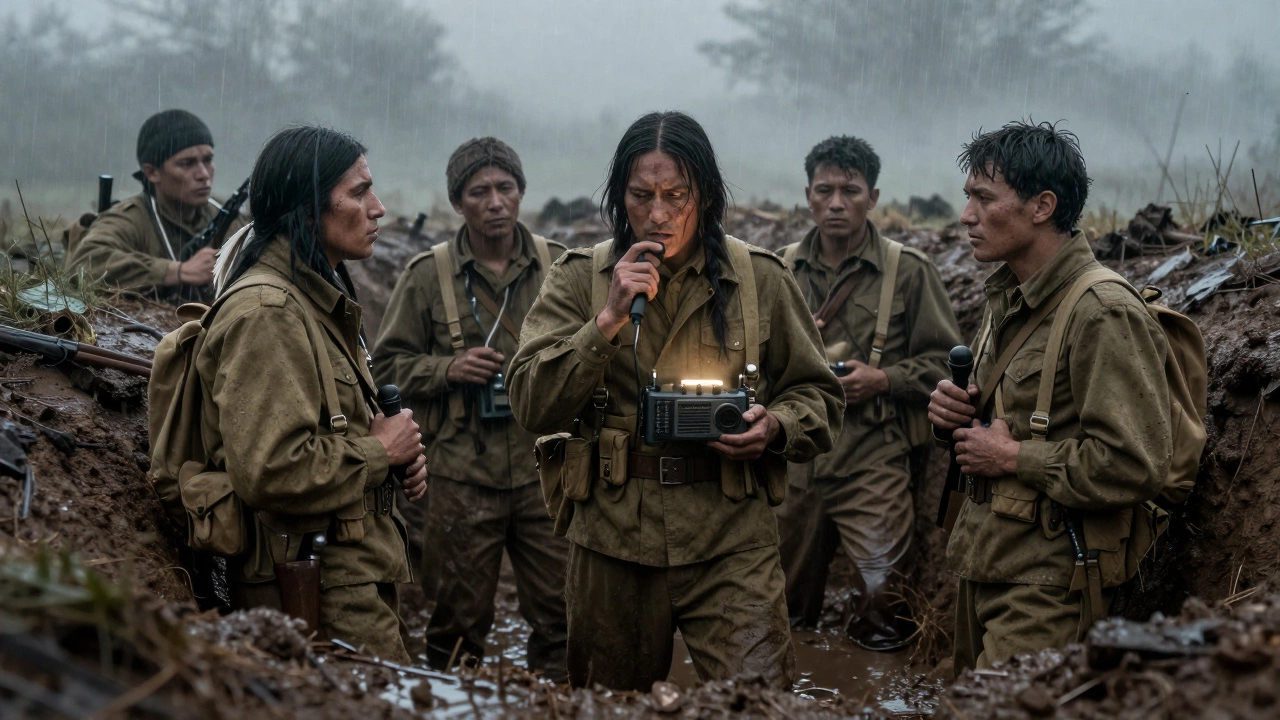
You might have heard the term "code talker" in a movie or a history book. It sounds like something out of a spy novel. But it wasn't fiction. It was real life for hundreds of Native Americans who served their country while protecting their own languages. So, what is an Indian code talker? Simply put, they were Indigenous soldiers who used their native tongues to send secret military messages during wartime. The enemy could hear the radio traffic, but they couldn't understand a word of it.
This isn't just about linguistics; it's about survival, identity, and a complex relationship between the U.S. government and its citizens. For decades, these men faced discrimination at home, only to be asked to save lives abroad using the very language officials had tried to erase from schools. Their story is one of the most unique chapters in modern military history.
The Origins: From WWI to WWII
The idea didn't start with World War II. It began earlier, in the trenches of World War I. During the Battle of Saint-Mihiel in 1918, officers noticed that German spies couldn't intercept communications sent in Choctaw. This was the first time the U.S. Army officially recognized the value of Indigenous languages as encryption tools. However, after the war ended, the program was largely forgotten. The military moved on, assuming technology would handle security.
Then came World War II. By the early 1940s, cryptographers were worried. Japan and Germany had sophisticated code-breaking units. The Enigma machine was feared, but the human element remained vulnerable. If you write a message in English and encode it with a cipher, experts can often crack the pattern over time. But if the base language itself is unknown to the enemy, the puzzle becomes nearly impossible to solve without a native speaker.
| War | Tribes Involved | Scale | Outcome |
|---|---|---|---|
| World War I | Choctaw, Chickasaw, Comanche | Small unit (approx. 19 Choctaw) | Successful tactical advantage, but program discontinued post-war |
| World War II | Navajo, Comanche, Cherokee, Houma, and others | Large scale (over 400 total across tribes) | Critical strategic impact; programs continued until end of war |
Why Navajo Stood Out
When we talk about code talkers today, most people think of the Navajo. And for good reason. The Navajo Nation had the largest population among the tribes recruited, which meant more candidates. But there was another reason: the complexity of the Navajo language. It is tonal, meaning the pitch of your voice changes the meaning of words. It has no written form in the traditional sense, making it hard for outsiders to learn quickly. Plus, dialects varied significantly between different bands of the Navajo people. A speaker from one area might not fully understand a speaker from another.
In 1942, Philip Johnston, a civilian engineer who grew up on the Navajo Reservation, proposed the idea to the Marine Corps. He argued that Navajo was perfect because it was unwritten and virtually unknown outside the tribe. The Marines agreed. They started a small test group. Within months, the results were undeniable. Messages that took minutes to encode and decode using machines could be transmitted by Navajo speakers in seconds.
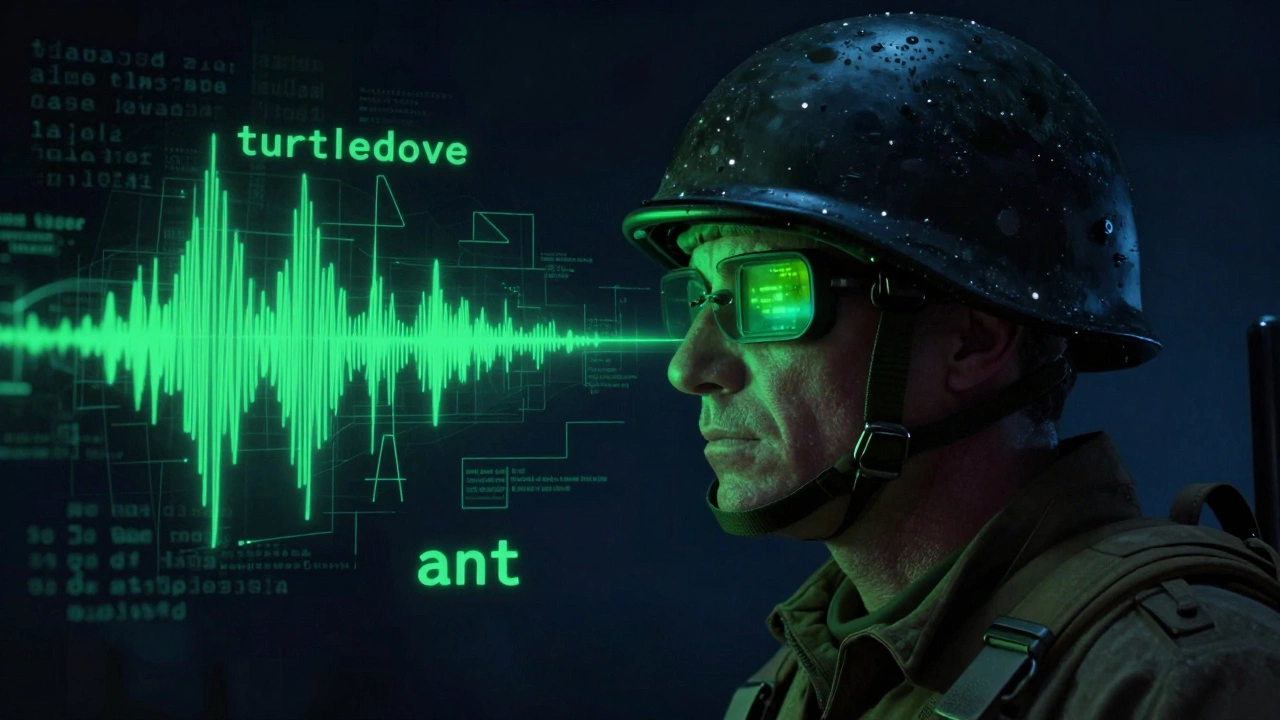
For example, the word for "turtledove" became "fighter plane." "Humpty-dumpty" meant "bombardier." "Wig-wag" meant "ammunition." They created a phonetic alphabet where every letter of the English alphabet was represented by a Navajo word. The letter "A" was "ahl-itoh" (ant). The letter "B" was "be-lah-si-lits-ahi" (bear). This allowed them to spell out technical terms that didn't exist in Navajo, like "zeppelin" or "radar."
Beyond Navajo: Other Tribes Who Served
It’s easy to forget that Navajo weren’t the only ones. Over fifteen different tribes contributed code talkers. Each brought their own linguistic strengths.
- Comanche: The Comanche code talkers served primarily in the European theater. Their language was so distinct that even other Native Americans found it difficult to understand. They were instrumental in the Battle of the Bulge.
- Cherokee: The Cherokee developed two separate codes. One was a direct translation of military terms into Cherokee. The other was a more complex system using Cherokee syllabary concepts. They served in both Europe and the Pacific.
- Houma: A smaller group from Louisiana, the Houma code talkers worked alongside the Navajo in the Pacific. Their contributions were vital but often overshadowed by the larger Navajo program.
- Menominee: These warriors served in the Pacific theater, providing secure communications for amphibious landings.
Each group faced similar challenges. They had to maintain secrecy while operating under fire. They couldn't tell their families what they were doing. Many suffered from PTSD, though it wasn't called that then. They returned home to a country that still treated them as second-class citizens, despite their heroism.
How the Code Worked: Simplicity Meets Security
You might wonder, how hard is it to break a code based on a spoken language? You’d think linguists could figure it out. But here’s the thing: the code wasn't just translation. It was a layered system. First, the message was written in English. Then, it was translated into Navajo using specific code words. Finally, it was spoken over the radio. The speed was key. A standard three-line message took about thirty seconds to transmit via machine cipher. A Navajo code talker could do it in ten seconds.
Imagine being a Japanese intelligence officer listening to static-filled radio waves. You hear rapid-fire speech that sounds like clicking and whistling. You don't know the grammar. You don't know the vocabulary. You don't even know if it's a single language or multiple dialects mixed together. Without a native speaker captured and forced to cooperate-which never happened-the code remained unbroken.
There were no books. No dictionaries. Everything was memorized. If a code talker was killed, the knowledge died with him. That made the role incredibly dangerous. They were high-value targets. Enemy forces knew that taking out a radio operator meant losing communication. Code talkers often sat right next to the radios, exposed to sniper fire and artillery.
The Struggle for Recognition
Here’s the bitter irony. These men fought for a nation that had spent generations trying to assimilate them. Boarding schools banned them from speaking their languages. They were beaten for using their mother tongues. Yet, when war came, that same language became their greatest weapon. After the war, the program was declassified. The code talkers went silent. They couldn't talk about it. Some didn't want to. Others felt it was just part of their duty.
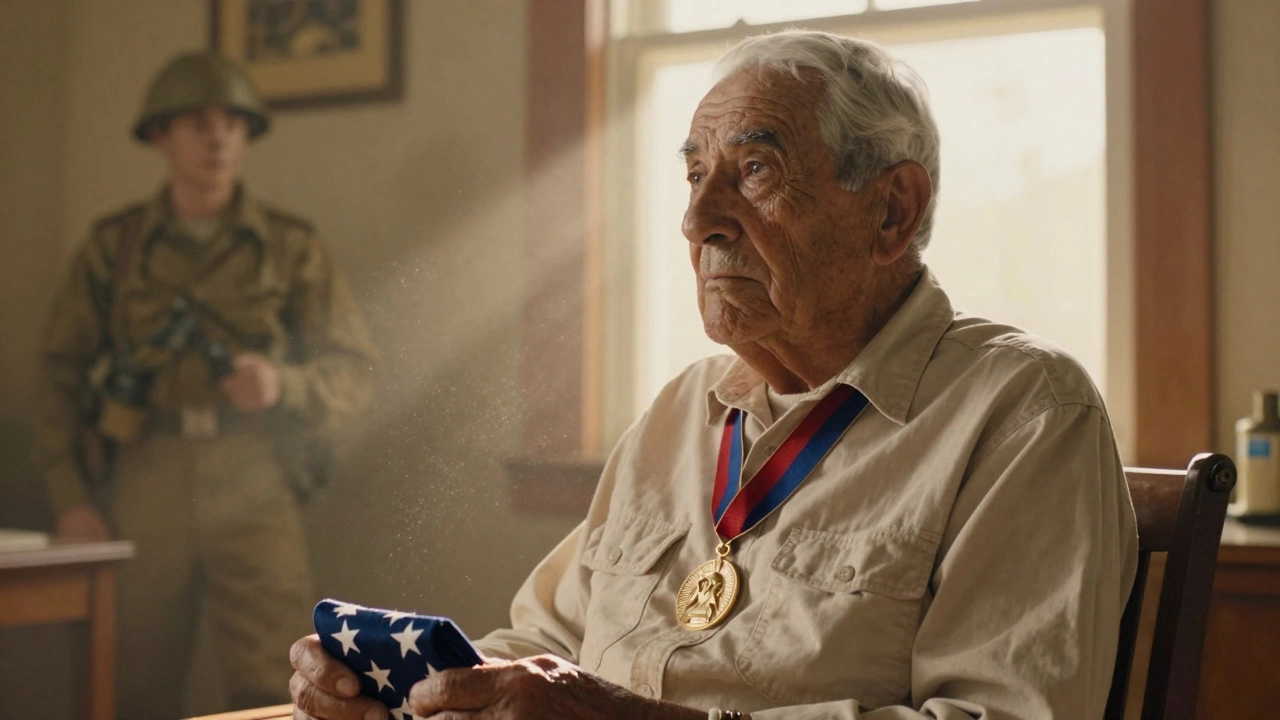
For decades, they received little recognition. No medals. No public ceremonies. They lived quiet lives, working jobs far removed from the glory of war. It wasn't until the 1980s and 90s that the truth began to surface. Veterans started speaking out. Historians dug deeper. In 2001, Congress passed legislation awarding Congressional Gold Medals to the Navajo and other code talkers. It was long overdue.
Today, we remember them not just as soldiers, but as guardians of culture. Their service helped preserve their languages. Because of the demand for code talkers, many young men learned to speak their ancestral tongues fluently, passing them down to younger generations who might have otherwise lost them.
Legacy in Modern Times
Does the concept of code talking still matter? Absolutely. While we now use digital encryption, the principle remains the same: obscurity and complexity protect information. The success of the code talkers proved that human ingenuity can outmatch machinery. It also highlighted the importance of diversity in problem-solving. A homogeneous team might miss angles that a diverse group sees instantly.
Moreover, their story teaches us about resilience. Imagine carrying the weight of your community’s survival on your shoulders, all while fighting for a country that doesn't fully accept you. That requires immense strength. It’s a reminder that heroism often comes from unexpected places.
If you’re interested in learning more, look beyond the movies. Read the memoirs of the veterans themselves. Listen to recordings of the Navajo code. Understand the context of the era. It adds depth to the narrative. It transforms a cool fact into a profound human story.
Were all code talkers from the Navajo tribe?
No, while Navajo code talkers are the most famous, members from over fifteen tribes served, including Comanche, Cherokee, Houma, Menominee, and Cheyenne. Each tribe developed its own unique coding systems based on their respective languages.
Was the Navajo code ever broken by the enemy?
No, the Navajo code was never broken during World War II. Despite intense efforts by Japanese cryptanalysts, the complexity of the language, combined with the lack of written records and the speed of transmission, kept the code secure throughout the war.
Why did the U.S. military choose Native American languages for codes?
The military chose these languages because they were largely unwritten, had complex grammatical structures, and were unknown to potential enemies. This made them ideal for creating unbreakable ciphers without relying solely on mechanical devices, which could be reverse-engineered.
When did the code talker programs end?
The primary code talker programs ended shortly after World War II concluded in 1945. With the advent of advanced electronic encryption and computers, the need for human-based linguistic codes diminished. However, some limited use continued in Korea and Vietnam, though on a much smaller scale.
Did code talkers receive special recognition during their lifetime?
For many years, no. The program was classified, so veterans could not discuss their service publicly. It wasn't until the late 20th century that they began receiving official honors, such as the Congressional Gold Medal in 2001, acknowledging their critical contribution to Allied victory.