What Is a Common Indian Phrase That Still Moves Millions?
 Jan, 27 2026
Indian Resilience Phrase Finder
How This Tool Works
Describe your current situation or emotional state, and we'll suggest the most appropriate Indian phrase for resilience. Our recommendations are based on cultural wisdom from the article.
Ask any Indian what phrase they hear every day, and chances are they’ll say "Sab kuchh theekah hai" - everything will be fine. It’s not just words. It’s a rhythm. A heartbeat. A quiet anchor in chaos. You hear it when the train is late, when the power goes out during monsoon, when the grocery bill hits harder than expected. It’s not denial. It’s resilience wrapped in calm.
Why This Phrase Lives in Every Home
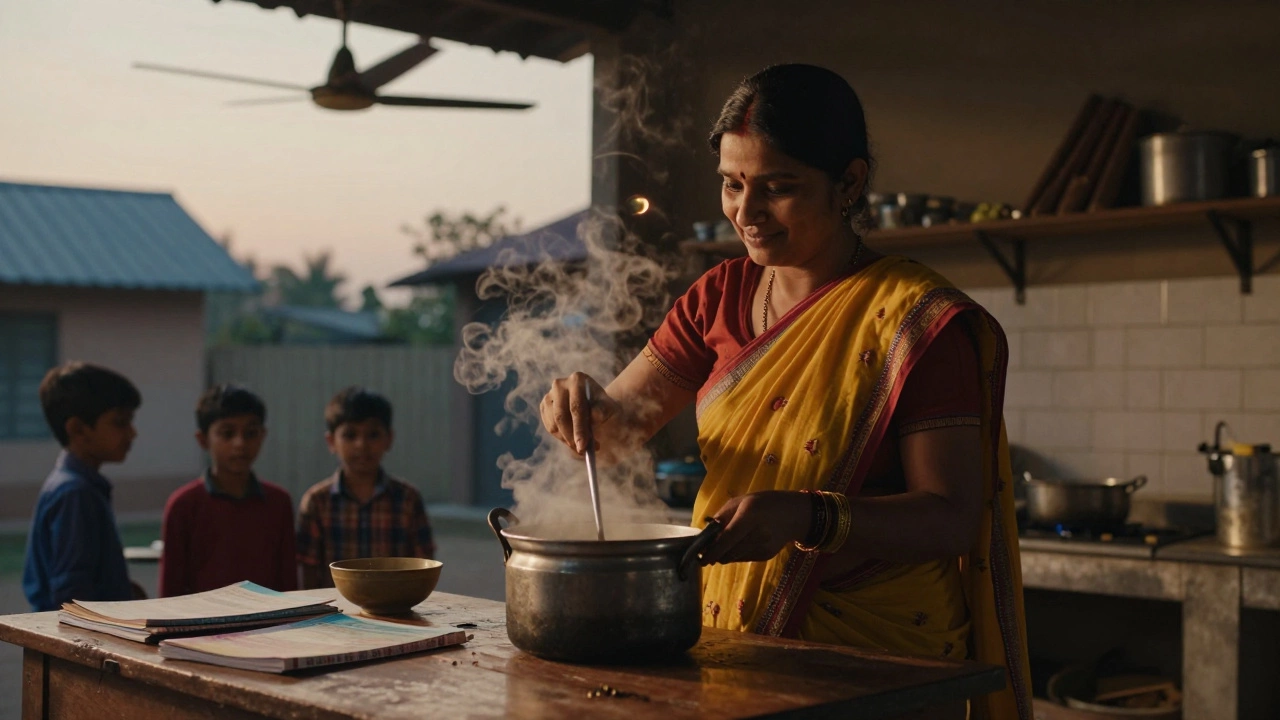
"Sab kuchh theekah hai" isn’t from a book. It wasn’t written by a poet or quoted by a philosopher. It was born in the crowded lanes of Delhi, the tea stalls of Kolkata, the small towns of Uttar Pradesh, and the kitchens of Tamil Nadu. It’s the phrase a mother says while stirring dal, a father says while fixing a broken fan, a sibling says when you’re crying over a failed exam. It doesn’t promise solutions. It promises presence.
Compare it to Western phrases like "stay positive" or "just believe in yourself." Those are about action. "Sab kuchh theekah hai" is about endurance. It’s the difference between pushing through a storm and learning to dance in the rain. You don’t need to fix it. You just need to wait. And trust.
Other Common Phrases That Carry Weight
There are dozens more - each tied to a region, a language, a way of life.
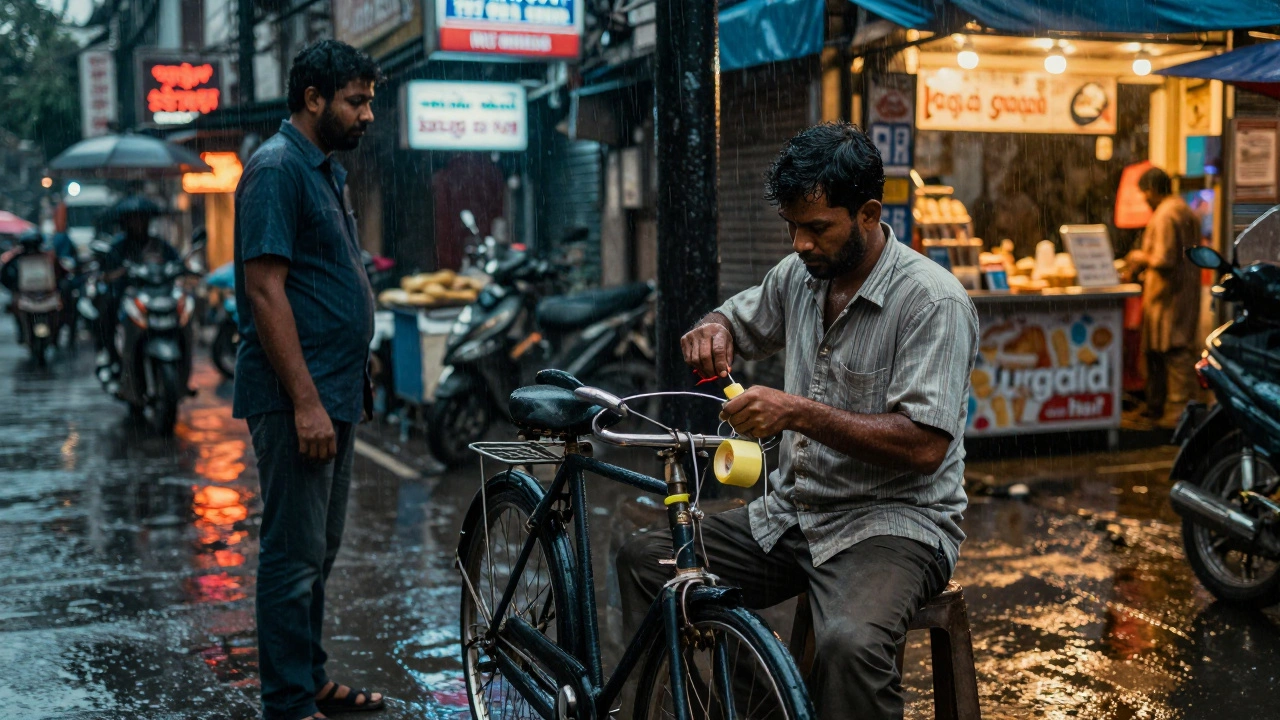
- "Jugaad" - the art of making do. It’s not cheating. It’s improvising. A broken scooter held together with wire and hope? That’s jugaad. It’s not a flaw - it’s a skill passed down for generations.
- "Bhaiya, kya baat hai?" - "Bro, what’s up?" Not just a greeting. It’s a way to say, "I see you, and I’m here." Used by street vendors, auto drivers, even office clerks. It cuts through hierarchy.
- "Dil se" - "From the heart." You don’t say this lightly. If someone tells you "yeh dil se hai," they mean it’s real. No fluff. No performance. Just truth.
- "Yeh toh bas ek din ka hai" - "This is just one day." Said during heartbreak, job loss, or failure. It doesn’t minimize pain. It reminds you it won’t last forever.
These aren’t random sayings. They’re survival tools. They’re emotional first aid. In a country where 70% of people live on less than $3 a day, language becomes a shield. And these phrases? They’re the strongest parts of it.
How These Phrases Shape Mindset
Think about how Western motivation works: set goals. hustle. optimize. win. Indian wisdom? It’s about flow. Acceptance. Patience. There’s a reason the Bhagavad Gita says, "Karmanye vadhikaraste, Ma phaleshu kadachana" - you have the right to act, but not to the fruits. That’s not passive. It’s deeply strategic.
When you internalize "Sab kuchh theekah hai," you stop wasting energy on things you can’t control. You focus on what you can: your effort, your kindness, your breath. That’s not laziness. That’s emotional intelligence built over centuries.
Studies from the Indian Institute of Management show that people who regularly use these phrases report lower stress levels during economic downturns. Not because they’re ignoring problems - but because they’ve built mental frameworks that don’t collapse under pressure.
Why You Won’t Find Them in Motivational Posts
Scroll through Instagram. You’ll see quotes like "Hustle harder" or "Success is guaranteed if you believe." They’re loud. They’re shiny. They’re made for likes.
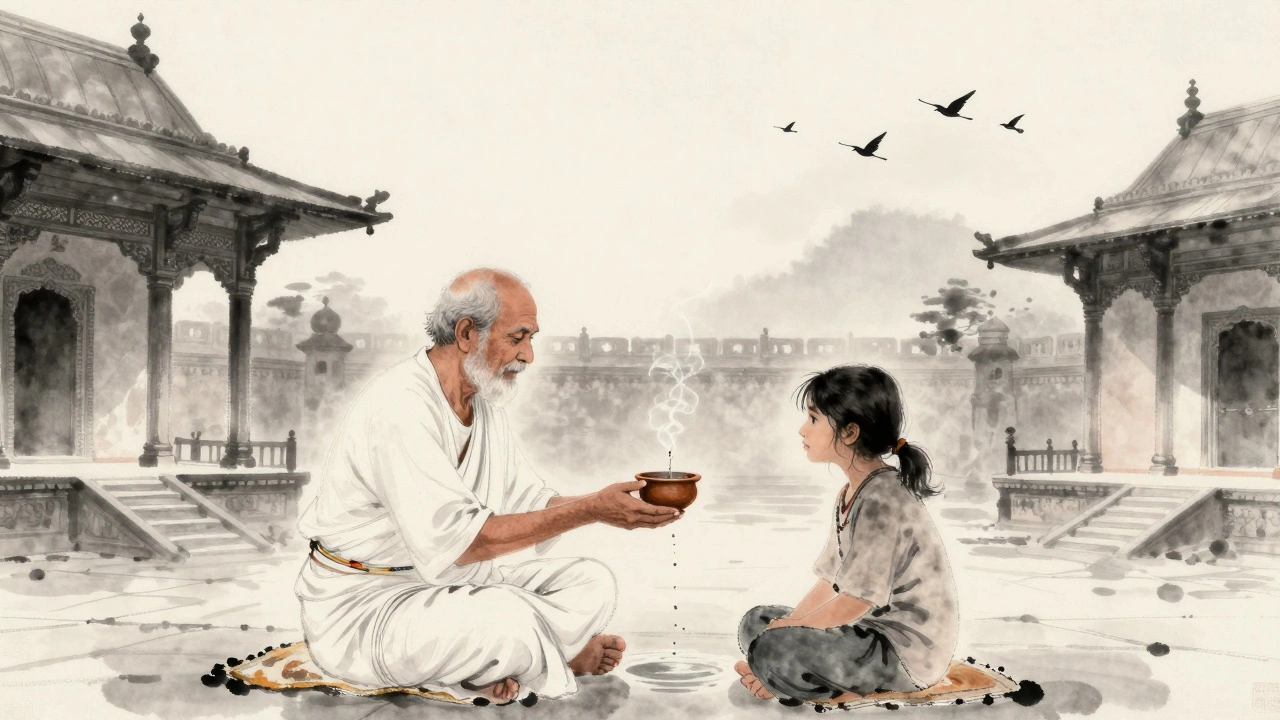
But the real Indian wisdom? Quiet. Unpolished. Unposted. You won’t find "Jugaad" on a poster. You’ll find it in the uncle who fixes your phone with a rubber band and a prayer. You won’t see "Dil se" on a T-shirt. You’ll hear it from the old man at the temple who gives you a cup of water without asking your name.
These phrases don’t sell. They sustain.
What These Phrases Teach the World
Global wellness trends talk about mindfulness. Meditation. Digital detox. But Indians didn’t need apps to learn presence. They had phrases. They had rituals. They had generations of people saying, "Kal dekhte hain" - we’ll see tomorrow.
That’s not procrastination. That’s wisdom. It’s knowing that not every problem needs an immediate fix. Sometimes, time does the healing. Sometimes, silence does the talking.
When the world burns out chasing perfection, Indian phrases whisper: "It’s okay to be broken. It’s okay to wait. It’s okay to not have answers right now."
How to Use These Phrases in Your Life
You don’t need to speak Hindi to use them. You just need to feel them.
- When you’re overwhelmed - say "Sab kuchh theekah hai" out loud. Not as a prayer. As a reminder.
- When someone asks how you are - answer with "Dil se theekah" if you mean it. No fake smiles.
- When you’re stuck - think "Jugaad." What’s one small thing you can do with what you have?
- When you’re grieving - repeat "Yeh toh bas ek din ka hai." Let it hold space for your pain.
These aren’t magic spells. They’re mental tools. Like a hammer. Or a compass. You don’t need to believe in them. You just need to use them.
The Real Power Is in the Silence
The most powerful Indian phrase isn’t spoken at all. It’s the pause after someone says "Bhaiya, kya baat hai?" - and you don’t answer right away. The silence says: I’m here. I’m listening. I’m not rushing you.
That’s the quietest, deepest wisdom of all.
What is the most common Indian phrase used daily?
The most common daily phrase is "Sab kuchh theekah hai" - meaning "everything will be fine." It’s used across regions and languages, from Mumbai to Manipur, in homes, markets, and workplaces. It’s not a promise of change, but a comfort in uncertainty.
Are these phrases only in Hindi?
No. While Hindi phrases like "Sab kuchh theekah hai" are widespread, every Indian language has its own version. In Tamil, it’s "Sarvam sollum" (everything will be said). In Bengali, "Sob thik thakbe". In Marathi, "Sarv kahi theekah". The meaning stays the same - resilience through acceptance.
Why don’t these phrases appear in Western motivational content?
Western motivation focuses on control, action, and outcomes. Indian phrases focus on acceptance, presence, and endurance. They don’t fit the "hustle culture" narrative. But that’s why they’re more sustainable - they don’t burn you out. They ground you.
Can non-Indians use these phrases meaningfully?
Absolutely. You don’t need to be Indian to feel the weight of "Dil se" or the relief of "Yeh toh bas ek din ka hai." These are human responses to stress, loss, and uncertainty. They’re universal in their truth, even if their words are local.
What’s the difference between "Jugaad" and just being resourceful?
Jugaad isn’t just being clever. It’s improvising under constraint - with no budget, no tools, no backup. It’s using a plastic bottle as a water jug, a bungee cord as a belt, or a friend’s bike to deliver a package. It’s born from necessity, not convenience. It’s a cultural skill, not a hack.
Final Thought: The Quiet Revolution
India doesn’t shout its wisdom. It whispers it - in the rustle of a sari, the clink of a tea cup, the pause before a reply. These phrases aren’t relics. They’re alive. They’re in your grandmother’s voice. In your cousin’s laugh after a bad day. In the way a stranger helps you carry your bags without asking why.
Next time you feel like you’re falling apart, try saying "Sab kuchh theekah hai" - not to pretend everything’s fine. But to remind yourself that you’re still here. And that’s enough.