What Do You Call Someone From India? The Right Terms and What They Really Mean
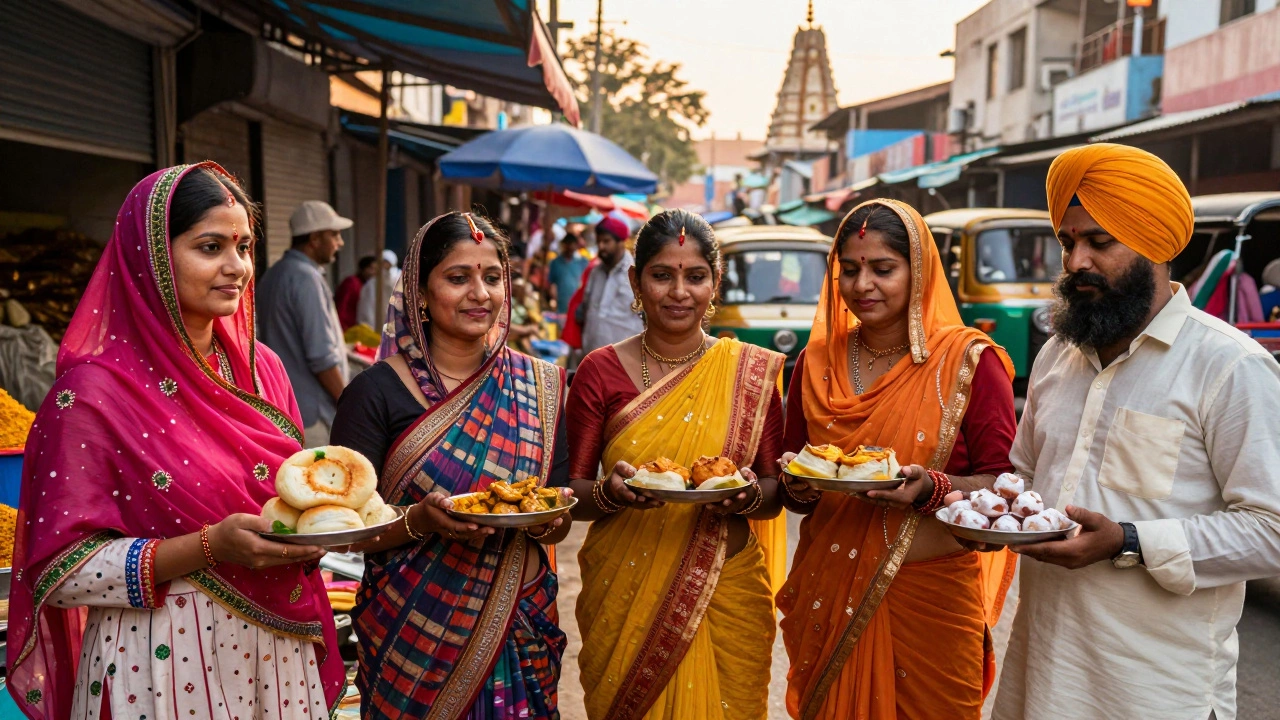 Feb, 3 2026
Cultural Reference Checker
Enter a phrase you might say about someone from India. We'll check if it's respectful and accurate based on cultural context.
Enter a phrase to check its appropriateness
When you meet someone from India, what do you call them? It sounds simple, but the answer isn’t just "Indian." People from India carry layers of identity - regional, linguistic, cultural - and how you refer to them matters more than you think. You might say "Indian" out of habit, but that’s like calling someone from the U.S. just "American" without considering they might be from Texas, Louisiana, or Native Hawaiian heritage. India isn’t a single box. It’s 28 states, 8 union territories, over 19,500 languages and dialects, and hundreds of distinct communities. So what’s the right way to refer to someone from India? And when does the word "Indian" fall short?
"Indian" Is Correct - But It’s Not the Whole Story
Yes, "Indian" is the official, legal, and widely accepted term for someone from the Republic of India. It’s used in passports, government forms, and international settings. If you’re filling out a form or introducing someone to a global audience, "Indian" works perfectly fine. But here’s the thing: in India, people rarely use "Indian" to describe themselves in daily life. Ask someone in Mumbai what they are, and they’ll likely say "Maharashtrian." Ask someone in Chennai, and they’ll say "Tamil." Ask someone from Punjab, and they’ll say "Punjabi."
That’s because identity in India is deeply tied to region, language, and community. The word "Indian" is a national label - like "European" - but it doesn’t capture the richness beneath. A person from Kerala might speak Malayalam, eat fish curry daily, and celebrate Onam. A person from Assam might speak Assamese, drink tea grown in their hills, and celebrate Bihu. Both are Indian. But their lives are shaped by completely different traditions, foods, clothing, and festivals.
Why "Indian" Feels Too Broad - And When It’s Not Enough
Imagine meeting someone from India and saying, "Oh, you’re Indian? Do you like curry?" That’s not just lazy - it’s reductive. Curry isn’t a single dish. It’s a word English speakers created to describe hundreds of different spiced stews. In India, you have masala dals from the north, sambar from the south, fish kalia from Bengal, and ghughni from Bihar. Each has its own history, spices, and preparation method.
And then there’s religion. India is home to Hindus, Muslims, Sikhs, Christians, Jains, Buddhists, Parsis, and tribal faiths. Calling someone "Indian" doesn’t tell you if they fast during Ramadan, wear a turban, go to church on Sunday, or follow Jain non-violence. A Sikh from Punjab and a Muslim from Hyderabad are both Indian - but their daily lives, dress, and traditions can be worlds apart.
Even within religions, there are deep divisions. A Brahmin from Varanasi and a Dalit from rural Odisha may both be Hindu, but their experiences, access to resources, and social treatment are shaped by caste - a system still felt today, even if it’s illegal to practice. So "Indian" as a term hides these realities. It flattens complexity into a single label.
What Do Indians Call Themselves?
Most Indians will say their state or language first. If you’re in Delhi, you’ll hear "I’m from Uttar Pradesh" or "I’m a Punjabi." If you’re in Bangalore, you’ll hear "I’m Kannadiga" - meaning someone from Karnataka who speaks Kannada. In the northeast, you’ll hear "I’m Naga," "I’m Mizo," or "I’m Bodo." These aren’t just regional identities - they’re tied to history, resistance, language survival, and pride.
Some people also identify by their mother tongue. "I’m a Telugu speaker," "I’m a Bengali," "I’m a Marathi." These terms carry cultural weight. A Bengali might talk about Rabindranath Tagore, Durga Puja, and fish with mustard sauce. A Marathi speaker might reference Shivaji Maharaj, Ganesh Chaturthi, and vada pav. These are more than labels - they’re anchors to heritage.
And then there’s the urban-rural divide. A software engineer from Hyderabad and a farmer from Jharkhand are both Indian. But their daily struggles, aspirations, and even the way they speak English are different. One might use "WhatsApp" to coordinate a wedding. The other might walk 5 kilometers to a market with a cart full of millet. "Indian" doesn’t capture that.
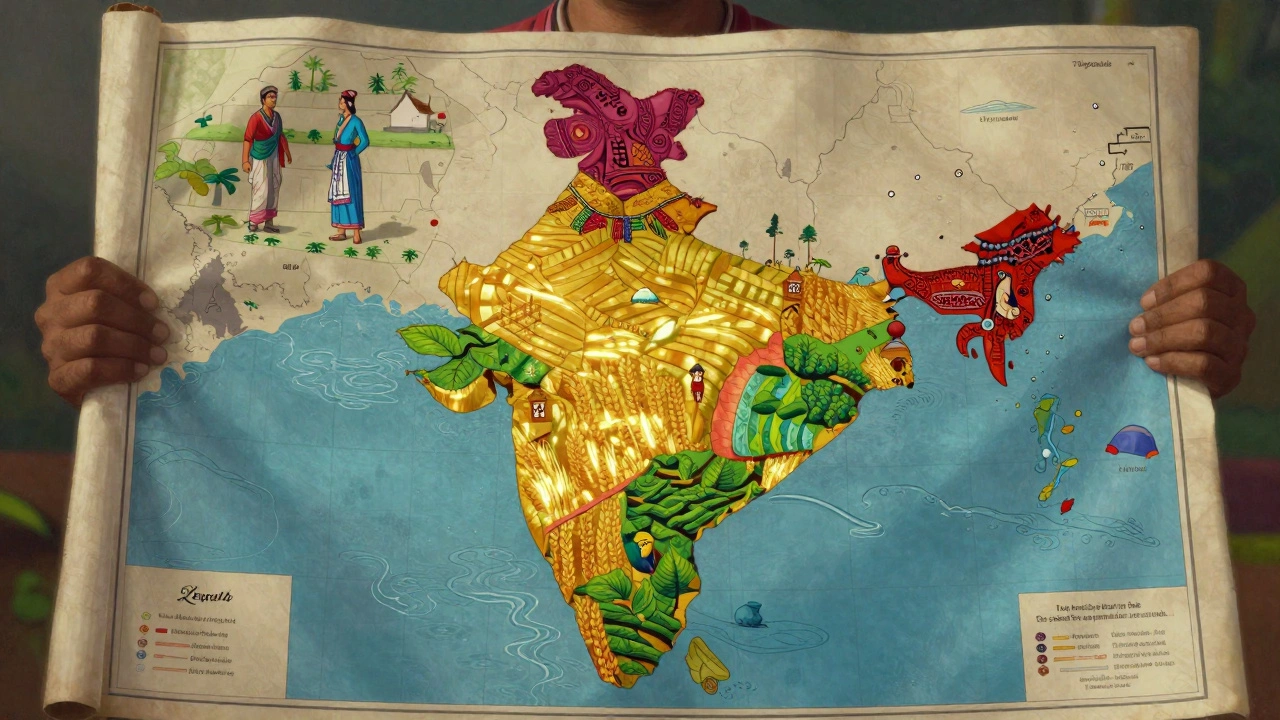
What Not to Say - And Why
Here are common mistakes people make:
- "Are you from India? So, do you eat with your hands?" - Yes, many do. But so do people in parts of Africa, the Middle East, and Southeast Asia. It’s not unique to India.
- "Do you have cows everywhere?" - Cows are sacred in Hinduism, but not everyone in India is Hindu. And cows aren’t roaming freely in most cities.
- "You must be good at math." - This stereotype ignores that India has 1.4 billion people. Some are engineers. Some are artists. Some are street vendors. Some are poets.
- "You’re so exotic." - That word reduces a person to a curiosity. It’s not a compliment. It’s a way to distance them as "the other."
These assumptions come from a lack of exposure - not malice. But they still hurt. They turn a person into a stereotype instead of a human being with a family, dreams, fears, and a story.
How to Talk About Someone From India - The Right Way
If you’re curious, ask. Instead of guessing, say: "I’d love to learn more about your background." Then listen. You might find out they’re a third-generation Gujarati immigrant who grew up in Toronto. Or a tribal woman from Jharkhand who’s now a teacher in Delhi. Or a Tamil-speaking engineer from Chennai who loves K-pop.
Use specific terms when you know them:
- "You’re from Kerala? What’s it like growing up near the backwaters?"
- "I heard you’re from Odisha. Have you been to Puri during Rath Yatra?"
- "Are you Punjabi? I’ve always wanted to try makki di roti with sarson ka saag."
These questions show respect. They invite connection. They recognize that India isn’t a monolith - it’s a mosaic.
What About the Diaspora?
There are over 35 million people of Indian origin living outside India - in the U.S., Canada, the U.K., the Gulf, Australia, and the Caribbean. Many of them still identify as Indian. But they also say "Indian-American," "Indian-British," or "Indo-Caribbean." These terms honor both roots and belonging. Someone in Trinidad might celebrate Diwali and eat roti with curry, but they’re also Trinidadian. Their identity is layered. And that’s okay.
For them, "Indian" is part of their story - not the whole story. The same should be true for people living in India. No one should be reduced to a single word.
Final Thought: Identity Is Personal
The best way to refer to someone from India? Ask. Listen. Respect. If they say "I’m from Tamil Nadu," say "Oh, that’s beautiful - I’ve heard the music there is incredible." If they say "I’m Indian," then use that word. But never assume. Never generalize. Never reduce.
India isn’t just a country. It’s a continent of cultures. And every person from there carries a story that no single word can hold.
Can I call someone from India "Hindu"?
No. Not everyone from India is Hindu. India is home to the world’s largest Muslim population outside Indonesia, millions of Sikhs, Christians, Jains, Buddhists, and tribal communities. Calling someone "Hindu" based on their nationality is inaccurate and offensive. Always ask about their faith - don’t assume.
Is it okay to say "Indian" in casual conversation?
Yes - "Indian" is correct and widely used, especially in formal or international contexts. But if you’re speaking with someone from India, they may prefer to share their regional or linguistic identity. Use "Indian" as a starting point, not the full answer. Let them guide you.
Why do some people from India dislike being called "Asian"?
Because "Asian" in the U.S. and Europe often refers only to East Asians - Chinese, Japanese, Korean. People from South Asia - including India - have different histories, appearances, languages, and cultures. Being lumped into "Asian" erases their unique identity. "South Asian" is more accurate, but even that’s a broad category. "Indian" is clearer when you mean someone from India.
Do people from India use "Indian" to describe themselves?
In formal settings - like job applications, passports, or international travel - yes. But in daily life, most people lead with their state, language, or community. "I’m a Bengali," "I’m from Andhra," "I’m a Maharashtrian" - these are more meaningful to them. "Indian" is the umbrella. The rest is the detail.
Is "Bharatiya" the same as "Indian"?
Yes. "Bharatiya" is the Hindi word for "Indian." It’s used in official contexts, media, and poetry. You’ll hear it in news broadcasts and national songs. But in everyday speech, most people still say "Indian" - even in Hindi-speaking areas. "Bharatiya" feels more formal or patriotic. It’s not wrong to use it, but it’s not how most people talk.