The Saddest Poem Ever Written: A Global and Indian Perspective
 Sep, 25 2026
Find Your Saddest Poem Match
Poetry is subjective. The "saddest" poem depends entirely on your current experience of loss, anger, or longing. Select the statement that best describes your current feeling to find a poetic match from the article's discussion.
Select an emotion above to reveal a poem recommendation.
Is there a single saddest poem ever written? That’s the question that keeps poets, critics, and heartbroken readers up at night. If you ask ten people, you’ll get ten different answers. Some will point to Wilfred Owen’s war horrors. Others will swear by Emily Dickinson’s quiet despair. And if you’re reading this from Delhi or Mumbai, your mind might drift toward the haunting verses of Mirza Ghalib or the raw pain in Gulzar’s letters.
The truth is, sadness isn’t a contest with a winner’s podium. It’s personal. The poem that breaks your heart depends entirely on what you’ve lost, who you’ve loved, and how you process pain. But certain poems have stood the test of time because they capture universal grief so perfectly that they feel like they were written specifically for you. Let’s look at why these specific works resonate so deeply, especially within the context of short poetry and the rich tradition of Indian literary sorrow.
Why We Search for the "Saddest" Poem
We don’t just read sad poems for fun. We read them because we need validation. When you are grieving, happiness feels like an insult. You want someone else to say, "Yes, this hurts. This is unbearable." A great sad poem does exactly that. It gives shape to formless pain.
This search often leads us to short poetry. Why? Because long epics require emotional stamina. Short poems hit harder, faster. They are like a sudden punch rather than a slow bruise. In the Indian context, where oral traditions and concise expression (like the Ghazal and Haiku) are deeply rooted, brevity is a powerful tool for conveying intense emotion.
| Feature | Western Tradition (e.g., Romanticism) | Indian Tradition (Urdu/Hindi) |
|---|---|---|
| Primary Emotion | Individual loss, existential dread | Separation (Viraha), divine longing |
| Structure | Free verse, Sonnets | Ghazal, Rubaiyat, Dohe |
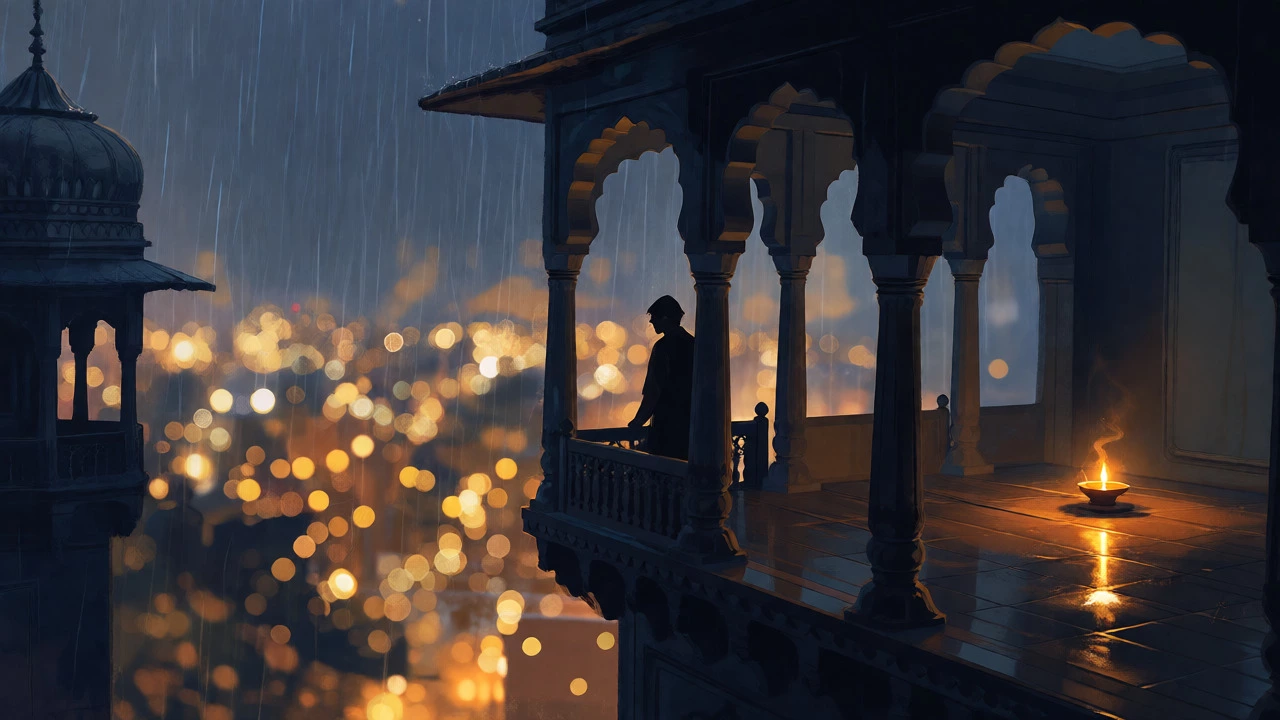
| Key Imagery | Nature, death, darkness | Rain, moonlight, empty rooms |
| Resolution | Often unresolved despair | Acceptance or spiritual surrender |
The Western Contenders: Silence and War
If you look at global lists, two names appear constantly: Emily Dickinson and Wilfred Owen.
Dickinson’s "Because I could not stop for Death" is terrifyingly calm. She personifies Death as a polite gentleman caller. There is no screaming, no drama. Just a carriage ride into eternity. The sadness here is cold. It’s the realization that life ends quietly, without fanfare. For many modern readers dealing with depression or isolation, this quiet resignation hits harder than any dramatic tragedy.
Then there is Wilfred Owen. His poem "Dulce et Decorum Est" is visceral. He describes a gas attack during World War I. You can smell the chlorine. You can see the frothing mouth of a dying soldier. Owen writes about the "old Lie": that it is sweet and fitting to die for one’s country. The sadness here is anger mixed with pity. It’s the grief of wasted youth. If your definition of sad involves injustice and horror, Owen wins.

The Indian Soul: Viraha and Divine Longing
In India, sadness has a different texture. It is rarely just about death; it’s about separation. The concept of Viraha (the pain of separation) is central to our literary heritage. Whether it’s Radha waiting for Krishna or a lover waiting for a beloved who never returns, the ache is the same.
Mirza Ghalib, the legendary Urdu poet, mastered this. His couplets often sound romantic until you read them twice. Take his famous line: "Hazaaron khwahishen aisi ke har khwahish pe dam nikle." (Thousands of desires, each worth dying for). The sadness isn't in the desire itself, but in the futility of it. He acknowledges that getting what you want doesn't bring peace. That’s a profound, mature sadness that resonates with adults who have lived enough to know that fulfillment is elusive.
More recently, Gulzar, known for his minimalist style, wrote lines that cut deep because they are so simple. His work in films like 1942: A Love Story or his standalone poetry collections uses everyday language to describe extraordinary loneliness. He doesn’t use archaic words. He talks about rain, windows, and silence. This accessibility makes his sadness immediate and relatable for the modern urban reader in cities like Delhi or Bangalore.
Short Poetry: The Power of Brevity
You mentioned "short poetry," and this is crucial. The Japanese Haiku is a masterclass in sad minimalism. Consider Basho’s famous frog poem, which implies the passage of time and solitude in just three lines. While not explicitly tragic, its emptiness evokes a melancholic stillness.
In Hindi, the Dohe (two-line couplet) serves a similar purpose. Kabir’s dohes often speak of the transient nature of life. "Jaise til mein tel hai, jyon ghas mein agni" (As oil is in sesame seeds, as fire is in grass). The sadness lies in the inevitability of change. You can’t hold onto anything. These short forms force the poet to distill complex emotions into a few drops. For a reader scrolling through social media or looking for quick comfort, these bite-sized tragedies are more effective than lengthy narratives.
How to Choose Your Own Saddest Poem
So, whose poem is the saddest? It depends on your current emotional state. Here is a quick guide to help you find the right match:
- If you feel numb or isolated: Read Emily Dickinson. Her internal world mirrors the feeling of being trapped inside your own head.
- If you are angry at the world’s cruelty: Read Wilfred Owen or T.S. Eliot’s "The Waste Land." Their disillusionment matches your frustration.
- If you miss someone deeply: Read Ghalib or Faiz Ahmed Faiz. Their focus on separation and memory validates your longing.
- If you seek peace in pain: Read Rabindranath Tagore’s "Gitanjali." His sadness is spiritual, offering comfort through acceptance of the divine will.
Notice how Tagore differs from the others. His sadness is not a dead end; it’s a doorway. This distinction is vital in Indian philosophy. Sorrow is not something to defeat; it’s something to transcend.
The Role of Context in Modern Reading
Today, we consume poetry differently. We see snippets on Instagram or hear them in Bollywood songs. This changes how we perceive sadness. A line from a Gulzar song might make you cry in traffic, while the full poem might not. This fragmentation creates a new kind of poetic experience. We connect with fragments because they fit into our busy, distracted lives.
However, don’t underestimate the power of sitting down with a full collection. The buildup matters. In a Ghazal, the final couplet (Maqta) delivers the emotional payload after setting the stage with previous verses. Rushing to the end kills the magic. Give yourself permission to read slowly. Let the rhythm of the words wash over you. Sometimes, the sadness comes not from the meaning, but from the sound-the heavy 'gh' sounds in Urdu, or the soft vowels in Hindi.
What is generally considered the saddest poem in English?
While subjective, "Funeral Blues" by W.H. Auden and "Dulce et Decorum Est" by Wilfred Owen are frequently cited. Auden’s poem captures the absolute devastation of losing a partner, demanding the entire universe stop for his grief. Owen’s work captures the horrific, senseless waste of war. Both are contenders for the title depending on whether you value personal loss or collective tragedy more.
Which Indian poet is known for the saddest verses?
Mirza Ghalib is often regarded as the master of melancholy in Urdu poetry. His exploration of unfulfilled desires and existential dread is unmatched. However, for modern readers, Gulzar is highly influential due to his accessible, contemporary style that addresses loneliness and separation in a way that resonates with today’s urban audience.
Why are short poems often sadder than long ones?
Short poems rely on implication and white space. They leave room for the reader’s own pain to fill the gaps. A long poem explains the sadness; a short poem evokes it. This immediacy creates a sharper emotional impact, akin to a sudden shock rather than a slow burn, making them feel more intensely sad in the moment of reading.
Can reading sad poetry actually help with depression?
Yes, for many people. It provides catharsis and reduces feelings of isolation. Knowing that someone else felt this exact pain centuries ago can be comforting. However, it should not replace professional therapy. It works best as a complementary practice for processing emotions, not curing clinical conditions.
What is the concept of Viraha in Indian poetry?
Viraha refers to the intense pain of separation, particularly between lovers or between the human soul and the Divine. It is a central theme in Bhakti and Sufi traditions. Unlike Western notions of grief which often focus on death, Viraha focuses on absence and longing, creating a unique type of melancholic beauty prevalent in Indian short poetry.