Important Inspirational Quotes on India That Capture Its Spirit
 Dec, 1 2025
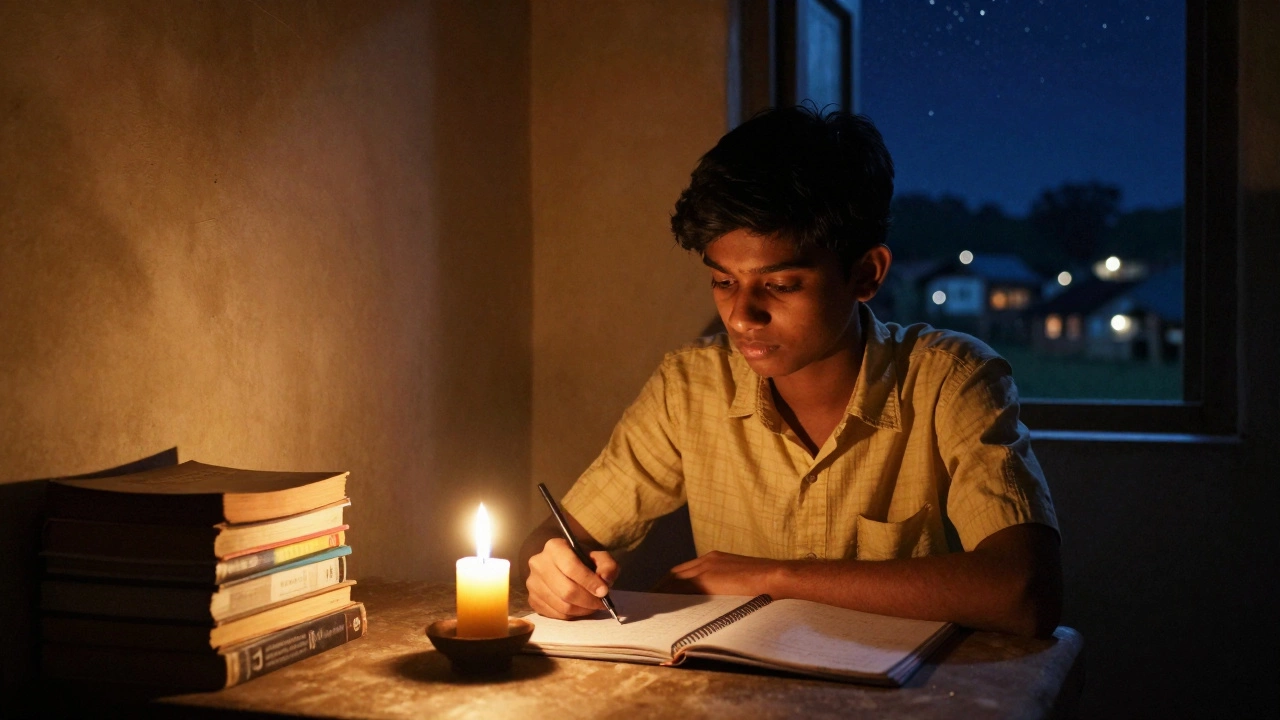
India isn’t just a country-it’s a living library of ideas, struggles, and triumphs. Its people have spoken in proverbs, poems, and powerful statements that echo across generations. These aren’t just words on a poster. They’re the quiet strength of a farmer at dawn, the fire of a student studying by candlelight, the calm of a grandmother teaching patience through silence. If you want to understand India, listen to what its greatest minds have said-not just about the land, but about life itself.
"Truth and non-violence are my God." - Mahatma Gandhi
This quote isn’t just history. It’s still the heartbeat of India’s moral compass. Gandhi didn’t just lead a movement; he redefined power. He showed that you don’t need weapons to change a nation. You need truth, discipline, and unshakable courage. Today, when people talk about protest, justice, or peace, they’re still echoing his words. In a world obsessed with noise, Gandhi’s quiet strength feels more urgent than ever. His philosophy wasn’t abstract-it was practiced daily, in markets, villages, and prisons. That’s why it still moves people, not because it’s old, but because it’s real.
"Education is the most powerful weapon which you can use to change the world." - Dr. APJ Abdul Kalam
Dr. Kalam didn’t just build missiles-he built dreams. As India’s Missile Man and later its President, he never lost sight of one thing: children. He believed every child, no matter where they were born, deserved to learn. He walked into villages with books in hand, not speeches. He told students, "You have to dream before your dreams can come true." That’s why schools across India still hang his pictures. His quote isn’t about degrees or exams. It’s about breaking chains-poverty, ignorance, fear-through learning. In 2025, with AI and automation reshaping jobs, his message isn’t just inspirational. It’s survival.
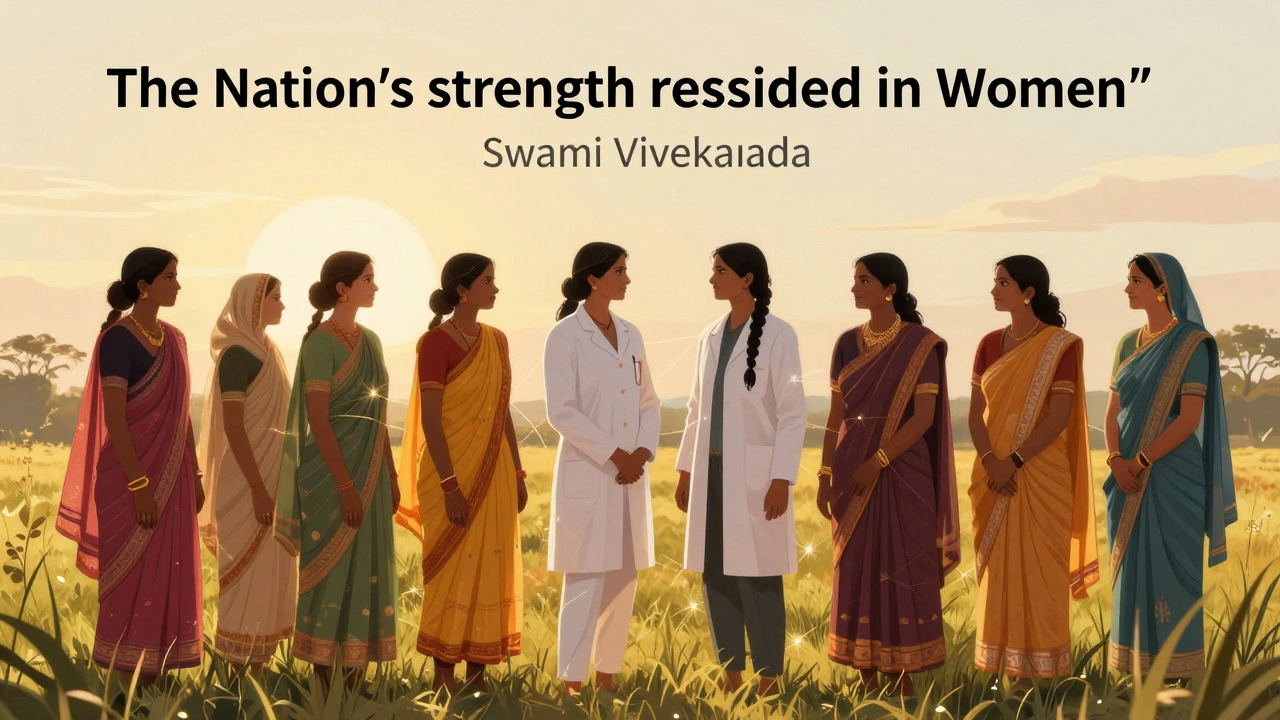
"A nation’s strength resides in the character of its women." - Swami Vivekananda
Over 130 years ago, Vivekananda said this when women in India were denied basic rights. Today, it’s clearer than ever. From farmers in Punjab to CEOs in Bengaluru, from scientists at ISRO to street vendors in Varanasi-Indian women are the backbone of this country. He didn’t say "women should be respected." He said their character is the nation’s strength. That’s a radical idea. It means progress isn’t measured by GDP or highways, but by how girls are raised, how mothers are heard, how daughters are given space to lead. His words weren’t a suggestion. They were a prediction-and it’s coming true.
"I have no special talent. I am only passionately curious." - Albert Einstein (quoted often by Indian students and teachers)
Wait-Einstein isn’t Indian. But in India, this quote belongs to everyone. Why? Because Indian families have turned curiosity into a religion. You see it in the way a child in a rural school asks why the sky is blue, or how a mechanic in Jaipur fixes an engine using only instinct and a screwdriver. India doesn’t always have the best labs, but it has the best question-askers. This quote is repeated in classrooms, coaching centers, and home kitchens because it’s true: brilliance here isn’t about privilege. It’s about hunger-to know, to try, to fail, and try again. Einstein’s words became Indian because they matched the soul of the place.
"The future belongs to those who believe in the beauty of their dreams." - Eleanor Roosevelt (a favorite among Indian youth)
Another non-Indian quote, but one that lives in Indian hearts. Think of the teenager in Odisha who builds a solar charger from scrap metal. Or the girl in Bihar who tutors neighbors after school to save for college. They don’t have money, but they have dreams-and they believe in them fiercely. Roosevelt’s words aren’t fluffy motivation. They’re a lifeline. In a country where 40% of the population is under 25, dreams aren’t luxuries. They’re the only currency that matters. These aren’t fairy tales. They’re survival strategies wrapped in hope.
"You must be the change you wish to see in the world." - Mahatma Gandhi
This is the most repeated quote in India. It’s on T-shirts, WhatsApp forwards, school walls. But most people say it without living it. Gandhi didn’t mean wait for someone else to fix corruption, pollution, or inequality. He meant: start with your own hands. Turn off the lights. Pick up trash. Speak up when someone is treated unfairly. Donate your old books. Help a neighbor. In a country of 1.4 billion, change doesn’t come from protests alone. It comes from millions of small, quiet acts. That’s why this quote still works-it’s not about grand gestures. It’s about showing up.
"Success is not final, failure is not fatal: It is the courage to continue that counts." - Winston Churchill (often cited in Indian boardrooms and coaching centers)
Every year, over 20 million Indian students sit for competitive exams. Only a few thousand get through. The rest? They try again. And again. And again. Why? Because they’ve internalized Churchill’s truth. Failure here isn’t the end-it’s part of the process. A student fails the JEE three times? They study harder. An entrepreneur loses their startup? They start another. In India, resilience isn’t taught. It’s inherited. From parents who worked two jobs to raise a child, to grandparents who survived partition and still smiled. This quote isn’t just inspiring. It’s a daily practice.
"A man is but the product of his thoughts. What he thinks, he becomes." - Mahatma Gandhi
This one is quiet, but it cuts deep. In a society where caste, class, and money often define your path, Gandhi reminds us: your mind is your real freedom. A boy from a slum in Mumbai doesn’t become a doctor because he got lucky. He becomes one because he believed he could-every morning, every night, even when everyone told him no. This quote isn’t about positivity. It’s about identity. Your thoughts shape your actions. Your actions shape your life. In India, where external limits are strong, this inner power is the only thing no one can take away.
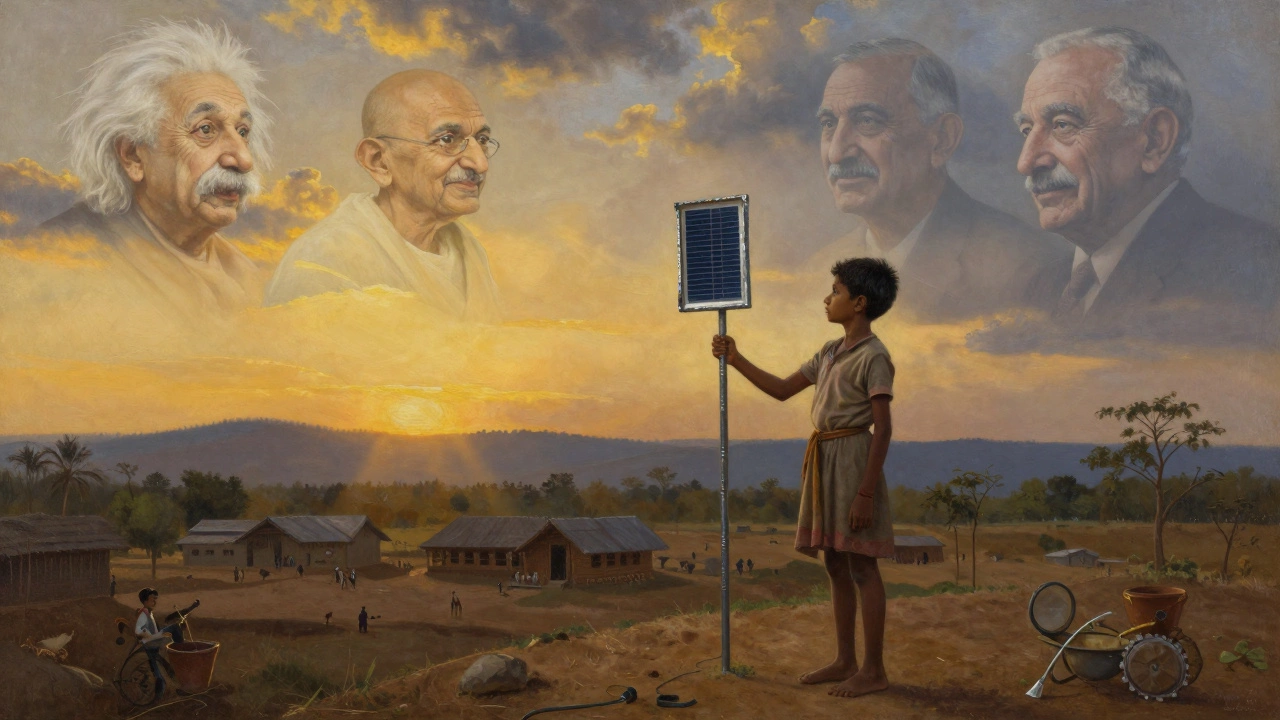
"The soul of India is in its villages." - Mahatma Gandhi
When you think of India, you think of cities. But 65% of its people still live in villages. They grow the food, weave the cloth, build the roads. Yet they’re often ignored. Gandhi knew this wasn’t just about geography-it was about dignity. He didn’t romanticize village life. He saw its truth: hard work, deep wisdom, quiet strength. Today, as cities grow louder and faster, this quote is a reminder: progress isn’t just about skyscrapers. It’s about clean water in a village, electricity in a remote school, a doctor who comes once a week. The soul of India isn’t in Silicon Valley-it’s in the soil.
"Work is worship." - Swami Vivekananda
In India, you don’t need to go to a temple to pray. You can pray by sweeping the floor, by stitching clothes, by teaching a child to read. Vivekananda didn’t separate spirituality from labor. He said: do your work with full attention, and you’re already in communion with something greater. That’s why a street vendor in Delhi who wakes up at 3 a.m. to prepare chai isn’t just selling coffee-he’s living a spiritual practice. This isn’t about religion. It’s about respect-for the job, for the effort, for the person doing it. In a world chasing shortcuts, this is the deepest form of strength.
"The best way to find yourself is to lose yourself in the service of others." - Mahatma Gandhi
Volunteering in India isn’t a trend. It’s tradition. From temple kitchens feeding thousands daily to college students tutoring under streetlights, service is woven into the culture. Gandhi didn’t mean service as a photo op. He meant giving without expecting anything back. In a country where family and community are everything, this quote is lived every day. A mother works extra shifts so her daughter can study. A neighbor shares food when someone is sick. A stranger gives their bus ticket to someone in need. These aren’t grand acts. They’re quiet, daily choices-and they’re what hold India together.
"India is not just a country. It’s a feeling." - Rabindranath Tagore
Tagore didn’t write poetry just to be beautiful. He wrote it to capture the invisible. The smell of rain on dry earth. The sound of a temple bell at dusk. The way a mother hums a lullaby in a language no one else understands. India can’t be explained with statistics. It’s felt. It’s in the chaos of a Mumbai train, the silence of a Himalayan monastery, the laughter of children playing with a torn ball. This quote reminds us: you don’t need to understand India to love it. You just need to feel it.
What makes an Indian quote truly powerful?
Indian quotes carry weight because they’re born from lived experience-not theory. They come from people who faced poverty, colonialism, war, and still chose hope. They’re not about big ideas. They’re about daily courage: waking up, showing up, trying again. That’s why they stick with you. A quote from Gandhi or Kalam isn’t just advice-it’s a mirror. It shows you what’s possible when you refuse to give up.
Are these quotes still relevant today?
More than ever. In 2025, India is at a crossroads-facing climate stress, digital overload, and rising inequality. But the same questions Gandhi, Kalam, and Vivekananda asked are still the ones that matter: How do we live with integrity? How do we lift others? How do we stay curious in a world of noise? These quotes aren’t relics. They’re tools. They help you navigate modern chaos with ancient wisdom.
Can non-Indians relate to these quotes?
Absolutely. These aren’t just Indian quotes-they’re human quotes. The struggle for dignity, the power of education, the courage to keep going-these are universal. A student in Kenya, a worker in Mexico, a parent in Canada-they all recognize the truth in these words. India’s strength is that it speaks in truths, not slogans. And truths don’t need a passport.
Why are some quotes from non-Indians so popular in India?
Because India doesn’t claim ownership of truth-it recognizes it. When Einstein, Churchill, or Roosevelt say something that matches the Indian spirit, it’s adopted. Indians don’t care who said it. They care if it helps. This openness is part of India’s genius. It absorbs wisdom from everywhere and makes it its own. That’s why you’ll find a quote from Rumi next to one from Tagore in the same classroom.
Which quote should I remember when I feel stuck?
Go with: "You must be the change you wish to see in the world." It doesn’t ask you to fix everything. It asks you to start with what’s in your hands. Turn off the light. Call a friend. Study for 20 minutes. That’s the change. You don’t need to be a leader. You just need to be present. That’s how India moves forward-one small act at a time.
These quotes aren’t meant to be memorized. They’re meant to be lived. Pick one. Live it for a week. Notice how your thoughts shift. How your actions change. That’s the real power of India’s wisdom. It doesn’t shout. It whispers. And if you listen closely, it’s already speaking to you.