How to Celebrate a Birthday in Indian Style: A Complete Guide
 May, 29 2026
Indian Birthday Planner & Estimator
Your Party Blueprint
Select your preferences and click Generate to see your plan.
Imagine the air filled with the scent of jasmine garlands and incense. The sound of temple bells mixes with upbeat Bollywood music. You aren't just blowing out candles; you are performing a ritual that has been passed down for generations. Celebrating a birthday in India is rarely a simple affair. It is a vibrant explosion of colors, flavors, and emotions that blends ancient tradition with modern joy.
If you have ever wondered how to throw an authentic Indian-style birthday party, you are about to learn that it goes far beyond cake and balloons. It is about community, spirituality, and feeding everyone until they can’t eat another bite. Whether you are planning your own special day or honoring a loved one, here is how to capture the true spirit of an Indian celebration.
The Spiritual Foundation: Puja and Blessings
In many Indian households, the day begins long before the guests arrive. It starts with silence, prayer, and gratitude. The first major step in an Indian birthday celebration is the morning puja (prayer ceremony). This isn't optional for traditional families; it is the anchor of the entire event.
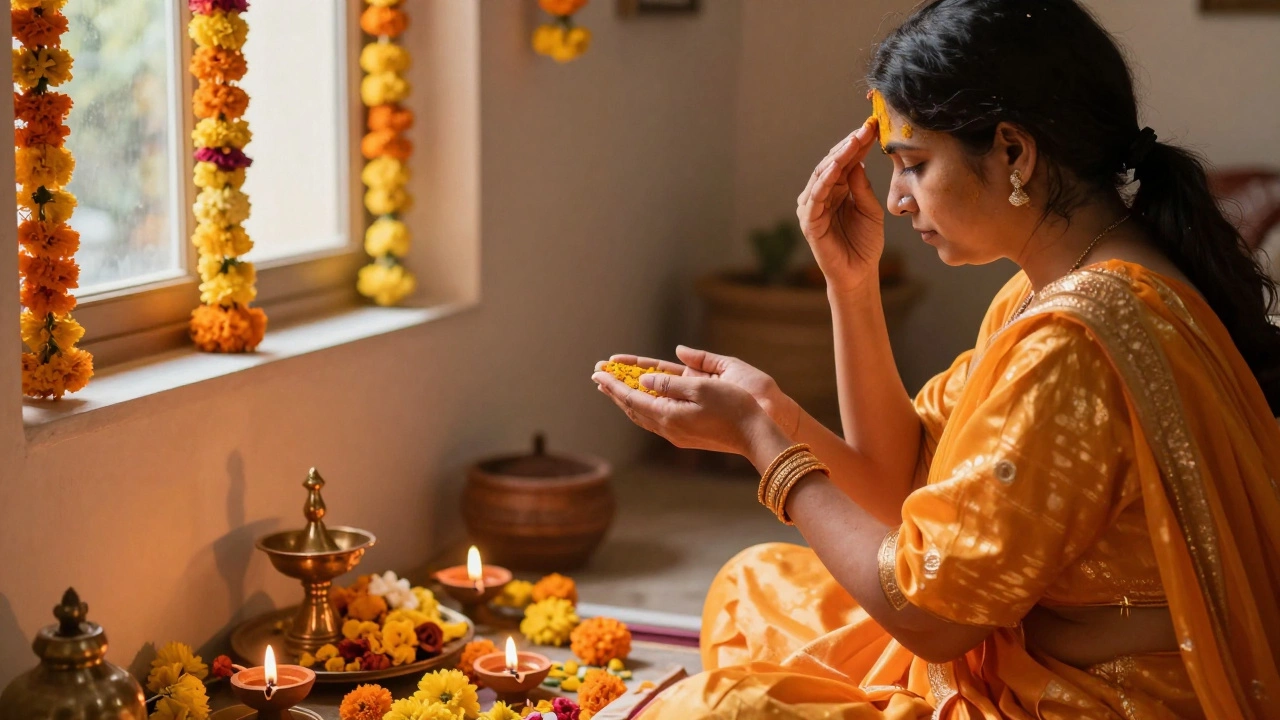
The birthday person, often referred to as the 'Shubhakartaa' or auspicious doer, takes a bath and wears fresh clothes. Usually, these are new outfits in bright colors like red, yellow, or orange. They then sit before a small altar set up at home. Family members light diya (oil lamps) and offer flowers to deities such as Lord Ganesha (the remover of obstacles) or the family’s chosen guardian deity.
After the prayers, the elder women of the family perform the Haldi Kunku ceremony. They apply a paste of turmeric and sandalwood on the birthday person's forehead. This is believed to ward off evil eyes and bring prosperity. The elders then place their hands on the celebrant's head, offering verbal blessings for health, wealth, and happiness. This moment is deeply emotional and sets a respectful tone for the rest of the chaotic fun that follows.
Dress Code: Colors and Fabrics That Pop
Forget jeans and t-shirts. An Indian birthday is a fashion statement. The attire reflects the region, the season, and the family’s status, but there is one universal rule: wear something new. Wearing new clothes on your birthday is considered auspicious because it symbolizes a fresh start for the new year of life.
For men, this might mean a crisp kurta-pajama or a Nehru jacket paired with churidar pants. Fabrics like cotton for summer or silk for winter are preferred. Women often choose sarees, lehengas, or salwar kameez in vibrant hues. Gold jewelry is almost mandatory for women, adding weight and shine to the ensemble. Even children dress up in miniature versions of traditional wear, looking like tiny princes or princesses.
The color palette matters too. While white is associated with mourning in many parts of India, birthdays call for warmth. Reds, yellows, oranges, and greens dominate. These colors are not just aesthetic choices; they are believed to attract positive energy. If you are hosting, encourage your guests to wear ethnic wear. It instantly transforms the vibe from a casual get-together to a cultural festival.
The Feast: Food as the Main Attraction
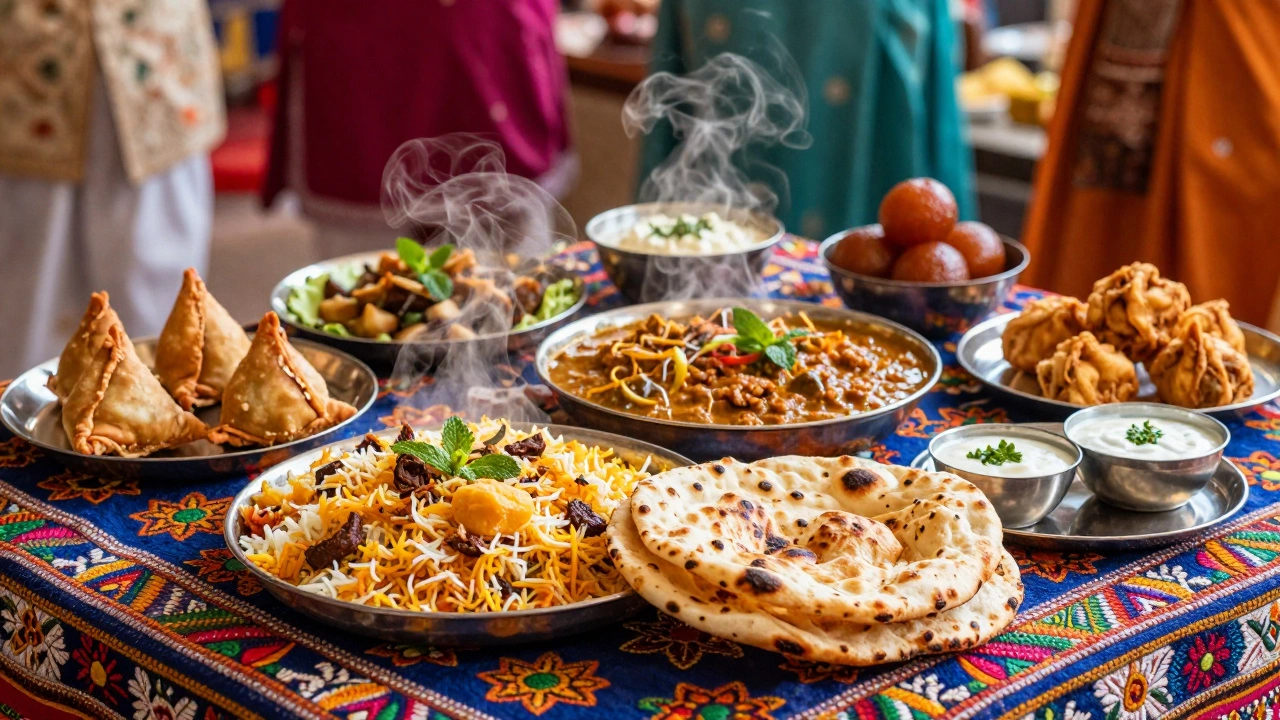
In India, love is measured in calories. No birthday celebration is complete without a massive feast. In fact, the food is often more important than the cake. The menu varies significantly depending on whether you are in North, South, East, or West India, but the principle remains the same: variety and abundance.
| Course | North Indian Examples | South Indian Examples | Sweet Treats |
|---|---|---|---|
| Starters | Samosa, Pakora, Chaat | Mysore Pak, Bajji | Fruit Chaat |
| Main Course | Biryani, Roti, Dal Makhani | Rice, Sambar, Rasam | Gulab Jamun |
| Dessert | Kheer, Jalebi | Pongal, Payasam | Laddoo |
A typical spread includes savory snacks like samosas and pakoras to keep guests occupied while they arrive. Then comes the main meal. In the North, expect rich curries, fluffy naan bread, and aromatic biryani rice. In the South, the focus shifts to steamed rice accompanied by tangy sambar, spicy rasam, and crispy dosas. Regardless of the region, sweets are non-negotiable. Ladoo (sweet balls made from flour, semolina, or nuts) are the most common birthday sweet. Distributing ladoo to guests is a few days before the actual birthday is a custom known as 'Ladoo Vitaran,' which spreads the joy and marks the occasion socially.
Cake does exist, but it plays second fiddle. It is usually served after the heavy meal, often with coffee or chai. The act of cutting the cake is ceremonial, accompanied by singing "Happy Birthday" in Hindi or English, followed by enthusiastic clapping and cheering.
Music, Dance, and Entertainment
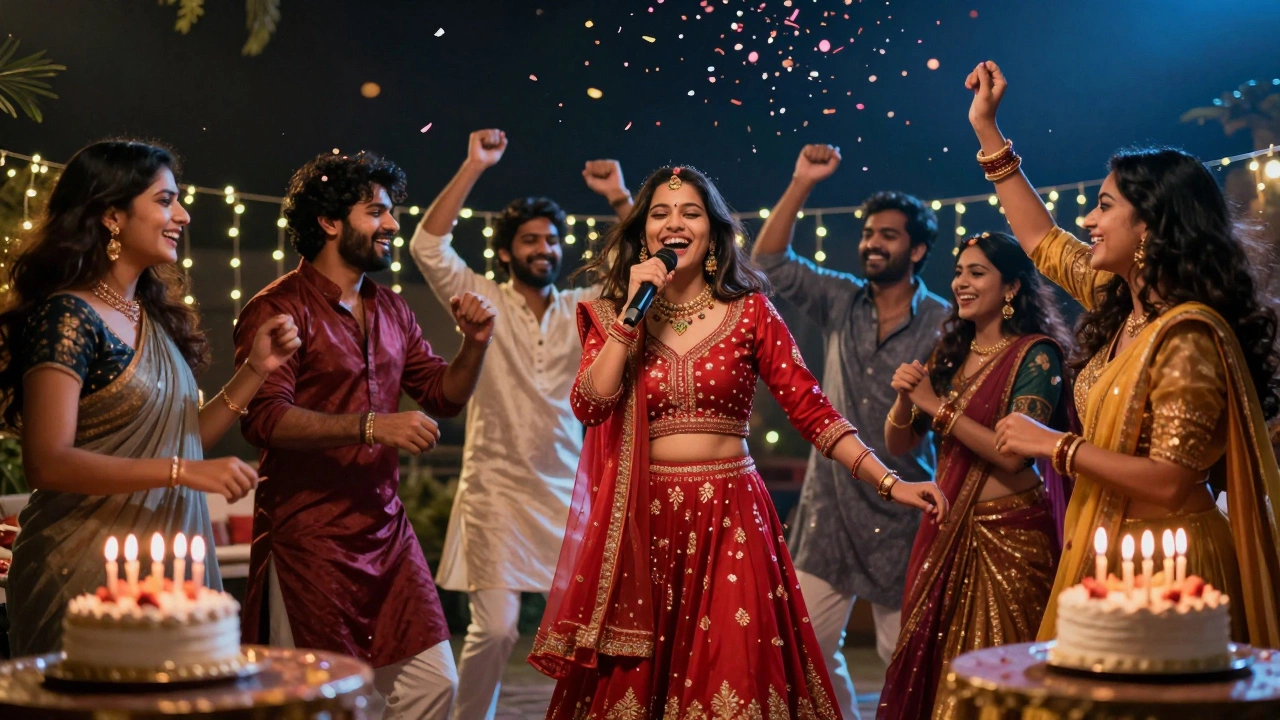
Silence is not part of an Indian birthday. From the moment the first guest arrives, the house fills with noise. Music is the heartbeat of the celebration. Bollywood hits from the 90s, classic film songs, and regional folk music create a lively backdrop.
Dancing is encouraged, even if no one is particularly skilled. Guests often gather in a circle for impromptu dance-offs. For younger crowds, DJs might play current pop remixes mixed with traditional beats. Elders might enjoy classical instrumental music or devotional bhajans during the quieter moments of the day.
Games are also a staple. Traditional games like Antakshari (a song guessing game where players take turns singing lines starting with the last letter of the previous line) are huge hits. They require no equipment, just knowledge of songs and a competitive spirit. Other activities might include card games, charades, or organized talent shows for children.
Gift Giving: Practicality Meets Sentiment
Gift-giving in India is thoughtful and often practical. Unlike Western cultures where wrapping paper and ribbons are the focus, Indian gifts prioritize utility and value. Cash envelopes are extremely common and accepted without offense. In fact, giving money is seen as empowering the recipient to buy what they truly need.
Physical gifts often include gold coins or jewelry, especially for milestone birthdays like 16th or 21st. Electronics, kitchen appliances, or clothing are also popular. For close friends, personalized items like photo albums or handwritten letters add a sentimental touch. The key is that the gift should be useful or hold lasting value. Cheap trinkets are generally avoided unless they are handmade with significant effort.
Regional Variations: One Country, Many Traditions
India is diverse, and so are its birthday customs. In Maharashtra, for example, the birthday person might be blindfolded and asked to hit a pot filled with sweets (Dahi Handi style) to break it open, symbolizing breaking barriers. In Tamil Nadu, the celebration might revolve around specific astrological timings and elaborate temple visits.
In Punjab, the energy is high with Bhangra music and energetic dancing. In Kerala, the feast (Sadya) is served on banana leaves, emphasizing freshness and organic ingredients. Understanding these nuances helps in creating a celebration that feels authentic to the specific heritage being honored. If you are mixing traditions, it is best to ask elders for guidance to ensure respect for local customs.
Modern Twists on Traditional Roots
Today’s Indian birthdays are a fusion of old and new. You might see a puja performed in the morning, followed by a brunch party with Instagram-worthy decor. Social media plays a huge role. Guests post photos with hashtags like #BirthdayVibes and #DesiCelebration. Video messages from distant relatives are played on screens during the gathering.
Eco-friendly practices are also gaining traction. Instead of plastic decorations, people use marigold flowers and cloth banners. Digital invitations replace paper cards. Yet, the core values remain unchanged: gratitude to God, respect for elders, joy with peers, and generosity with food. This blend ensures that the celebration stays relevant for younger generations while honoring the past.
Is it necessary to do a puja for an Indian birthday?
While not legally required, a puja is culturally significant for most traditional Indian families. It serves as a spiritual grounding for the day. However, modern or secular families may skip the formal ritual and focus on family gatherings instead. It depends entirely on personal belief and family tradition.
What is the significance of distributing Ladoo?
Ladoo distribution, or 'Ladoo Vitaran,' is a way to share the joy of the birthday with the community. It is done a few days before the actual date. Accepting a ladoo is seen as accepting the blessing of the birthday person. It strengthens social bonds and announces the upcoming celebration.
Can I give cash as a birthday gift in India?
Yes, giving cash is very common and widely accepted. It is often given in decorative envelopes. Cash allows the recipient to purchase exactly what they need or want, making it a practical and appreciated gift, especially for weddings or major milestones.
What time of day is best for an Indian birthday party?
Traditional celebrations often start in the morning with puja and continue through lunch. Evening parties are also popular, especially for younger crowds. The timing depends on whether the focus is on family rituals (morning/daytime) or social entertainment (evening/night).
Are there any foods to avoid serving at an Indian birthday?
Generally, no specific foods are forbidden, but vegetarian options are crucial if you are unsure of guests' dietary restrictions. Many Indians are vegetarian due to religious or personal reasons. Always provide clear labels for vegan, vegetarian, and non-vegetarian dishes to accommodate all guests comfortably.