How to Be a Power Woman: A Guide to Confidence, Mindset, and Strength
 Apr, 14 2026
Power Communication Transformer
Stop Shrinking, Start Leading
Transform "softener" phrases into power statements.
Select a common passive phrase below to see how a Power Woman would rephrase it to command respect and confidence.
Power Statement:
""
The Core Mindset of a Power Woman
Power starts between your ears. You can't lead others if you're still fighting a war with yourself. The first step is shifting from a fixed mindset to a growth mindset. A fixed mindset tells you, "I'm not good at public speaking," or "I've never been a leader." A power woman replaces that with, "I haven't mastered this yet, but I can learn." Have you ever noticed how some women effortlessly take charge? They aren't born with a 'power gene.' They've just decided that their ambition is a virtue, not a flaw. Stop apologizing for being assertive. When you say "I'm sorry" before asking a question or sharing an idea, you're subconsciously telling the world that your contribution is an inconvenience. Trade your "sorries" for "thank yous." Instead of saying "Sorry for the delay," try "Thank you for your patience." It shifts the energy from an apology to a position of strength.Building this mental toughness requires a daily practice. It's about setting non-negotiable boundaries. A power woman knows that "No" is a complete sentence. Whether it's a demanding boss asking for a weekend favor or a friend who only calls when they need a vent session, knowing where you end and someone else begins is the ultimate power move.
Mastering the Art of Confident Communication
How you speak is often more important than what you say. Many of us have been conditioned to use "softeners" in our speech-words like "just," "maybe," or "I think." For example, saying "I just feel like maybe we should try this" sounds like a suggestion that can be easily ignored. A power woman says, "I propose we try this because the data shows it will work."Body language is the other half of the equation. Think about the "power pose." While the scientific debate continues, the psychological effect is real. Standing tall, keeping your shoulders back, and maintaining eye contact signals to your brain-and the people around you-that you are in control. Avoid crossing your arms or shrinking your posture when you're nervous. Take up space. You have every right to occupy the physical and intellectual room you're in.
| Situation | Passive Approach | Power Woman Approach |
|---|---|---|
| Sharing an idea | "I might be wrong, but..." | "Based on my experience..." |
| Handling a mistake | "I'm so sorry, I'll fix it!" | "I've identified the error and here is the solution." |
| Asking for a raise | "I was wondering if maybe..." | "My performance metrics justify a salary adjustment." |
| Setting a boundary | "I'll try to make it work." | "I am unavailable at that time." |
Strategic Networking and the Power of the Circle
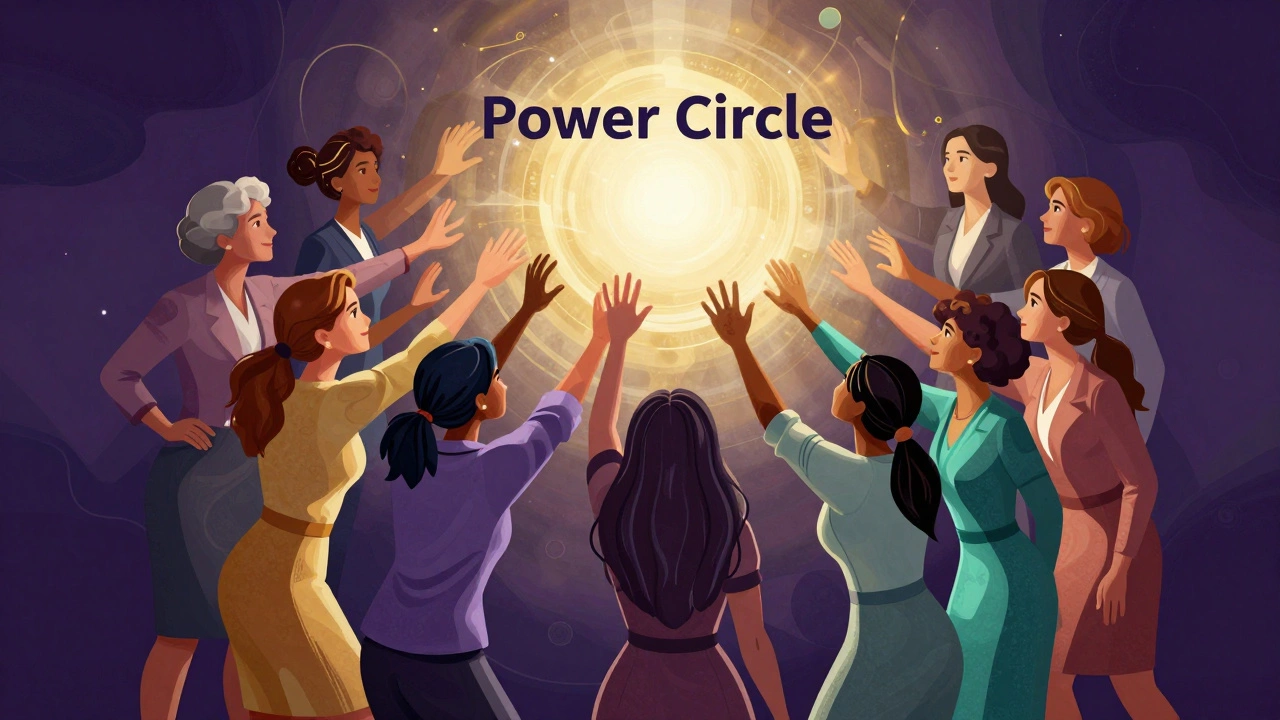
No one reaches the top alone. The secret of the most successful women is that they build "power circles." This isn't about social climbing; it's about mutual elevation. You need a mix of mentors (people who have been where you want to go) and sponsors (people in positions of power who will mention your name when you're not in the room).Look for women who are 5-10 years ahead of you in your career or personal growth journey. Ask them for a 15-minute virtual coffee. Be specific about why you're reaching out. Instead of "I'd love to pick your brain," try "I admire how you handled the transition to a leadership role and would love to know one thing you wish you'd known back then." People love to give advice when the request is focused and respectful of their time.
Equally important is supporting other women. The "Queen Bee Syndrome," where a woman in power distances herself from other women to maintain her status, is a relic of the past. True power is additive. When you pull another woman up, you don't lose your spot; you create a stronger network that protects and promotes everyone in the circle. Whether it's recommending a colleague for a project or praising a peer in a meeting, these small acts build an empire of loyalty.
Emotional Intelligence: The Secret Weapon
Being a power woman isn't about being a "boss babe" who screams orders. In fact, the most effective leaders possess high Emotional Intelligence (or EQ). This is the ability to recognize, understand, and manage your own emotions while influencing the emotions of others.One of the hardest parts of EQ is managing the "imposter syndrome." That nagging voice telling you that you're a fraud and you'll be found out? Everyone has it-even the CEOs of Fortune 500 companies. The difference is that power women don't let the voice drive the car; they let it sit in the backseat. They acknowledge the fear and then move forward anyway. Courage isn't the absence of fear; it's action in spite of it.
Practice active listening. When someone speaks, listen to understand, not to respond. This makes people feel valued and gives you a strategic advantage because you're gathering more information than everyone else. When you finally speak, your words carry more weight because they are grounded in the reality of the conversation.
Physical and Mental Resilience
You can't pour from an empty cup. You cannot be a how to be a power woman success story if you're burning out by age 25. Power requires energy. This means prioritizing sleep, nutrition, and movement-not for aesthetics, but for cognitive function. When your brain is foggy from lack of sleep, your decision-making suffers, and your confidence wavers.Build a "recovery ritual." Whether it's a 20-minute walk without a phone, a skincare routine, or reading a book for pleasure, you need a way to disconnect from the world. High performance requires high-quality rest. If you treat your downtime as a luxury, you'll eventually crash. Treat it as a strategic requirement for your success.
Mental resilience also comes from failing forward. A power woman doesn't see a mistake as a dead end; she sees it as a data point. When a project fails or a relationship ends, don't ask "Why did this happen to me?" Ask "What does this teach me about my process?" This shift transforms you from a victim of circumstance into an architect of your own life.

Practical Checklist for Your Power Journey
Becoming a power woman is a gradual evolution, not an overnight switch. Use this checklist to audit your current habits and identify where you can level up:
- Audit your vocabulary: Remove "just," "sorry," and "I think" from your professional emails today.
- Own your space: Practice a power pose for two minutes before your next big meeting.
- Set a boundary: Say "no" to one thing this week that doesn't align with your goals.
- Build your circle: Reach out to one woman you admire for a brief informational interview.
- Prioritize recovery: Schedule your downtime in your calendar as a non-negotiable appointment.
- Celebrate wins: Keep a "hype file" of screenshots and emails where people praised your work. Read it when imposter syndrome hits.
Does being a power woman mean I have to be aggressive?
Not at all. There is a huge difference between aggression and assertiveness. Aggression is about dominating others and winning at their expense. Assertiveness is about clearly stating your needs, boundaries, and value while remaining respectful. You can be kind, empathetic, and soft-spoken while still being an absolute powerhouse in your field.
How do I handle it when people call me "bossy" or "too much"?
Often, when people call women "bossy," they are actually reacting to a woman who has leadership qualities they aren't used to seeing in a female. The best response is to remain calm and focused on the results. If your "bossiness" is actually just efficient project management that gets results, the results will eventually speak for themselves. Don't shrink yourself to fit someone else's comfort zone.
What if I'm an introvert? Can I still be a power woman?
Absolutely. Some of the most powerful women in history were introverts. Power isn't about being the loudest person in the room; it's about the impact of your presence. Introverted power women excel at strategic thinking, deep listening, and focused execution. Your power comes from your preparation and the quality of your insights, not from the volume of your voice.
How do I start if I have zero confidence right now?
Confidence is a muscle, not a trait you're born with. Start with "micro-wins." Set a tiny goal every day-like speaking up once in a meeting or trying a new hobby-and actually do it. Every time you keep a promise to yourself, you build a tiny bit of trust. Over time, these micro-wins accumulate into genuine, unshakable confidence.
How do I balance being a power woman with my personal life?
Balance is a myth; think of it as integration. You can't give 100% to everything all the time. Instead, focus on priorities. Use your power-woman skills-like boundary setting and delegation-in your personal life. It's okay to outsource chores or ask for help so you can spend quality time with loved ones. Being a power woman means managing your life on your own terms, not according to societal expectations of the "perfect" woman.
What's Next?
If you're feeling inspired, don't let this be another article you read and forget. Pick one thing from the checklist-just one-and implement it in the next 24 hours. Whether it's deleting a "sorry" from an email or scheduling a nap, start small. The journey to becoming a power woman isn't about a single giant leap; it's about a thousand small steps in the right direction. Once you've mastered your mindset, start looking at how you can mentor someone else. Nothing solidifies your own power more than helping another woman find hers.