How Long Is a 1 Minute Poem? Time, Rhythm, and the Hidden Rules of Short Poetry in India
 Feb, 13 2026
How long is a 1 minute poem? It sounds simple-until you try to say one out loud. If you read it too fast, it feels rushed. Too slow, and it drags. In India, where poetry lives in daily rhythms-on bus rides, in temple chants, in wedding speeches-timing isn’t just about seconds. It’s about breath, pause, and feeling.
There’s No Exact Clock for a 1 Minute Poem
There’s no rule that says a 1 minute poem must be exactly 60 seconds. People don’t time poems with stopwatches in Jaipur or Kolkata. They feel them. A poem that takes 55 seconds to speak might feel longer than one that takes 65, depending on how it’s delivered. In Indian oral traditions, poetry is meant to be heard, not counted. The rhythm comes from the poem itself, not the clock.
Think of it like a lullaby. A mother might sing a short verse to her child. It’s not 60 seconds because the clock says so. It’s 60 seconds because the child’s breathing matches it. That’s how Indian poetry works. The timing is shaped by emotion, not math.
What Makes a Poem Last One Minute?
Most 1 minute poems in India fall between 18 and 28 lines. That’s not a law-it’s an observation. Poets who write for public readings, like at poetry slams in Bangalore or open mics in Delhi, test their work aloud. They time it. They adjust. They cut a line if it drags. They add a pause if it feels too thin.
Take the classic haiku-style poems that became popular in urban India after 2010. They’re short, often 3 lines. But even a 3-line poem can stretch to a full minute if each line is spoken slowly, with silence after each. One poet from Chennai, Meera Raghavan, says her most popular poem-just 5 lines-takes 58 seconds when read with the right pauses. “The silence between lines is part of the poem,” she says.
Compare that to a fast-paced poem written for a wedding toast. It might be 22 lines but delivered in 48 seconds. The audience doesn’t mind. They’re smiling. They’re clapping. The poem isn’t about length-it’s about impact.
Why Timing Matters More Than Words
In India, poetry often lives in moments of transition. A funeral. A birth. A first train ride alone. A quiet morning before work. These aren’t moments for long speeches. They’re moments for a single breath of truth.
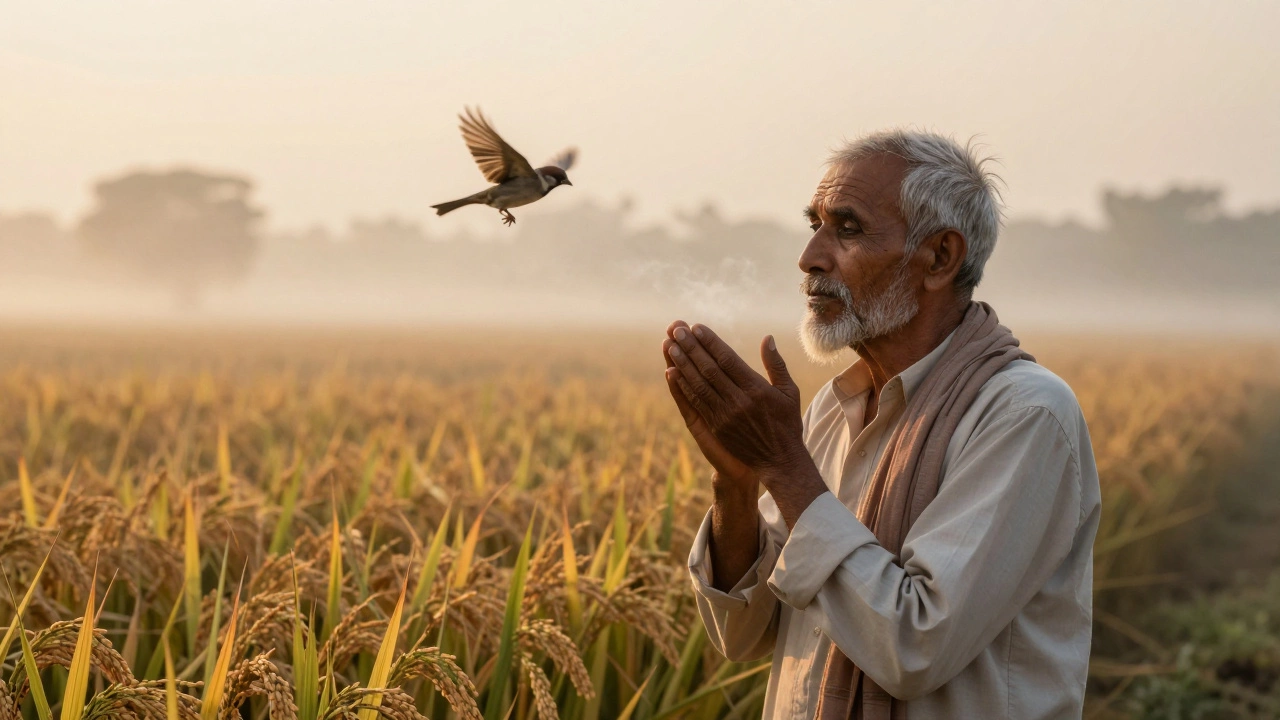
A 1 minute poem fits perfectly. It’s long enough to carry meaning. Short enough to be remembered. In rural Uttar Pradesh, farmers recite short verses before dawn. In Mumbai slums, children learn poems in school that last exactly one minute-because that’s how long the power stays on. The poem ends when the lights go out.
That’s why Indian poets don’t write for page count. They write for breath count. One breath per line. Two breaths for a pause. Three breaths for a tear. A 1 minute poem isn’t measured in syllables-it’s measured in heartbeats.

Real Examples from Indian Poets
Let’s look at three real 1 minute poems from different parts of India:
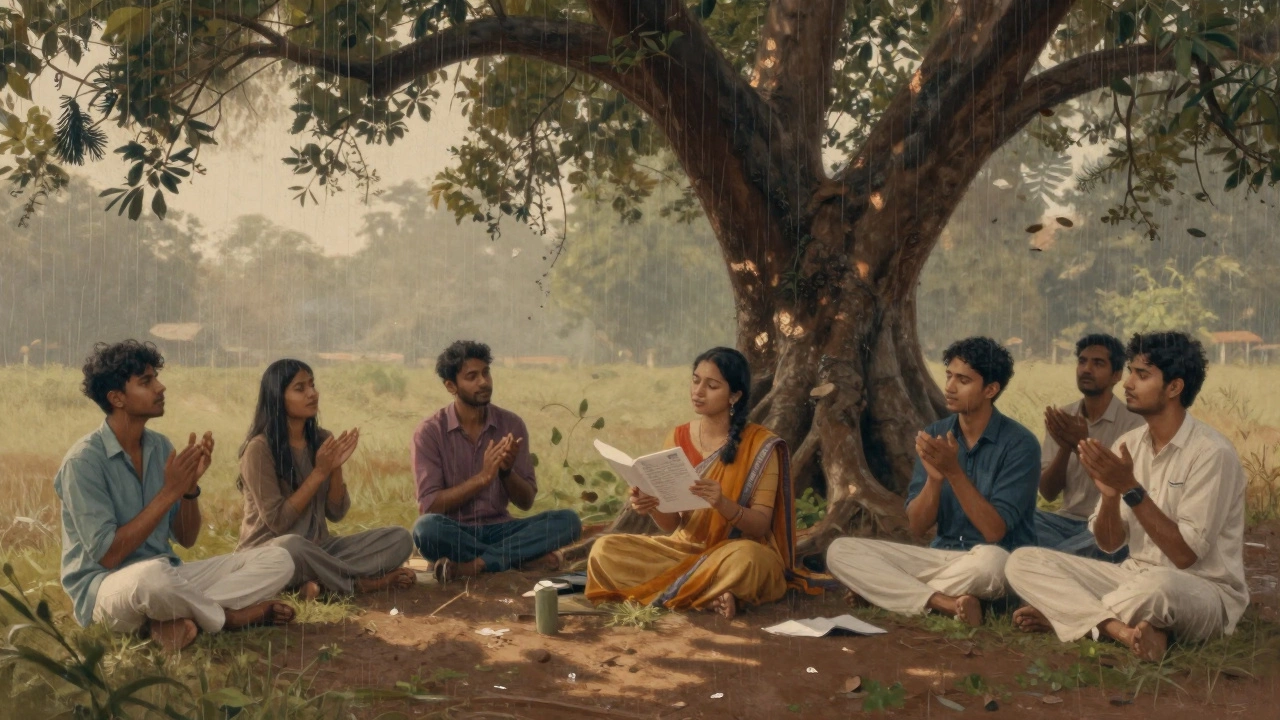
- From Kerala: A poem about monsoon rains. 21 lines. 62 seconds when read aloud with pauses. Uses local dialect. The last line is whispered.
- From Punjab: A poem about a father’s hands. 17 lines. 51 seconds. No pauses. Fast, like a drumbeat. The rhythm matches the dhol.
- From Bengal: A poem about a train station. 24 lines. 68 seconds. Long pauses after each station name. Listeners hold their breath.
Each poem is different. Each timing is different. But each one lasts one minute because it feels like one minute.
How to Write Your Own 1 Minute Poem
If you want to write a 1 minute poem in the Indian style, here’s how:
- Start with a single moment. Not a big idea. One thing you saw, felt, or remembered.
- Write 15 to 30 lines. Don’t count words. Count feelings.
- Read it aloud. Time it with your phone.
- Listen. Where did you rush? Where did you pause too long? Cut or add lines.
- Try reading it to someone. Watch their face. If they blink twice, you’ve got it.
Most beginners write too much. They think more words = more meaning. In Indian poetry, less is more. One line can hold a lifetime. A pause can hold a whole city.
The Hidden Rules of Indian Short Poetry
There are no official rules. But if you listen closely, you’ll notice patterns:
- Use local words. Even if they don’t translate. Their sound matters more than their meaning.
- End with silence. Not a punchline. A quiet space.
- Let the poem breathe. Don’t rush the last line.
- Use repetition-not for effect, but for memory. Like a chant.
- Don’t rhyme unless it feels natural. Forced rhyme kills the moment.
These aren’t rules you learn in school. They’re rules you feel after listening to a hundred poems under a tree, in a train, or at a funeral.
Why This Matters Today
In a world of 15-second reels and viral quotes, the 1 minute poem is a quiet rebellion. It asks for attention. Not clicks. Not likes. Just presence.
Young poets in India are bringing it back. Not as a trend. But as a practice. In cities, you’ll find people sitting alone in parks, reciting poems out loud. Not for Instagram. Just because the poem needs to be heard.
One 19-year-old from Varanasi posted a video of herself reciting a 1 minute poem by the Ganges. It got 300 views. No likes. No comments. But a man in his 70s called her the next day. He said he’d been waiting 40 years to hear a poem like that.
That’s the power of a 1 minute poem. It doesn’t need to go viral. It just needs to be felt.
Can a 1 minute poem be longer than one minute?
Yes, if the emotion demands it. In Indian poetry, timing is emotional, not technical. A poem that takes 70 seconds might feel right if it’s about grief, loss, or a quiet moment of realization. The goal isn’t to hit 60 seconds-it’s to match the rhythm of the feeling.
Do Indian 1 minute poems always rhyme?
No. In fact, most don’t. Forced rhymes feel artificial in Indian oral poetry. What matters is flow. A poem can repeat a phrase, use internal rhythm, or even leave silence where a rhyme would go. The sound of the language itself-like the roll of ‘r’ in Tamil or the soft ‘sh’ in Bengali-creates its own music.
Is a 1 minute poem the same as a haiku?
Not exactly. Haiku comes from Japan and follows strict syllable rules. Indian short poems don’t. They’re more flexible. A 1 minute poem can be 3 lines or 30. It can rhyme or not. It can be serious or playful. The only rule? It must fit the space of one breath.
Why do Indian poets use silence in poems?
Silence isn’t empty. In Indian culture, silence holds meaning. It’s where memory lives. Where grief rests. Where joy settles. A pause after a line lets the listener feel what the poet felt. That’s why poets in India treat silence like a line of poetry. Sometimes, it’s the most important part.
Can I write a 1 minute poem in English?
Yes. But if you want it to feel Indian, use Indian rhythms. Don’t write like a Western poem. Think of the way people speak in your city-the pauses, the repetition, the way a sentence trails off. That’s your rhythm. English words can carry Indian feeling. It’s not about language. It’s about heart.
Final Thought: It’s Not About Time. It’s About Presence.
A 1 minute poem isn’t a challenge. It’s an invitation. To slow down. To listen. To feel something real in a world that moves too fast. In India, poetry isn’t just art. It’s a way of breathing. And sometimes, all you need is one minute to remember how.