Ghazal vs Poem: Understanding the Key Differences in Structure and Meaning
 Aug, 14 2026
Ghazal Structure Validator
Paste your poem below to analyze its adherence to traditional Ghazal rules (Radif, Qafiya, Sher independence).
Not a Ghazal
Needs significant changes.
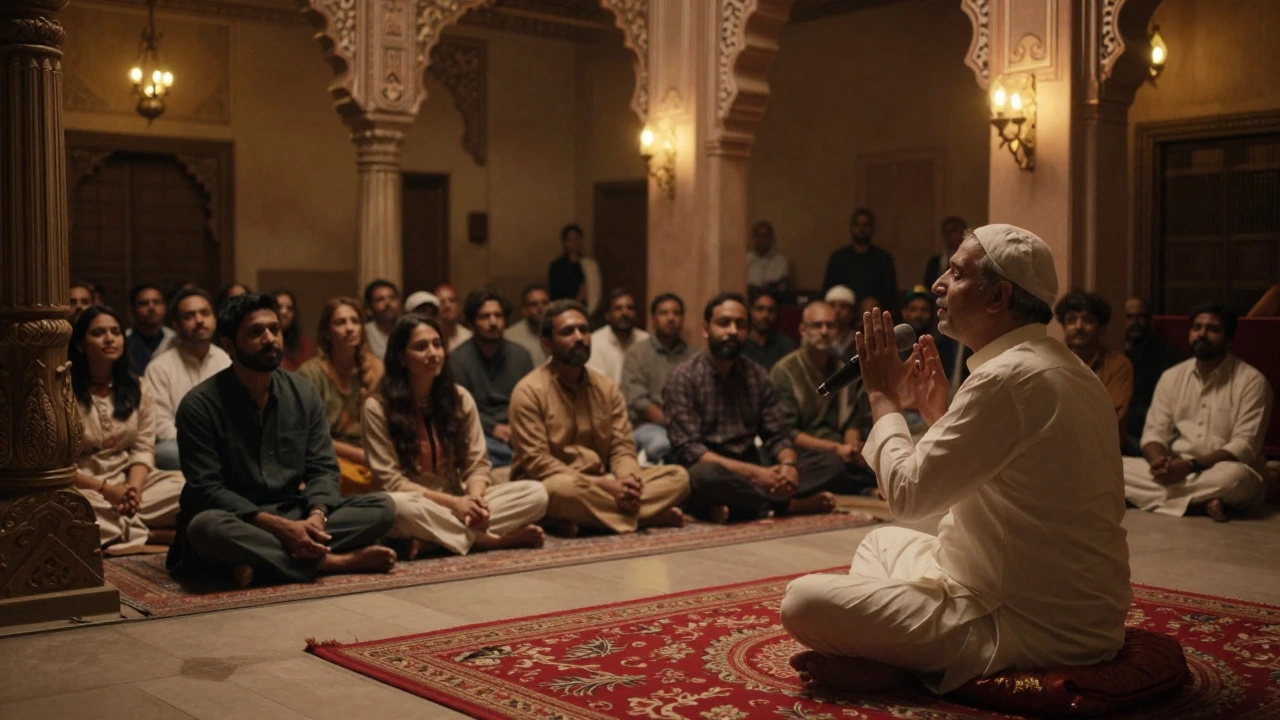
You’ve probably heard someone recite a beautiful verse about love or loss and been told it’s a "poem." Then, you might have attended a mushaira (poetry gathering) in Delhi or Mumbai and watched an artist perform a ghazal, which is a traditional form of Arabic and Persian poetry that has become deeply rooted in South Asian culture. You felt the emotion, but did you notice the structural difference? Many people use these terms interchangeably, but they are not the same. A poem is a broad umbrella term for any creative writing in verse. A ghazal is a specific, highly disciplined architectural style within that umbrella.
If you want to appreciate the art form truly, you need to understand why a ghazal cannot just be called a "short poem" and why breaking its rules ruins the experience. Let’s break down exactly what makes a ghazal distinct from general poetry, looking at structure, rhyme, meaning, and cultural context.
The Umbrella vs. The Specific Form
To understand the difference, we first need to define the players. Poetry is the broad literary art form characterized by rhythm, meter, and condensed language. It includes sonnets, haikus, free verse, epics, ballads, and yes, ghazals. When you write four lines about your cat sleeping on a sunny windowsill with no specific rhyme scheme, you have written a poem. But you haven’t written a ghazal.
A ghazal, on the other hand, is a rigid format. It originated in Arabic literature around the 7th century, moved to Persian courts, and was perfected in the Indian subcontinent during the Mughal era. In India, poets like Mirza Ghalib and Allama Iqbal turned this form into a vehicle for deep philosophical and romantic expression. Today, when we say "ghazal" in India, we are usually referring to the Urdu or Hindi version of this tradition.
The key distinction here is flexibility versus constraint. Poetry allows you to experiment with line breaks, lack of rhyme, and chaotic imagery. A ghazal demands strict adherence to mathematical precision in its sound patterns. If you remove the constraints, the ghazal collapses.
The Architecture of Sound: Radif and Qafiya
This is where most amateur writers get stuck. The heartbeat of a ghazal is its rhyme scheme, which is far more complex than simple end-rhymes found in children’s poems. A ghazal relies on two specific technical elements: Radif is the recurring word or phrase that appears at the end of every couplet in a ghazal. and Qafiya is the rhyming word that immediately precedes the radif.
Let’s look at how this works in practice. In a standard English poem, you might rhyme "love" with "above" and "heart" with "start." Each pair is independent. In a ghazal, every single couplet must end with the exact same word or phrase (the Radif). Furthermore, the word right before that Radif must rhyme (the Qafiya).
| Feature | General Poem | Ghazal |
|---|---|---|
| Rhyme Requirement | Optional (Free Verse exists) | Mandatory |
| End Pattern | Can change per stanza | Must remain identical throughout |
| Technical Terms | Rhyme, Meter | Radif, Qafiya, Matla, Maqta |
| Flexibility | High | Low (Strict Rules) |
Imagine a ghazal where the Radif is "door." Every couplet ends with the word "door." The Qafiya might be words ending in "-oor" like "floor," "pour," "soar." So one line ends with "tears pour... door," and another ends with "hope soars... door." This repetition creates a hypnotic, musical quality that defines the genre. General poems do not require this level of sonic consistency.
Independent Couplets vs. Continuous Narrative
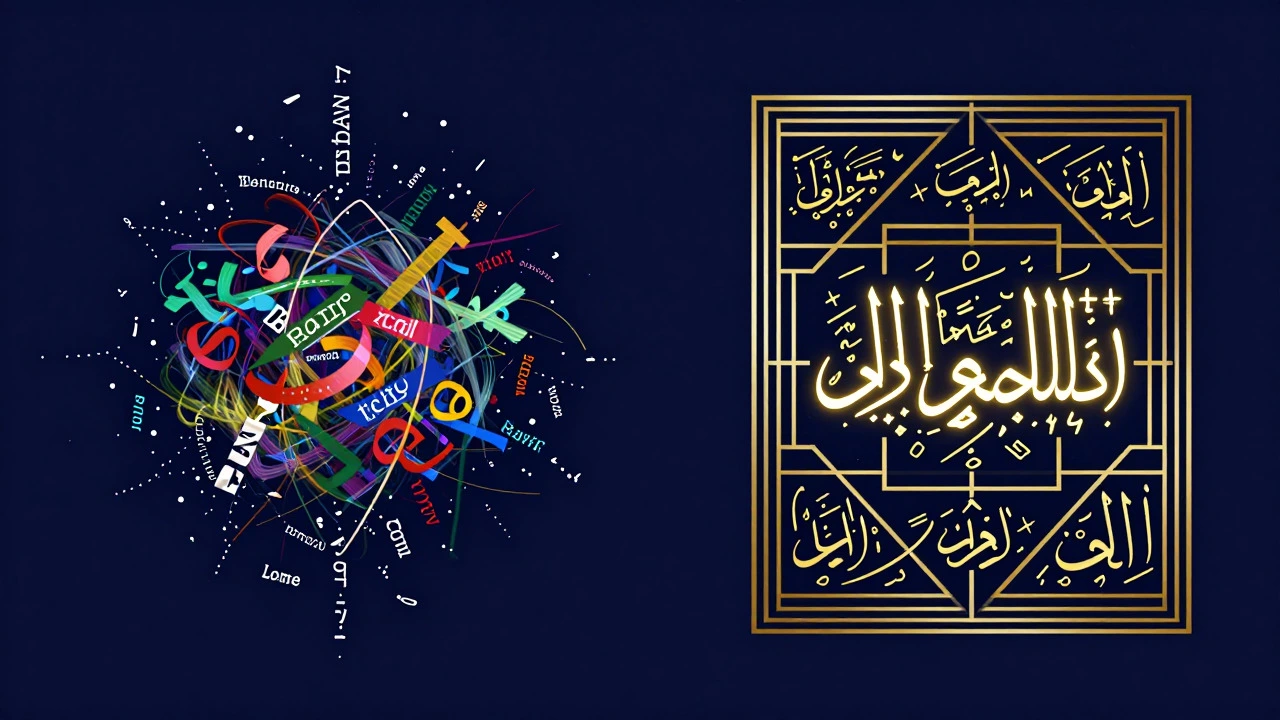
If you pick up a novel, you read chapter one, then chapter two, because the story continues. Most narrative poems work the same way; they tell a story from start to finish. A ghazal does not tell a linear story.
A ghazal consists of Shers, which are independent couplets that make up the body of a ghazal. Each Sher stands alone. You can shuffle the order of the Shers in a ghazal, and while the mood might shift slightly, the structural integrity remains intact. Each couplet explores a different facet of a central theme-usually love, longing, separation, or existential despair-but they don’t necessarily connect grammatically or narratively.
Think of a ghazal as a playlist of songs rather than a movie soundtrack. Each song (Sher) hits a different note of sadness or passion, but you don’t need to hear them in order to feel the emotion. In contrast, a sonnet or an epic poem requires you to follow the argument or plot from line one to the last. If you remove the middle of a narrative poem, the ending makes no sense. If you remove the middle of a ghazal, the remaining couplets still function perfectly.
The Role of the Takhallus (Pen Name)
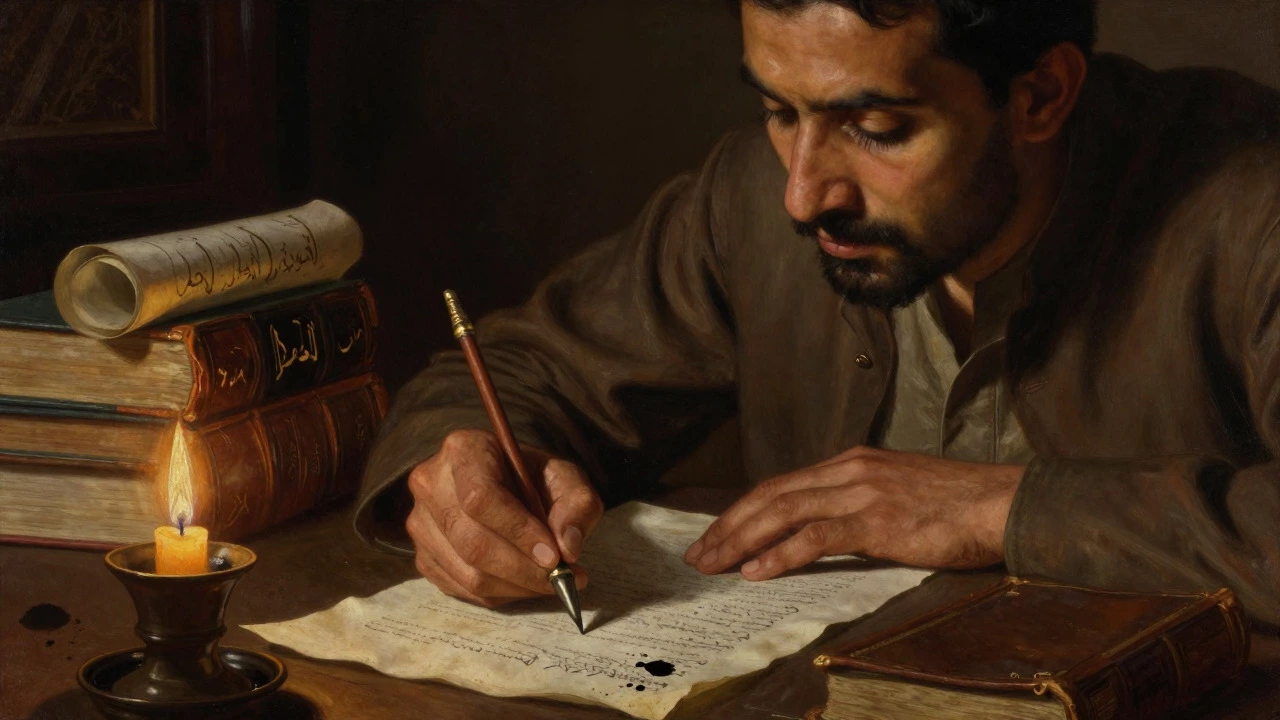
There is one unique rule in ghazal writing that you will almost never see in other forms of poetry: the inclusion of the poet’s pen name. This is called the Takhallus, which is the poetic pen name used by a ghazal writer, typically appearing in the final couplet.
In the last couplet of a ghazal, known as the Maqta, which is the concluding couplet of a ghazal that often contains the poet's signature, the poet traditionally inserts their Takhallus. This serves as a signature, proving authorship and adding a personal touch to the abstract emotions described earlier. For example, if the poet’s name is "Arjun," the last line might include the word "Arjun" in a way that fits the rhyme scheme.
While modern poets sometimes skip this, it remains a defining characteristic of the classical form. You won’t find Robert Frost signing his name inside his poem "The Road Not Taken" using a specific rhyme slot. That is exclusively a ghazal convention.
Theme and Tone: Ambiguity vs. Clarity
What are these forms talking about? While poems can be about anything-from grocery lists to political manifestos-ghazals tend to stick to a narrower emotional range. The classic themes are Ishq (romantic love), Fana (annihilation of the self in divine love), and Huzn (melancholy).
However, the *way* a ghazal handles these themes is different. Ghazals thrive on ambiguity. A good ghazal leaves room for interpretation. Is the beloved a human lover or God? The poet rarely clarifies. This double entendre is a hallmark of the genre. Mirza Ghalib’s verses often walk this fine line, allowing readers to project their own spiritual or romantic struggles onto the text.
General poetry, especially in the Western tradition, often values clarity of image or directness of statement. Free verse, for instance, prioritizes the raw truth of the moment over decorative ambiguity. A ghazal is inherently decorative; it is designed to be performed, recited, and savored for its sound as much as its meaning.
Performance Context: Mushaira vs. Reading
Finally, consider how these forms are consumed. In India, poetry is often read silently. You open a book, sit in a quiet room, and absorb the words. A ghazal is meant to be heard. It is the centerpiece of the Mushaira, which is a traditional poetry symposium where ghazals are recited aloud to an audience.
The performer, or Qawwal, who is a singer or reciter of devotional or poetic music, often associated with Sufi traditions, uses pauses, tone changes, and emphasis to bring out the hidden layers of the Radif and Qafiya. The audience claps or shouts "Wah!" at moments of particular brilliance. This interactive, auditory experience is integral to the ghazal. A poem can exist entirely on the page; a ghazal feels incomplete without the voice.
Understanding these differences doesn’t diminish either form. Instead, it helps you appreciate the craftsmanship involved. When you hear a ghazal, you’re listening to a master builder working within strict walls. When you read a poem, you’re exploring an open landscape. Both are beautiful, but they ask different things of the creator and the audience.
Is every ghazal a poem?
Yes, technically. A ghazal is a specific type of poem. However, not every poem is a ghazal. Think of it like squares and rectangles: all squares are rectangles, but not all rectangles are squares. A ghazal follows strict rules that general poems do not.
Can I write a ghazal in English?
Absolutely. While ghazals originated in Arabic and flourished in Urdu and Persian, many contemporary poets write ghazals in English. The challenge lies in finding words that fit the strict Radif and Qafiya structure naturally without forcing the language.
What is the minimum length of a ghazal?
A ghazal must have at least five couplets (Shers). Traditionally, it can range from five to fifteen couplets. Anything shorter is generally considered a fragment or a different form of verse.
Do ghazals always have to be about love?
Traditionally, yes. The core themes are romantic love, spiritual longing, and melancholy. However, modern ghazal poets have expanded the scope to include social commentary, politics, and existential philosophy, though they usually maintain the traditional tone of yearning or reflection.
Why is the 'Matla' important in a ghazal?
The Matla is the opening couplet. It is crucial because it establishes the rhyme scheme (Radif and Qafiya) for the entire ghazal. Both lines of the Matla must rhyme according to the established pattern, setting the template for all subsequent couplets.