5 Wise Quotes That Actually Change How You Think
 Sep, 8 2026
Wisdom Matcher
Select the challenge you are facing right now to receive a tailored perspective from one of five historical figures.
Feeling Anxious or Out of Control?
Struggling with Arguments or Ego?
Overwhelmed by Hustle Culture?
Dealing with Pain or Failure?
Wasting Time on Trivialities?
Philosopher Name
"Quote text goes here."
Core Concept
Concept description
Action Step
Action step description
You’ve probably seen them plastered on coffee mugs and Instagram feeds: wise quotes that sound profound but often feel empty after the third read. Why do some words stick with you for decades while others vanish from your memory before you even finish your morning coffee? It’s not just about how pretty the sentence sounds. Real wisdom has a specific weight to it. It challenges your assumptions, offers a practical tool for living, or reframes a problem in a way you hadn’t considered.
This isn’t a list of random sayings picked because they look good in cursive font. We’re digging into five specific pieces of advice from history’s sharpest minds-Socrates, Marcus Aurelius, Lao Tzu, Rumi, and Seneca. These aren’t just nice thoughts; they are mental models. By the end of this read, you’ll understand why these specific lines have survived centuries and how to actually apply them when life gets messy.
The Socratic Method: Knowing What You Don’t Know
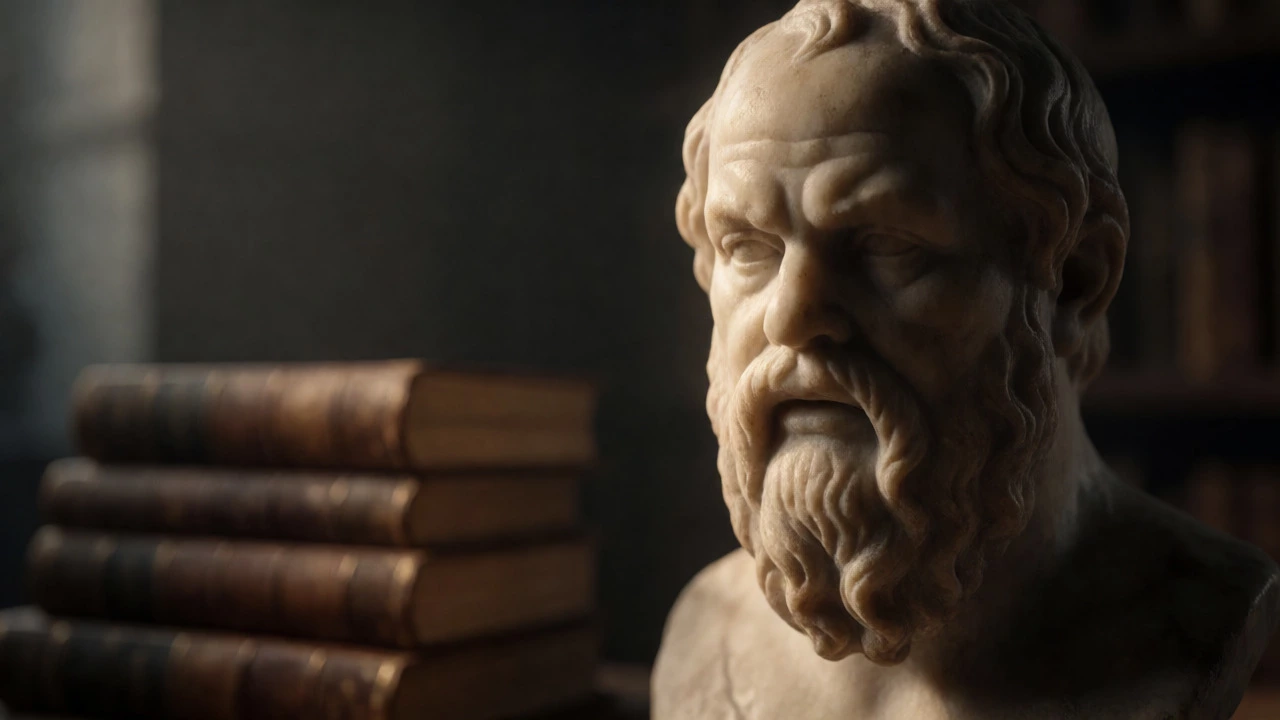
Socrates is the classical Greek philosopher credited as one of the founders of Western philosophy. His most famous maxim, "I know that I know nothing," is often misunderstood as humility or modesty. It’s neither. It’s an epistemological stance. In a world where everyone rushes to have an opinion on everything-from politics to quantum physics-this quote is a radical act of intellectual honesty.
Think about the last time you argued with someone. Did you listen to understand, or did you listen to reply? Most people operate on confirmation bias, filtering out data that contradicts their existing beliefs. Socrates suggests that true wisdom begins with acknowledging the limits of your knowledge. When you admit ignorance, you open the door to learning. If you think you already know the answer, you stop asking questions.
How do you use this today? Next time you encounter a complex issue, pause. Instead of forming an immediate judgment, ask yourself: "What evidence am I missing here?" This simple shift turns conflict into curiosity. It prevents you from making confident mistakes based on incomplete data. It’s not about being passive; it’s about being precise.
Marcus Aurelius: The Power of Perception
Marcus Aurelius was a Roman Emperor who ruled from 161 to 180 AD and is best known for his personal writings, Meditations. He wasn’t writing for publication; he was talking to himself. One of his most powerful insights is: "You have power over your mind - not outside events. Realize this, and you will find strength."
This is the core tenet of Stoicism, an ancient Greek school of philosophy founded by Zeno of Citium around 300 BC. The idea is deceptively simple. You cannot control traffic jams, bad weather, rude colleagues, or economic downturns. But you can control your reaction to them. Most human suffering comes from resisting reality-wishing things were different than they are.
Let’s make this concrete. Imagine your flight gets canceled. Option A: You rage at the gate agent, lose sleep worrying about meetings, and arrive exhausted. Option B: You accept the delay, use the extra hour to read or call a friend, and adjust your schedule calmly. The event (cancellation) is identical. The outcome (your stress level) is entirely different. This quote isn’t about suppressing emotions; it’s about directing energy toward what you can actually change. It’s a productivity hack disguised as philosophy.

Lao Tzu: The Art of Letting Go
Lao Tzu is the founder of Taoism and the author of the Tao Te Ching, a fundamental text for both philosophical and religious Taoism. His quote, "Nature does not hurry, yet everything is accomplished," strikes a nerve in our hyper-connected, instant-gratification culture.
We live in an era of hustle culture, where speed is equated with value. We multitask, skim articles, and rush through conversations. Yet, look at nature. An oak tree doesn’t strain to grow faster. A river doesn’t push its way around rocks; it flows around them. Lao Tzu teaches the concept of Wu Wei, which translates to non-action or effortless action, aligning oneself with the natural flow of life.
This doesn’t mean laziness. It means efficiency through alignment. When you force a solution, you often create friction. When you work with the grain of the situation, progress feels smoother. Have you ever noticed that your best ideas come during a walk, not while staring at a spreadsheet? That’s Wu Wei in action. Your subconscious processes problems better when you step back. Trust the process. Sometimes, the fastest way to get there is to slow down.
Rumi: Embracing the Whole Self
Jalal ad-Din Muhammad Rumi was a 13th-century Persian poet, jurist, Islamic scholar, theologian, and Sufi mystic. His words resonate across cultures because they speak to universal human experiences. Consider this: "The wound is the place where the Light enters you."
In modern self-help, we often try to fix pain immediately. We numb it with entertainment, food, or busyness. Rumi flips this script. He suggests that vulnerability and hardship are not obstacles to happiness but pathways to depth. Without cracks, light cannot enter. Without failure, we don’t learn resilience. Without loss, we don’t appreciate presence.
This perspective transforms how you handle setbacks. Instead of asking, "Why is this happening to me?" you might ask, "What is this teaching me?" It’s not romanticizing suffering-it’s extracting meaning from it. People who have navigated grief or failure often possess a empathy and wisdom that those who haven’t struggle to access. Your scars are proof of survival, and they make you more relatable, not less.

Seneca: Time Management for the Soul
Lucius Annaeus Seneca was a Roman Stoic philosopher, statesman, dramatist, and humorist. He famously wrote, "It is not that we have a short time to live, but that we waste a lot of it."
This hits hard in the age of doom-scrolling. We claim we’re "too busy" to pursue hobbies, exercise, or connect with loved ones. Yet, screen time reports often show we spend three to four hours a day on social media alone. Seneca argues that life is long enough if you use it well. The tragedy isn’t death; it’s unlived life.
Audit your week. Where does the time go? Is it spent on tasks that align with your values, or is it reactive maintenance of other people’s priorities? Seneca urges us to be intentional. Every minute spent on something trivial is a minute stolen from something meaningful. This quote forces a confrontation with mortality-not to scare you, but to prioritize. If you knew you had only five years left, would you spend Tuesday afternoon arguing with strangers on Twitter?
| Philosopher/Poet | Core Quote Theme | Practical Application | Primary Benefit |
|---|---|---|---|
| Socrates | Intellectual Humility | Ask questions before judging | Better decision-making |
| Marcus Aurelius | Emotional Control | Focus on controllable factors | Reduced anxiety |
| Lao Tzu | Natural Flow | Avoid forcing outcomes | Increased efficiency |
| Rumi | Growth through Pain | Find meaning in setbacks | Emotional resilience |
| Seneca | Time Valuation | Audit daily habits | Life satisfaction |
How to Make Wisdom Stick
Reading these quotes once won’t change your life. Applying them will. Here is a simple framework to integrate these wise quotes into your daily routine:
- Pick One: Don’t try to master all five at once. Choose the one that resonates most with your current struggle. Are you anxious? Start with Marcus Aurelius. Feeling scattered? Try Seneca.
- Set a Trigger: Associate the quote with a daily habit. For example, whenever you check your phone first thing in the morning, remind yourself of Seneca’s warning about wasted time.
- Reflect Weekly: At the end of the week, review how you handled situations using this lens. Did you react or respond? Did you force or flow?
Wisdom isn’t a destination; it’s a practice. These thinkers weren’t perfect humans-they were observers of human nature who distilled their observations into actionable truths. Your job isn’t to memorize their words, but to notice where their insights fit into your own story.
Are these quotes still relevant in the modern world?
Yes, because they address fundamental human conditions like anxiety, time management, and ego, which haven't changed despite technological advancements. While the context shifts, the psychological patterns remain consistent.
Which wise quote is best for anxiety?
Marcus Aurelius's insight about having power over your mind rather than external events is highly effective for anxiety. It helps distinguish between real threats and imagined catastrophes, reducing the cognitive load of worry.
Can reading quotes really improve my mindset?
Only if you engage with them actively. Passive reading has minimal impact. Active reflection-asking how a quote applies to your current situation-creates neural pathways that reinforce new behavioral patterns over time.
What is the difference between motivation and wisdom?
Motivation pushes you to act, often through emotion or urgency. Wisdom guides how you act, offering perspective and sustainability. Motivation burns bright and fast; wisdom provides the compass so you don't run off a cliff.
How do I choose which quote to follow?
Identify your primary pain point. If you struggle with procrastination, look at Seneca. If you struggle with anger, look at Stoics like Aurelius. Match the wisdom to the specific challenge you face right now.