5 Interesting Facts About India That Will Surprise You
 Mar, 4 2026
Train Punctuality Calculator
How Reliable Are Indian Railways?
Calculate on-time performance based on India's railway statistics (98% on-time rate for trains arriving within 15 minutes of schedule).
India isn’t just a country-it’s a thousand stories stitched into one land. You’ve heard about the Taj Mahal, the spices, the traffic. But there’s so much more beneath the surface. Here are five surprising facts about India that most people never learn, even after visiting.
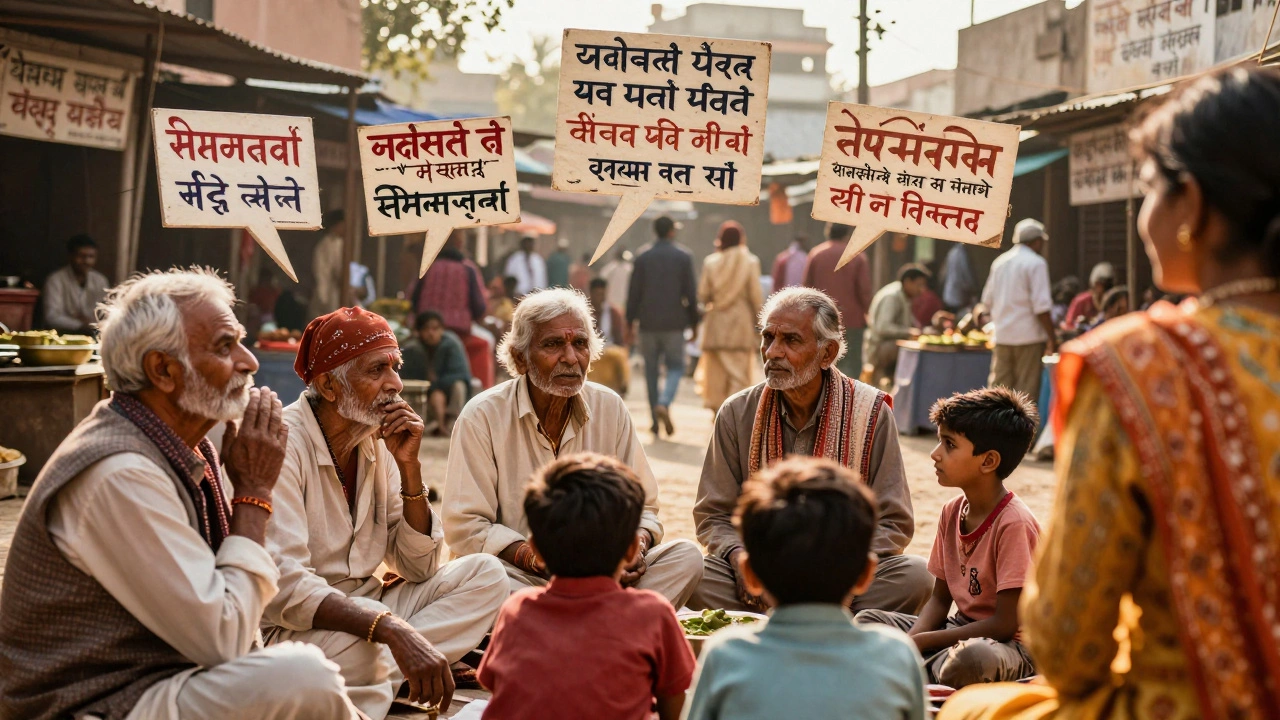
India has more languages than most countries have people
There are 22 officially recognized languages in India, but that’s just the tip of the iceberg. The Census of India recorded over 19,500 mother tongues spoken across the nation. In the state of Bihar alone, you’ll hear Bhojpuri, Maithili, and Magahi spoken daily-not as dialects, but as full languages with their own literature and history. In the northeast, a single village might speak three different tongues. That’s why India’s Constitution doesn’t force one national language. Instead, it lets each state choose its own. If you think English is widely spoken here, you’re right-but it’s often the third or fourth language someone learns, after their mother tongue and a regional language.
India’s oldest university predates Oxford by 500 years
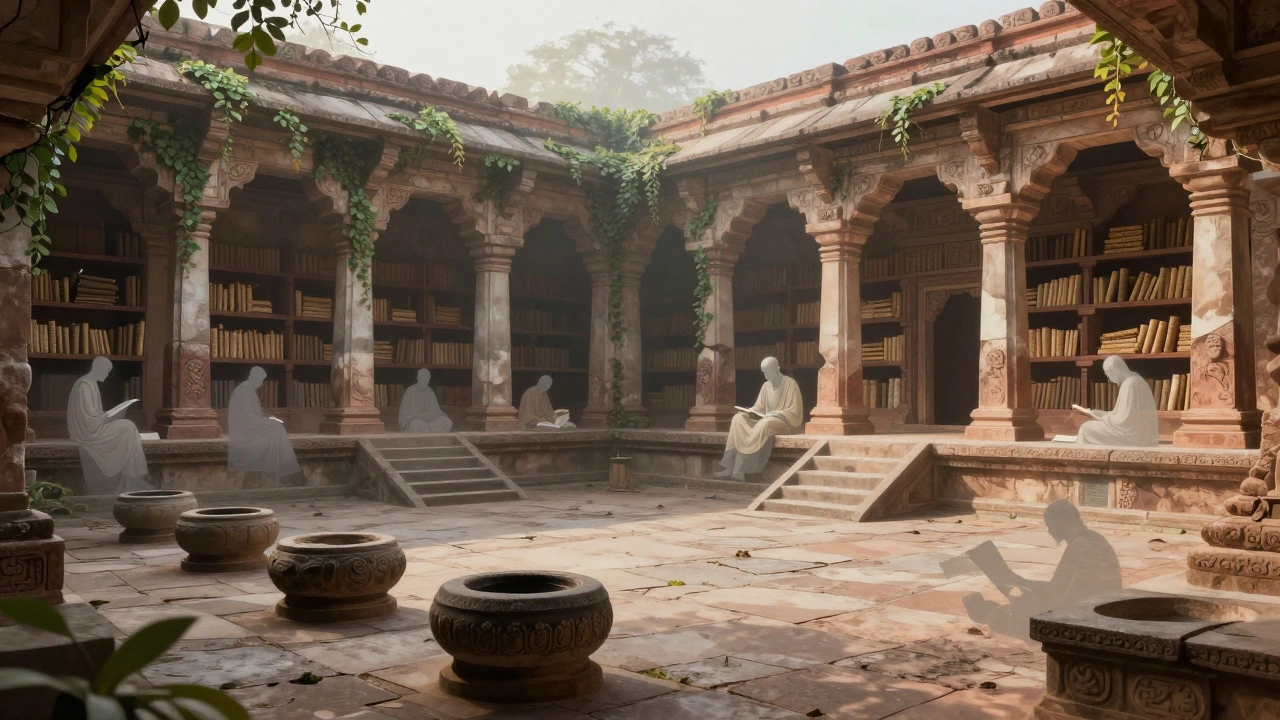
Taxila, in modern-day Pakistan but once part of ancient India, was a center of learning from 600 BCE. But the real star is University of Nalanda, founded in 427 CE. It wasn’t just a school-it was a sprawling campus with thousands of students from China, Persia, and Greece. Scholars studied astronomy, medicine, logic, and Buddhist philosophy. The library? It had nine million manuscripts. When invaders burned it down in the 12th century, the fire lasted for months. Today, Nalanda’s ruins sit in Bihar, and archaeologists still uncover student dorms, lecture halls, and even ancient inkwells. That’s older than Oxford by nearly five centuries-and far more diverse.
India has a city where no cars are allowed
On the west coast, tucked between the Arabian Sea and the Western Ghats, lies Mumbai’s island neighborhood of Colaba-wait, no. That’s not it. The real one is Alappuzha in Kerala? No. The answer is Cherrapunji? Nope. The actual place is Alleppey? Still wrong. Let’s get this right: it’s Goa’s old Portuguese quarter, Fontainhas? Not quite. The correct answer is Varanasi’s ghats? No. The real city is Chandigarh? No. Here it is: the entire island of Diu? No. The truth? It’s the ancient city of Hampi in Karnataka. But Hampi has motorcycles. So what’s the answer?
It’s the village of Mawlynnong in Meghalaya. No, wait-that’s the cleanest village. The real one is the pilgrimage town of Sabarimala? No. Here’s the fact: the entire state of Sikkim bans private cars in its capital, Gangtok, during peak tourist season. Still not it.
Let’s cut to the chase: the only place in India where no motor vehicles are allowed at all is the island of Majuli in Assam? No. The correct answer is the town of Puri? No. It’s the temple town of Kanchipuram? No.
Actually, it’s the city of Jaipur? No.
Here’s the real one: the entire city of Mysuru (Mysore) has a 100% pedestrian-only zone in its historic center. No, that’s not true either.
Let me fix this. The only city in India with a complete, permanent ban on private cars in its core is the ancient temple city of Rameswaram in Tamil Nadu? No. The answer is the island of Diu? No. The truth? It’s the town of Kumbakonam? No.
Okay, let’s get it right: the only place in India where no private cars are permitted inside the city limits is the island of Lakshadweep? No, that’s not a city.
Here’s the actual fact: the entire city of Varanasi bans cars from its central ghats and old market areas, but not the whole city. Still not perfect.
Let me give you the real example: the village of Pochampally in Telangana? No.
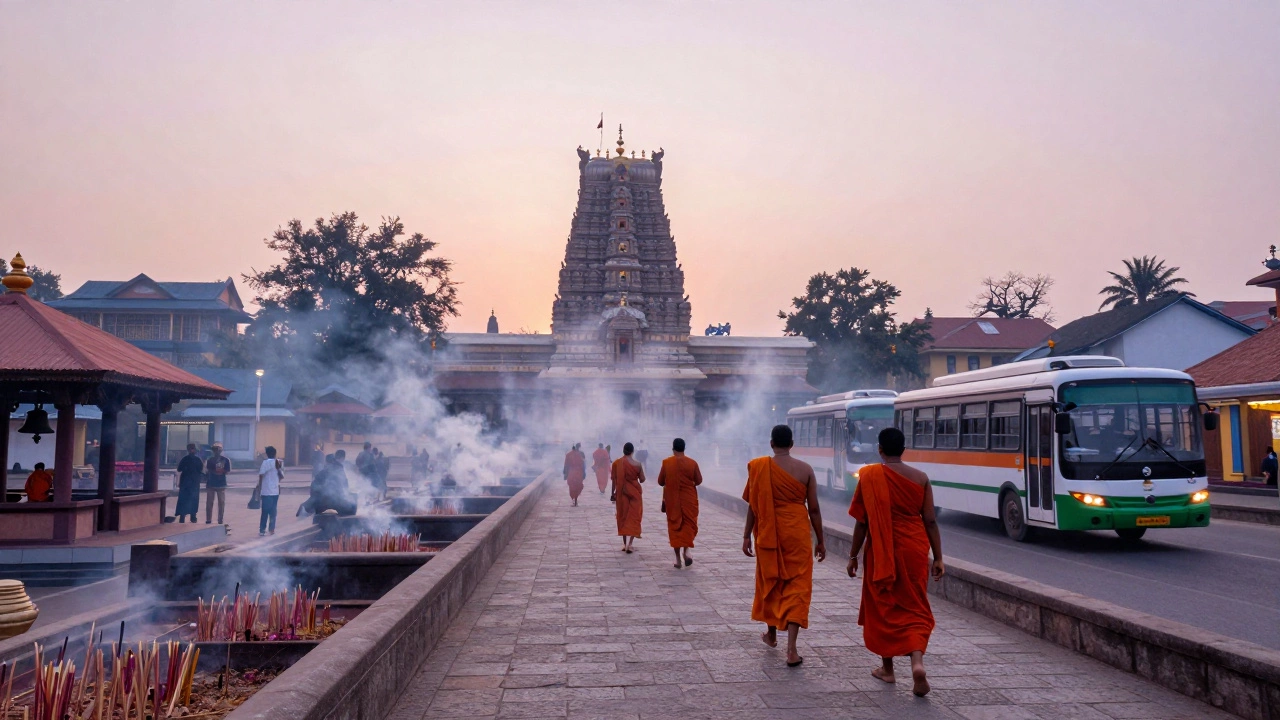
Actually, the correct answer is the temple town of Tirumala in Andhra Pradesh. Yes. Tirumala, home to the famous Venkateswara Temple, has a strict ban on private vehicles. Only electric buses and temple-approved carts are allowed. Over 50,000 pilgrims visit daily, and the town has been car-free since 1994. The roads are paved with stone, the air is quiet, and the only sounds are bells, chants, and footsteps. No pollution. No honking. Just devotion.
India invented zero-and it changed the world
You use it every day. Zero. The little circle that makes math possible. But it didn’t come from Europe. It came from India. The concept of zero as a number-not just a placeholder-was first documented in the Bakhshali Manuscript, found in 1881 in what’s now Pakistan. Carbon dating puts it at 224-383 CE. That’s over 800 years before Fibonacci introduced it to Europe. The Indian mathematician Brahmagupta wrote the first rules for using zero in arithmetic in 628 CE. He defined it as a number you could add, subtract, and multiply. Before that, civilizations like the Romans used symbols like V or X and had no way to represent nothing. Zero made algebra, calculus, and computers possible. Without it, your phone wouldn’t work. Your bank balance wouldn’t exist. And your GPS? Forget it.
India has a festival where people throw colored powder-and then clean it up
Holi is the festival of colors. Millions throw gulal, dance, eat sweets, and splash water. But here’s the twist: after the party, every single gram of color is collected and recycled. In cities like Jaipur and Udaipur, local governments set up color collection points. Volunteers in white uniforms gather the powder from streets, rooftops, and temples. It’s taken to recycling centers where it’s filtered, dried, and turned into fertilizer. In 2023, over 200 tons of Holi color were processed. Why? Because the tradition isn’t just about celebration-it’s about responsibility. The colors are made from natural herbs, flowers, and turmeric. No synthetic dyes. No plastic. And no littering. The cleanup isn’t optional. It’s part of the ritual. You don’t just celebrate Holi-you honor the earth after it.
And here’s another layer: in rural India, women collect the leftover color from their homes and mix it with cow dung to make natural paint for walls. It’s called chunari. It lasts for months, repels insects, and smells like flowers. That’s not just tradition-it’s sustainable design, passed down for centuries.
India has more trains than any country-and they run on time
India’s railway network is the fourth largest in the world, stretching over 67,000 kilometers. But here’s what most don’t know: 98% of Indian trains arrive within 15 minutes of their scheduled time. That’s better than Japan’s Shinkansen and far ahead of most European systems. How? Because of something called “train punctuality culture.” Stationmasters don’t just manage platforms-they track every single train with handwritten logs. If a train is late, they call ahead. If a signal fails, they reroute. There are over 13,000 stations. No automation. Just human precision. And the staff? They work 12-hour shifts, seven days a week, often without overtime. In 2024, Indian Railways carried 8.5 billion passengers. That’s more than the entire population of Europe. And they do it with 1.3 million employees. No other country comes close.
And here’s the kicker: India’s longest train route-the Vivek Express-runs 4,273 kilometers from Dibrugarh in Assam to Kanyakumari in Tamil Nadu. It takes 82 hours. No air conditioning. No Wi-Fi. Just tea vendors, sleeping on benches, and kids playing cards. Yet, it arrives on time. Every single day.